
Rivers
Immunization: Rivers Records Decrease In Women, Infant Mortality … As OPTS Donates Cold Chain Refrigerators To PHCMB


Rivers State has recorded reduction in mortality of infants, children, and women who die during pregnancy and childbirth.
The State Commissioner for Health, Dr. Adaeze Oreh, who disclosed this, Tuesday, during a media briefing, in Port Harcourt, by the Primary Healthcare Management Board (PHCMB), at the donation of World Health Organisation (WHO) Prequalified Cold Chain Refrigerators, said the decrease spans the last three months.
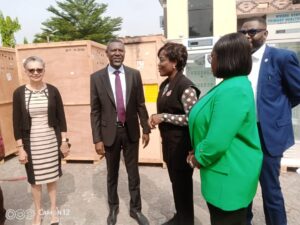
According to her, an analysis of relevant data in the last three months from which report was presented to the State’s Deputy Governor, Prof. Ngozi Odu, who is the Chairman of the Rivers State Primary Healthcare Taskforce, showed an increase in immunisation, which resulted in the decrease in the mortality of infants, children, and women in the State.
“As we were analysing the data in the last three months, and providing report to Her Excellency, the Deputy Governor, Prof. Ngozi Odu, we were pleased and delighted to share with her and onward to the State Executive Council that we have seen an increase in immunisation coverage by virtue of the work the management and staff of the PHCMB have been doing.
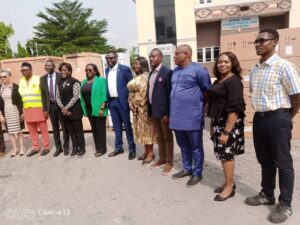
“Significant increase in immunisation coverage, reduction in mortality and in newborns, in infants, below the age of one, and children under the age of five”, she said.
Dr. Oreh continued that beyond the stated reductions, there were also “reductions in the number of women who died during pregnancy and childbirth”.
In spite of these, however, the Health Commissioner emphasized the need to sustain efforts being made to ensure that “we get to the point in Rivers State where there are no Zero Dose Children, that there are no more children who don’t have access to vaccines appropriate for their age to save their lives from common childhood illnesses that threaten their survival”.

Making the donation of the WHO Prequalified Cold Chain Refrigerators, the Executive Director, Oil Producers Trade Section (OPTS), the donor of the refrigerators, Mr. Gwueke Ajaifa, said the donation is in the spirit of giving back to the people.
Noting that OPTS is an association of oil and gas companies in Nigeria, comprising five International Oil Companies (IOCs), and 25 Nigerian Companies, Ajaifa explained the reason for the donation.
“As individual companies, we recognise the need to take care of the people who live in our communities, because without healthy communities, there can be no progress in terms of business.

“Individual companies have been reaching out to the State, but collectively, we also see the need to reach out and ensure that we take care of our people, and Rivers State is one of the States we believe deserves our attention.
“So, this equipment has been donated to support the immunisation programme, in order to maintain the potency of vaccines, because it’s important that we store them properly”, Ajaifa stated.
Explaining the function of the WHO Prequalified Cold Chain Refrigerators, the State Immunization Officer, Dr. Inwom Joseph Urang, said it’s basically to maintain the potency of the vaccines.
“When vaccines are brought, we maintain their potency at a particular temperature, usually +2 to +8 degrees centigrade. So, you don’t allow the temperature to go beyond that.
“Once the temperature goes beyond that, the potency of the vaccines might be compromised. So, we need this equipment to actually help us maintain these vaccines.
“If anything happens to the Cold Chain, we call it ‘breakage of the Cold Chain’. Once the Cold Chain is broken, the potency of the vaccine is gone. Instead of the vaccine being a life-saver, it will now be a killer.
“This is a modern equipment with ten years warranty”, Dr. Urang explained.
Sogbeba Dokubo


Continue Reading

The Commissioner of Police (CP) Delta State Command, Mr. Yemi Oyeniyi, has urged traditional institutions to continue to support law enforcement in the country.
Oyeniyi gave the advice on Tuesday at the palace of the Ovie of Uvwie Kingdom, Dr. Emmanuel Sideso, Abe 1, in Effurun, Uvwie Local Government Area of the state.
The Commissioner, who was on a familiarisation tour of police formations across the state, including the Effurun area command, solicited continued partnership of the Uvwie domain in strengthening intelligence gathering and promoting peaceful co-existence.
He commended the Ovie of Uvwie for his unwavering commitment to peace, security, and community development.
“I acknowledge the invaluable role of traditional institutions in supporting law enforcement in the country.
“I equally solicit continuous partnership of the Uvwie domain in strengthening intelligence gathering and promoting peaceful co-existence among the people”, he said.
In his remarks, the Ovie of Uvwie, welcomed the Commissioner and his entourage to the domain.
He reaffirmed the commitment of the people to supporting the Nigeria Police and other security agencies.
The royal father urged his subjects to continue to cooperate with the security agencies by way of providing timely and credible information.
The Commissioner, thereafter, proceeded to perform the groundbreaking of the Effurun area command at the instance of the Insp.-Gen. of Police, Mr. Olatunji Disu.
The Senate of Ignatius Ajuru University of Education (IAUE), Rumuolumeni, Port Harcourt, has approved the establishment of a University Leadership Assessment Centre as proposed by Professor Veronica Okogbaa of the Department of Educational Management.
A statement signed by the Public Relations Officer of the university, Dr. Ngozi Okiridu, said the centre will, among other things, identify and develop high potential skilled leaders and talents.
It will also evaluate participants through multi dimensional approach rather than rely on subjective perceptions, indulge in leadership trainings, and generate income from services with succession planning.
Similarly, Senate also approved the establishment of a centre for languages, digital Humanities and intercultural studies as proposed by the Dean of Faculty of Humanities, Professor Ibiere Ken-Maduako.
The proposed centre, according to he statement, will have seven units namely language teaching unit, where French, Spanish, Arabic, Portuguese, German, Hausa, Igbo, Yoruba and Rivers State indigenous languages will be taught.
It will also have Translation and interpretation unit, indigenous languages documentation unit, Digital Humanities Laboratory, Artificial intelligence and language teaching unit, professional certification unit, as well as Research and Publication unit..
The statement quoted the Dean, Faculty of Humanities, Professor Ken-Maduako, the centre will offer certificate in language proficiency for beginners, intermediate, advanced Diploma programme, translation and interpretation courses, Digital Humanities certification programme, Artificial intelligence and language technology workshops, online and Hybrid learning programmes, weekend and evening public classes, indigenous languages documentation training and Business and professional communication courses.
Professor Ken-Maduako firther said the center “will increase visibility of the University nationally and internationally, generate sustainable internally generated revenue, increase opportunities for grants and donor funded projects, enhance interdisciplinary research output, promote cultural preservation and community engagement, strengthen the University”s profile in innovation and digital transformation, attract research collaboration and international partnerships, and improve graduate employability and digital competence.”
In his speech, the Chairman of Senate and Vice Chancellor of the university, Professor Okechuku Onuchuku, encouraged sponsors of the centre to source for funds for the take off of the centre.
He explained that Directors will be appointed for the self-sponsored centres and reiterated that his administration will continue to support all proposals geared towards the growth of the University as long as they are consistent with the academic brief of the Ivory Tower.
Earlier, Professor Samuel Otamiri commended Professor Veronica Okogbaa for the proposed centre which, he said, is a remarkable development, amd described it as a robust programme that would attract the necessary patronage .
In another development, the Senate welcomed a suggestion by Professor Priye Iyalla-Amadi that Valedictory Senate sessions be introduced and held for retired Professors.
Results from the Postgraduate School as presented by the Dean of the School, Professor Chibuzor Chile Nwobueze, was approved by Senate.
Senate also approved that presented by the Director of the Centre for Continuing Education (CCE), Professor Goddey Wilson, and that of the Graduate School of Business by Dr. Florence Ironawusi.
Sogbeba Dokubo
The National President, Forum of Inclusive Educators and Readers (FIER), Mr. Onyeka Innocent, has admonished school owners and parents alike to learn how to prepare their children/wards ahead time in order to beat challenges irrespective of the angle they may spring up from.
Innocent made this known at the Forum’s meeting held partly in honour of the Spelling B, 2025 winners, in Port Harcourt.
“Soldiers are not trained during war, rather, they are trained and kept in the Barracks, waiting for war”, he said.
He said students must be provided with the necessary educational tools capable of boosting their academic pursuit.
According to him, proprietors of schools must conform with the Government’s authorities and guidance if they are determined to succeed in the project.
Another solution to educational management, he said, is the availability of Education Committees in schools, saying that it will improve the quality of its learning process.
Though he did not rule out decay in the society, he said there are few that still hold fast to determination and sincerity.
The FIER leader said his association was one of the bodies with the zeal to right wrongs in the society, especially in the Education sector.
He noted that his group was also prepared to reduce the number of out-of-school children by ensuring that education was taken to all parts of the Country.
On registration of private schools as directed by the State Government, he said his members are in compliance and assured of a cordial relationship between the Government and his Association.
Meanwhile, the winners of the Competition were Master Fredrick Jeffrey of Daisy Dan School, who emerged first; Badubulachi Maryan of Fertile Vineyard Academy, 2nd; and Itode Samuel of Baridoo Sam Joel School, 3rd.
They winners where rewarded with cash prices of N100,000, N50,000 and N30, 000 respectively.
King Onunwor
-
News4 days ago
Rivers Court Jails Man Seven Years For Defiling Minor …Directs N5 Million Upkeep For Victim
-
News4 days ago
Alleged Coup Plot: DSS Docks Five For Hiding Sylva’s Whereabouts
-
 Politics4 days ago
Atiku Names Kenneth Okonkwo As Spokesperson
-
Niger Delta4 days ago
24 Nigerian Universities Make 2026 THE Rankings … 4 S’South Versitieis Pull Through
-

 News4 days ago
FG To Replace NYSC Khaki With Adire
-
News4 days ago
BOI Unveils Maiden Impact Report, Disburses N644.9bn In 2025
-

 News3 days ago
Fubara Seeks Full Resolution Of Bille Gas Leakage …Pledges Upgrade Of Community Health Centre
-
Women4 days ago
NAWOJ Seeks Partnership With Hotel Presidential On Summit