
Rivers
Stopping HIV Infection By 2030 Still Long Way Off – ASWHAN

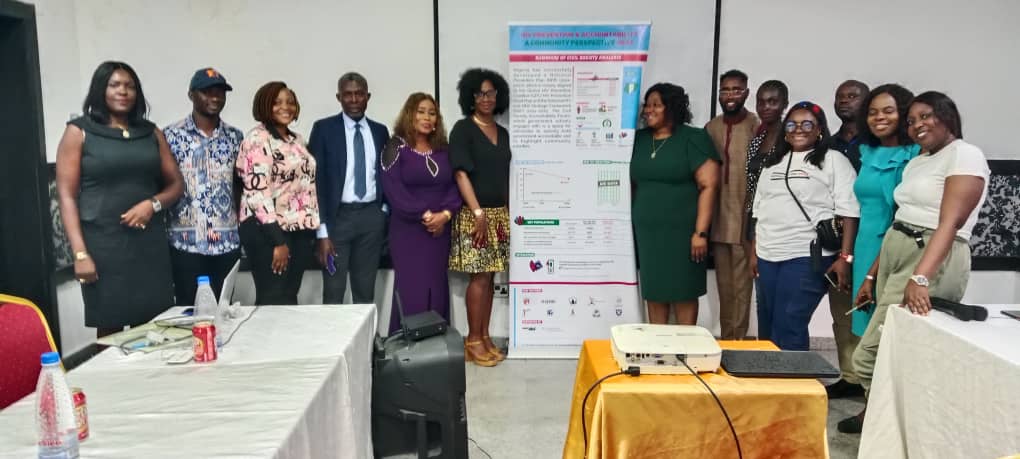
Amid growing pessimism over whether Nigeria can meet the Joint United Nations Programme On HIV/AIDS (UNAIDS) target of eliminating new HIV inffections by 2030, the Association of Women Living With HIV/AIDS in Nigeria (ASWHAN) has said it would be difficult to attain the target in Nigeria, nay Rivers State.
The Coordinator of ASWHAN in Rivers State, Mrs. Fortune Kalio-Faladu, made this disclosure in an exclusive interview with The Tide, recently, during a meeting of key stakeholders involved in HIV prevention held in Port Harcourt, organised by the ASWHAN, in collaboration with the Coalition of Sex Workers Rights Movement (COSWRIM) in Nigeria.
She said, going by revelations from presentations and dicussions during the meeting, achieving the 2030 target would not be feasible, except more deliberate drastic actions are taken by stakeholders, particularly Government, at all levels.
“From our discussions today, we still have a long way to go. But I think if we, as stakeholders, and members of the State, particularly the government, can actually come to do what we have to do, in the right proportion and at the right time, we can still achieve the 2030 target”, she stated.
On the part of individuals, she said people would need to come out to ascertain their HIV status, and be on treatment, if they turn out positive, and those who are negative would have to abstain from habits that could make them positive.
“For those that are positive, they should be on drugs, because I know that once you take your drugs correctly and consistently over a period of time, you will be virally suppressed, and once you’re virally suppressed, you cannot transmit the virus”, she explained.
For stakeholders, she called for more all round commitment: to meetings, increase efforts to not only create awareness, but to also follow-up on drives to reach targeted vulnerable groups to HIV infection.
She also said beyond these, the Government has a greater part to play, if the 2030 tagget for zero HIV infection can be achieved.
A key way to do this, she said, is for the government to come up with a disciplinary group that would act as spy in order to enforce discrimination of HIV positive persons.
“The truth be told, when we talk about prevention, if I’ll be stigmatized and discriminated upon, I don’t think I will come out from my hiding. I’ll be in my house, possibly without taking the necessary drugs.
“But if the Government is there, and these positive persons are aware that they’re being protected, then they’re more likely to come out of their hiding, because they know they can get jobs for which they are qualified, and also attain societal status without discrimination”.
In her presentation at the meeting, titled, “HIV Prevention and Accountability: A Community Perspective, 2023”, the ASWHAN Coordinator delved into such areas as efforts made by Civil Societies Organisation’ (CSOs) in HIV prevention; and Progress against the 2025 roadmap for CSOs, which covered Evidence-driven assessment of HIV prevention programme needs and barriers, Precision Prevention Approach, country investment needs, HIV Prevention political leadership, community-led HIV prevention services, remove social and legal barriers, promote HIV prevention integration, new HIV prevention technologies, Real-time prevention programme monitoring, and Accountability for HIV Prevention.
Buttressing the stand of the ASWHAN Coordinator on the feasibility of the 2030 target and the way forward, the Communication Officer of the COSWRIM in Nigeria, Mr. Vena Daniel, re-echoed the need for more efforts by key stakeholders.
He said, “Based on our meeting today, I will say that we are still very far away from attaining that goal, because, looking at some of the laws and practices and fragmentations within the CSO movement, you’ll see that we’re still far away from it.
“For instance, it’s just today we’re realising that a unique group has been excluded from the HIV/AIDS implementation space, that is, people who are in confined space, such as correctional homes (prison), frequent travellers, such as drivers, Police, and other security personnels.
“Implementation has been going on over the years, but these groups have been neglected”.
He, therefore, suggested that given the present scenario, there’s the need to extend the target year to 2035, within which more deliberate efforts should be made in HIV preventive efforts, considering that it’s barely six years to 2030.
“If we can extent it to 2035, we can begin to consider it. But, for now, 2030 is not feasible. Looking at the level of work that still needs to be done, I don’t think by 2030 we can achieve zero HIV infection “, he emphasized.
Sogbeba Dokubo



Rivers
Anaka Community Seeks Development, Unity … Advocates Devine Guidance In 2027 Leadership Selection


-

 Niger Delta2 days ago
Warri Airport Manager Disputes Air Peace Bird Strike Claim
-

 News2 days ago
Nigeria Won’t Surrender Any Territory To Criminals -Tinubu
-

 News2 days ago
FG Begins Trial Of Over 600 Terrorism Suspects
-

 Rivers2 days ago
79th IAUE Inaugural Lecture: Prof Anero Advoctes Tuition-Free Education For Children
-

 Politics2 days ago
Parties’ Deregistration: How Justice Lifu Overruled Appeal Court Justices
-

 News2 days ago
Rivers Judges Commence Annual Vacation, July 20
-

 Politics2 days ago
ADC: Okonkwo Rejects Amaechi As Presidential Running Mate, Withdraws Support
-

 Politics2 days ago
2027: Tinubu’s Projects Give APC Edge In South East – Yilwatda