
Politics
Ondo Assembly Petitions NJC Over Court Order Halting Dep Gov’s Impeachment

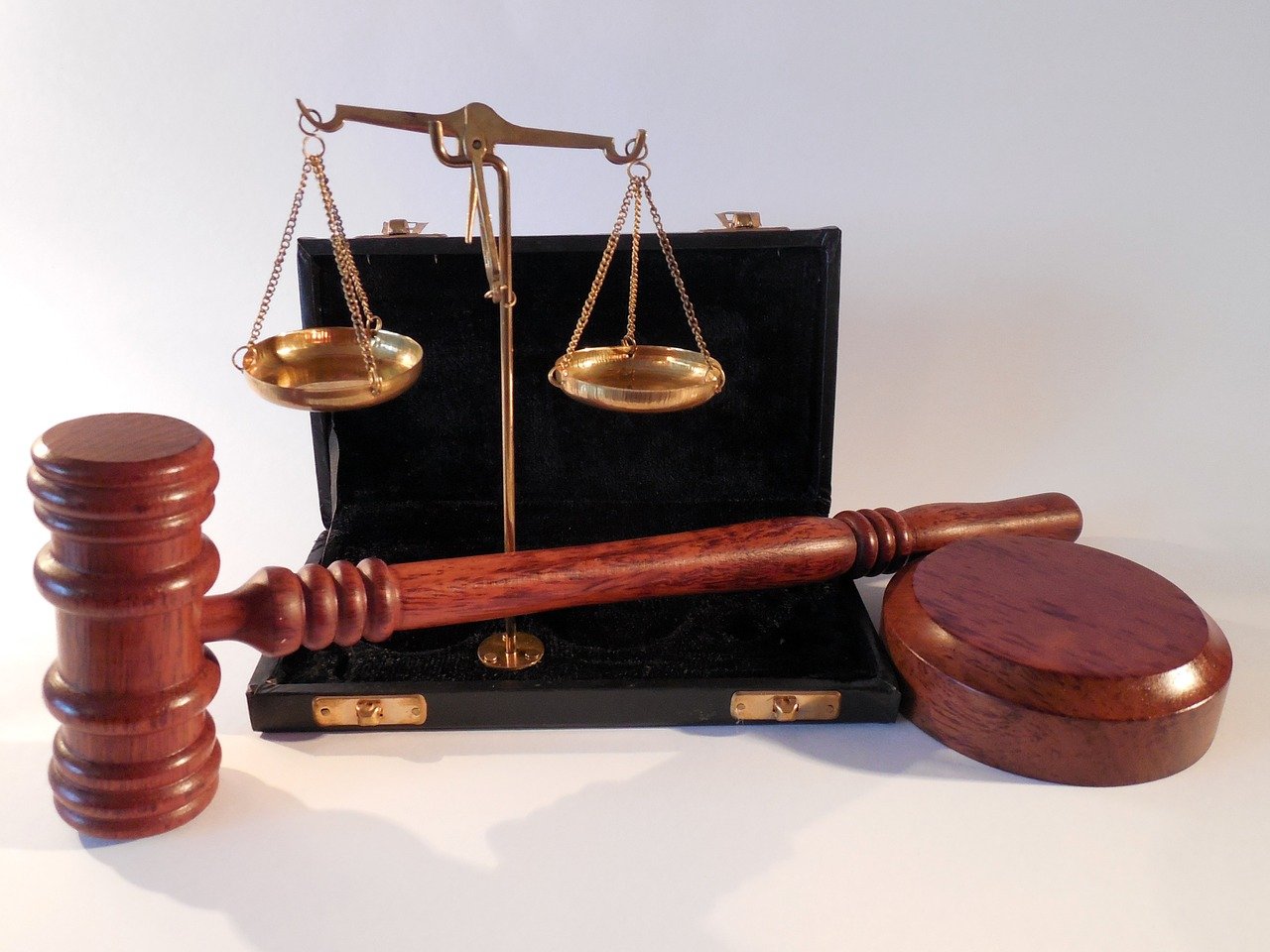
Members of the Ondo State House of Assembly have petitioned the National Judicial Council (NJC) over a Federal High Court order restraining them from performing their functions as an arm of government.
They described an ex-parte granted by the court on the 26th of September, 2023, restraining the Assembly from impeaching the Ondo State Deputy Governor, Hon. Lucky Aiyedatiwa, as “unconstitutional and clearly malevolent”.
In a petition addressed to the National Judicial Council (NJC) and signed by the Speaker of the House, Rt. Hon. Olamide Oladiji, it accused Justice Emeka Nwite, who granted the order for allegedly compromising his office and violating the constitution of the Federal Republic of Nigeria.
The lawmakers alleged that Justice Nwite was “heavily and/or compromised his office to grant an unconstitutional ex parte in favour” of the embattled Deputy Governor.
The petition read, “As the Speaker of the 10th Ondo State House of Assembly, and on behalf of the entire members of the House of Assembly (hereinafter referred to as “ODHA”), I write your lordship to formally lodge a complaint against Hon.
“Justice Emeka Nwite of the Abuja Judicial Division of the Federal High Court, for compromising his office and violating the extant provisions of the Constitution of the Federal Republic of Nigeria, 1999 (as amended), ignoring judicial decisions of the appellate courts and extant Practice Directions and/or relevant Circulars of the Federal High Court, to grant an unconstitutional, clearly malevolent, and ostensibly procured ex parte order on 26th September, 2023 in Suit FHC/ABJ/CS/1294/2023 restraining ODHA as an arm of government from exercising its constitutional powers.”
The assembly recall that on “September 2023, Eleven (11) members of the Ondo State Assembly presented a notice of allegation(s) of gross misconduct (impeachment notice) against the Deputy-Governor of Ondo State, His Excellency, Hon. Lucky Orimisan Aiyedatiwa to me as the Speaker, in line with Section 188(2) (a) & (b) of the Constitution. I hereby attach a copy of the notice as Annexure ODHA.
“As your lordship would observe, annexure ODHA contains 14 allegations, many of which relate to alleged financial improprieties running into hundreds of millions of naira.”
“My Lord, as a ranking member of ODHA and based on the benefit of a detailed legal advice which the House has sought on the subject matter, I know as a fact that impeachment is a purely legislative affair.”
“Section 188 (10) of the Constitution clearly provides that: “No proceedings or determination of the House of Assembly or an Impeachment Panel or any matter relating to such proceedings or determination shall be entertained or questioned in any court.”
“However, in spite of the above provisions of the Constitution, the Deputy-Governor approached Justice Emeka Nwite with an ex parte application on 21st September, 2023, just a day after I received Annexure ODHA1 (the notice of allegations of gross misconduct) against him at the plenary of the House, to procure an order to stop the legislative process of his impeachment.”
“My lord, as a Judge of the Federal High Court, Hon. Justice Emeka Nwite knows or ought to know that there are extant Circulars and Practice Directions prohibiting Federal High Court Judges from granting ex parte injunctions in political cases and/or taking cases that did not originate from their immediate Judicial Divisions.”
The House, however, resolved that Hon. “Justice Emeka Nwite should be investigated for “abuse of ex parte injunction and/or his office to gratify the Ondo State Deputy-Governor, and if found liable, the National Judicial Council should mete out the appropriate sanction against him as required by the dictates of judicial fidelity and the protection of the rule of law and our nascent democracy.”
Meanwhile, the Assembly yesterday said the deputy governor, Mr Lucky Aiyedatiwa, had failed to respond to the Letter of Notice served on him on September 25 over allegations of gross misconduct.
Speaker Oladiji said the Letter of Notice was received on behalf of Aiyedatiwa by his Chief Protocol Officer.
Speaking at the plenary session in Akure, yesterday, Oladiji said the House resolution that the deputy governor should be duly served a Notice of the allegations, was in line with Section 188 of the Nigerian Constitution.
“Concerted efforts were made to serve the Notice on the deputy governor, who for some time was not available for the service, prompting the House to approach the court for a substituted service on the deputy governor.
“On 25th of September, a substituted service of the Notice of allegations was made on the deputy governor duly signed by more than one-third Honourable Members of the House as required by the Constitution in Section 188 Sub-section 2,” he stated.
According to him, the Constitution stipulates that the assembly should wait for seven days for the embattled deputy governor to respond which has lapsed.
The speaker directed the Chief Judge of Ondo State, Justice Olusegun Odusola, to immediately set up a seven-man panel to investigate the deputy governor on the allegations levelled against him.
“Distinguished colleagues, Section 188 of the Constitution states further that the deputy governor has 7 days within which to reply to the allegations levelled against him.
“The Constitution states further that within seven days of the passing of a motion under the foregoing provisions of this section, the Chief Judge of the state shall at the request of the Speaker of the House of Assembly appoint a panel of seven persons.
“Distinguished colleagues, I, therefore, wish to seek your opinion to direct the Chief Judge of Ondo State, Hon. Justice Olusegun Odusola, to in line with this section of the Constitution, set up a seven-man panel to investigate the deputy governor on the allegations levelled against him,” he said.
The House, with available 23 out of 26 members at the plenary session through voice vote, gave a nod for the Chief Judge to constitute the panel.
Earlier, the Majority Leader, Mr Oluwole Ogunmolasuyi, (Owo 1-APC), moved the motion for the Notice on the Ondo State Impeachment Panel Procedure Rules that the panel be constituted by the Chief Judge of the State.
The motion was seconded by Mr Felix Afe (Akoko North West 2-PDP).



Prof. Amupitan gave the warning on Saturday, in Port Harcourt, Rivers State, during the South-South Zonal Readiness Assessment and Interactive Staff Engagement organised ahead of the 2027 general elections.
He said insecurity remained a potential challenge to the electoral process but stressed that the Commission would not allow threats against its personnel to undermine its constitutional responsibilities.
“Insecurity may pose a challenge, but our collective constitutional resolve is far stronger. Let me again send a clear message from Port Harcourt: anyone who attempts to threaten, intimidate, or harm our ad-hoc staff, NYSC members, or permanent personnel will be brought to justice under the full weight of the law,” he said.
The INEC Chairman, who was accompanied by National Commissioners, directors and technical aides, disclosed that the South-South engagement was the fifth in a series of zonal assessments, following similar exercises in the South-West, North-West, South-East and North-East.
He explained that his physical presence across the geopolitical zones reflected the Commission’s field-first approach, emphasising that electoral integrity must be established through effective operations at the grassroots.
According to him, the assessment would cover operational preparedness across the 123 Local Government Areas in the six South-South states.
On election security, Prof. Amupitan said INEC had moved away from reactive security arrangements traditionally activated around election day to a proactive, intelligence-driven framework known as the “ICCES Tentacle”.
He explained that the framework was designed to extend inter-agency security coordination from national and state headquarters to local government areas and Registration Area Centres, including remote communities.
He identified three critical pillars of the framework as mapping and mitigating security threats, protecting electoral personnel and infrastructure, and guaranteeing safe access to polling units.
The INEC boss said the security arrangement would provide comprehensive protection for electoral personnel, technological infrastructure, including Bimodal Voter Accreditation System (BVAS) devices and server infrastructure, as well as voters.
He added that the framework was intended to ensure that every polling unit, irrespective of its geographical location or history of security challenges, remained safe and accessible for the exercise of democratic rights.
Prof. Amupitan disclosed that the South-South security architecture comprised approximately 60 major operational formations, headquarters and state commands operating under the Inter-Agency Consultative Committee on Election Security (ICCES).
The network, he said, brings together military, naval, air, police and other security and intelligence agencies across the six states.
“Together, this integrated multi-agency network represents the operational backbone that guarantees intelligence-led protection across every riverine creek, coastal axis, and land-based polling unit in the Niger Delta,” he stated.
Providing an overview of the region’s electoral significance, the INEC Chairman said the South-South had the fourth-largest voting bloc in the country, with 15,823,550 registered voters, representing 15.30 per cent of the national register.
Rivers State alone, he said, accounts for 3,736,434 registered voters spread across the 23 local government areas.

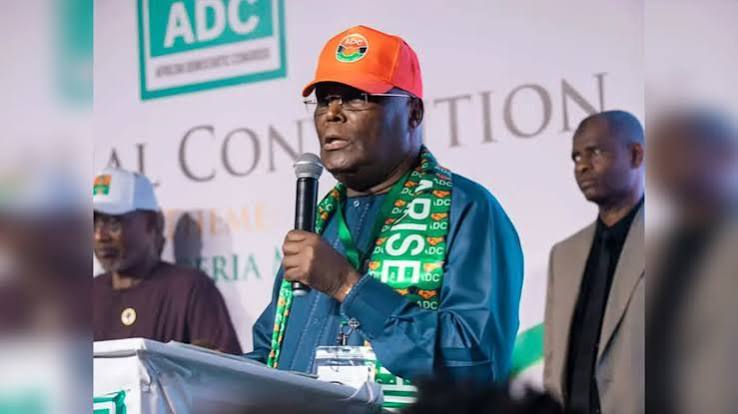
Alhaji Abubakar made the demand following revelations that some INEC registration officers allegedly abused their access to the voter registration system to introduce irregular records into the database.
In a statement issued by his Director of Strategic Communications, Mr Phrank Shaibu, the former vice-president described the development as a serious breach of the Commission’s internal safeguards and raised concerns about the integrity of the electoral process.
He urged INEC to identify the officials implicated in the alleged misconduct and explain what disciplinary or legal measures had been taken against them.
Alhaji Abubakar also called for an independent forensic audit of the preliminary voters’ register to establish the scale of the alleged manipulation, identify affected records and determine how the questionable entries were introduced into the system.
He further insisted that INEC preserve all relevant voter records, image files, system access logs and electronic audit trails to prevent the destruction or alteration of evidence before an independent examination could be conducted.
The former vice-president also demanded that the Commission disclose the identities of companies contracted to produce sensitive election materials ahead of the 2027 polls, arguing that transparency was essential to building public confidence in the electoral process.
INEC’s Director of Information and Communication Technology, Dr Lawrence Bayode, had earlier disclosed during a television interview that some registration officers across the country allegedly used their official login credentials to introduce irregularities into the voters’ database.
Dr Bayode explained that the Commission’s Automated Biometric Identification System helped identify questionable records and establish how some irregularities entered the system.
He, however, clarified that not all suspicious photographs were AI-generated, as some resulted from poor registration procedures.
The development followed public concerns over suspected AI-generated photographs, alleged duplicate entries and other inconsistencies discovered in the preliminary voters’ register published online on October 26, 2026.
INEC has maintained that the published document is a preliminary register and that it is reviewing questionable records ahead of the certification of the final Register of Voters.
The controversy has intensified calls for greater transparency and accountability in the management of the voters’ register as preparations gather momentum for the 2027 general elections.
-
Opinion4 days ago
Ancestorial Worship: My Take (1)
-

 Education1 day ago
PAMO MEDICAL UNIVERSITY -Nullifies Arrest warrant on VC
-
Niger Delta1 day ago
PANDEF Seeks 50% Oil Derivation Allocation Increase
-
Rivers1 day ago
Don Seeks Repositioning Of Tech Education For Dev
-

 Education1 day ago
IAUE MOVES TO END GHOST WORKERS SYNDROME AS 400 NEW NON-TEACHING STAFF UNDERGO MANDATORY ETHICS TRAINING
-

 News1 day ago
Fresh Ebola Scare As NCDC Records Two Cases
-
News1 day ago
Customs Partners EFCC, NDLEA, Others To Tackle Money Laundering, Terrorism Financing
-
 News4 days ago
FG Must Address Nigerians’ Concerns On Reforms -Shettima …Warns Against Misuse of AI, Social Media