
Business
Open Trade Neglect Will Cause Price Instability –Okonjo-Iweala

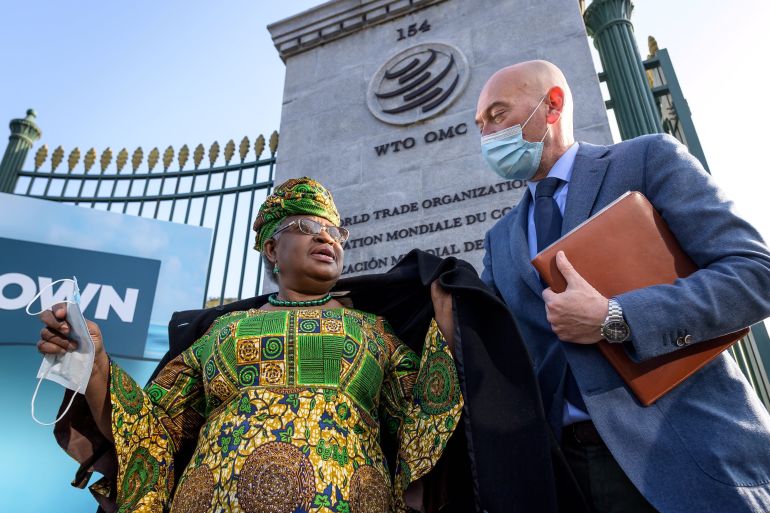
Director-General (DG) of the World Trade Organisation (WTO), Ngozi Okonjo-Iweala, has said turning away from open trade would lead to greater price volatility, inflationary pressures, and weaker growth prospects.
Okonjo-Iweala, who stated this recently at the annual Jackson Hole Economic Policy Symposium hosted by the Federal Reserve Bank of Kansas City, U.S., noted predictable trade was a source of disinflationary pressure, reduced volatility, and increased economic resilience, whereas fragmentation of trade into rival blocs “would be very costly”.
“A world that turns its back on open and predictable trade will be one marked by diminished competitive pressures and greater price volatility.
“It would be a world of weaker growth and development prospects, a slower low-carbon transition, and increased supply vulnerability in the face of unexpected shocks”, she said.
The WTO boss further noted that sustained inflation had made a comeback across the rich world, with subsequent monetary tightening exacerbating debt distress and financial instability for dozens of developing economies.
According to her, some policymakers have looked at these shocks, alongside rising geopolitical tensions, and concluded that globalisation needs to be rolled back.
She added that WTO economists estimated that if the world economy decouples into two self-contained trading blocs that would lower the long-run level of real global GDP by at least five per cent, with some developing economies facing double-digit welfare losses.
“Despite all the tensions and scepticism around trade, overall trade costs for agricultural products, manufactured goods, and services have fallen by 12 per cent over the past 20 years, with the increased digitalisation and trade in services potentially becoming a powerful disinflationary force.
“Falling trade costs for goods, and especially for services, mean that globalisation can still be an engine for increased growth, efficiency, and economic opportunities, while also contributing to price moderation”, she said.
According to Okonjo-Iweala, increased digitalisation and trade in services boosted by initiatives such as the agreement on Services Domestic Regulation, concluded by WTO members, accounting for over 90 per cent of global services trade, and the ongoing talks on electronic commerce now being negotiated among 90 WTO members, could become a powerful disinflationary force.
She advised that seizing those opportunities required open and predictable international markets, anchored in a strong and effective rules-based multilateral trading system.


-

 Niger Delta2 days ago
Warri Airport Manager Disputes Air Peace Bird Strike Claim
-

 News2 days ago
Nigeria Won’t Surrender Any Territory To Criminals -Tinubu
-

 News2 days ago
FG Begins Trial Of Over 600 Terrorism Suspects
-

 Rivers2 days ago
79th IAUE Inaugural Lecture: Prof Anero Advoctes Tuition-Free Education For Children
-

 Politics2 days ago
Parties’ Deregistration: How Justice Lifu Overruled Appeal Court Justices
-

 Politics2 days ago
ADC: Okonkwo Rejects Amaechi As Presidential Running Mate, Withdraws Support
-

 News2 days ago
Rivers Judges Commence Annual Vacation, July 20
-

 Politics2 days ago
2027: Tinubu’s Projects Give APC Edge In South East – Yilwatda