Connect with us

Editorial

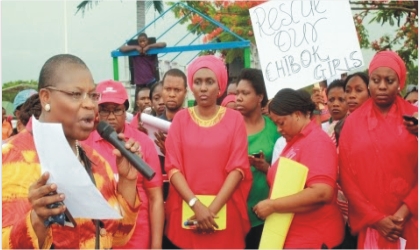
Hope Dims For Chibok Girls

Published

on

In the early hours of April 14, 2014, a group of Boko Haram insurgents attacked the Government Girls’ Secondary School in Chibok, Borno State, and kidnapped 276 teenage girls. That singular onslaught set off a chain of events whose ripples are still being felt nine years later. How the impressment was executed indicated that Nigeria was unprepared to rein it in.
The ravishing provided a much-needed spark for civic mobilisation, and the #BringBackOurGirls Campaign led by former Minister of Education, Oby Ezekwesili, would become one of the most iconic and enduring protests in Nigerian history. At least, the campaign was somehow successful. The government of former President Goodluck Jonathan awoke from its stupor and many abducted girls were released under President Muhammadu Buhari in exchange for ransom.
Regrettably, 98 of the missing Chibok girls are still being held captive by the sect nine years after their kidnap. Since then, the country’s security situation has taken a turn for the worse, even as mass abductions have become routine. For instance, in February, 2018, 110 schoolgirls were kidnapped when Boko Haram bandits stormed the Government Girls Science Technical College in Dapchi, Yobe State. Among them was Leah Sharibu, who is still being held because she refused to convert to Islam. Bandits across various schools have captured more than 1,000 students in the North.
In a statement in Abuja on the remembrance day of the Chibok incident last Friday, the Acting Director, Amnesty International, Nigeria, Isa Sanusi, said the Nigerian authorities had not carried out a single credible investigation into the security failures that left children vulnerable to the atrocities committed by Boko Haram and gunmen. Sanusi said, “Parents of the 98 Chibok schoolgirls who are still being held by Boko Haram — as well as other children abducted by gunmen — are living in anguish, knowing that their children are in the hands of ruthless individuals who subject their loved ones to chilling brutalities.
“It is beyond time that the Nigerian authorities took meaningful action to counter armed groups like Boko Haram and gunmen. Nigeria must implement safeguards to protect all children, and the lack of accountability for these callous crimes is fuelling impunity. The missing Chibok schoolgirls should be returned home to their families, and all those responsible for committing grave violations must face justice.”
Sanusi was right. This is the time for the fainéant Nigerian authorities to take meaningful action against armed groups like Boko Haram and the gunmen. This country must implement safeguards to protect all children, and the lack of accountability for these heartless crimes is fuelling impunity. The Federal Government should do everything possible to return the missing Chibok schoolgirls to their families, and all those who committed serious violations must be brought to justice.
Shamefully, between December, 2020 and March 2021, at least five kidnappings were reported in Northern Nigeria, including from schools in Kankara, Kagara, Jangebe, Damishi Kaduna, Tegina, and Yawuri, while threats of further attacks have compelled closures of over 600 schools in the northern part of the country.
No one has been arrested or prosecuted for the abductions of schoolchildren from Chibok and other locations. The lack of justice and accountability has led to an escalation of attacks on schools, forced school closures, and left parents in despair. Authorities must provide adequate security for schools to ensure that children and teachers are safe.
The United Nations Children’s Fund (UNICEF) estimates that about 10.5 million children between the ages of 5 and 14 are out of school in Nigeria. Following the shutdown of schools across Northern Nigeria, there has been a rise in reported cases of child marriages and early pregnancies in school-age girls.
It is the responsibility of the government to ensure that they leave behind no child. Education is a human right, and the government must make certain that all children have access to basic education in an environment free from violence and threats of attacks. The government should continue efforts to diminish bloodshed by possibly engaging insurgents.
We call on the authorities to reaffirm their commitment to ensuring the safe return of children still in captivity, including the remaining 98 Chibok girls, Leah Sharibu, the only Dapchi schoolgirl still held captive by Boko Haram and other victims. Kidnappings cast a shadow over education, especially for girls, which in turn affects the prospects for socio-economic development in the region.
The Federal Government must investigate the poor implementation of the Safe School Initiative over the past few years. The Federal Finance Ministry and relevant state agencies should identify the 500 schools that have reportedly been funded under the initiative and account for the funding provided. Governments at all levels should help advance the programme, especially by transferring students in high-risk settings — especially girls — to safer schools until the security situation improves.
State and local education authorities should guarantee that schools adopt other measures envisioned in the initiative, including safety guidelines, incident response plans, and early warning procedures linking school administrators, community residents, and local safety agencies.
Painfully, nine years after terrorists kidnapped 276 girls from a Chibok school, the insurgency is far from over. The government and their international partners need to redouble their efforts to protect communities in affected or at-risk areas through the deployment of additional security forces and sustained counter-insurgency operations, as well as through dialogue where feasible.
Nigeria needs help, not just to recapture the remaining Dapchi girl, the 98 Chibok schoolgirls, and an unknown number of others still held in terrorist enclaves, but to fight the insurgency more broadly. Besides much-needed humanitarian help, international partners should continue to assist the government, especially by sharing intelligence and building the capacity of security forces to protect civilians.

Continue Reading

Editorial

Time For GL 17 In Rivers 

Published

on

Rivers State is indeed fortunate to be led by Governor Siminalayi Fubara, whose remarkable and progressive disposition towards workers has distinguished him from his predecessors since the return to democracy in 1999. His approach to governance reflects empathy, balance and a genuine understanding of the civil service as the engine room of development.
Before his assumption of office, civil servants endured eight excruciating years under the immediate past administration of Chief Nyesom Wike, marked by painful stagnation and systematic neglect. Promotions were withheld, gratuities ignored, annual increments denied and employment processes shrouded in opacity, leaving workers demoralised and disillusioned.
Governor Fubara’s emergence, however, brought a decisive and restorative shift. Long overdue promotions were approved to cover lost years, gratuities were paid and continue to be honoured, while the once suspended Christmas bonus was revived after sixteen years, rekindling hope among public servants.
Even more commendable was the transparent employment process, particularly in the education sector, which injected fresh credibility and renewed confidence into government recruitment. These actions clearly signal a leader determined to rebuild trust between the state and its workforce.
In the same spirit of promoting workers’ welfare, it is both logical and timely to urge the governor to implement the Consolidated Grade Level 17 for civil servants in Rivers State. This call is reasonable and justified, given his proven commitment to labour-friendly reforms.
Grade Level 17 represents a modernised and inclusive salary structure where multiple allowances are consolidated into a single enhanced basic salary. This system simplifies remuneration, rewards seniority and aligns pay with responsibility and service delivery.
In states where this structure is operational, directors are rightly placed on Grade Level 17 rather than 16, ensuring equitable recognition and appropriate compensation. Rivers State should not remain an exception to a standard already accepted nationwide.
It is noteworthy that the Federal Government, many states and even local government councils across the country have implemented this policy. As a former civil servant himself, Governor Fubara possesses a personal and practical understanding of its value and necessity.
Rivers State occupies a strategic and influential position in the federation, economically and politically. Implementing Grade Level 17 would significantly boost morale, reinforce loyalty and inspire greater dedication among civil servants.
The argument that Rivers cannot afford this reform is untenable and unconvincing. It is unacceptable for a state with vast resources to trail behind others that are less financially endowed yet have successfully enforced the policy.
One clear advantage of implementing Grade Level 17 is improved motivation and productivity. A valued workforce is invariably a productive workforce, and fair remuneration directly translates into better service delivery.
Another benefit lies in the retention of experienced professionals who might otherwise seek opportunities elsewhere. Stability, continuity, and expertise are preserved when workers feel respected and adequately rewarded.
The reform would also strengthen institutional capacity and governance, creating a resilient and efficient civil service capable of supporting long-term development goals and policy implementation.
Furthermore, the enforcement of Grade Level 17 will promote a fairer and structured career progression system within the civil service. It will correct long-standing anomalies where officers retire without reaching their deserved peak, despite years of diligent service. Such a reform reassures workers that merit, experience, and dedication are ultimately rewarded.
This is not merely a financial adjustment but a moral and institutional statement about the value Rivers State places on its workforce. By approving Grade Level 17, Fubara will reaffirm his reputation as a compassionate leader and send a clear message that the welfare of civil servants remains central to his administration’s vision for sustainable governance.
Governor Fubara knows firsthand the harsh realities workers face as salaries struggle to meet basic needs. By the end of 2024, over twenty states had adopted the structure, with more joining, making Rivers’ delay increasingly indefensible.
If implemented, this policy will cement Fubara’s place in history as a visionary reformer whose legacy will endure. When the story of the Rivers State civil service is written, his name will be etched in gold, for it is fundamentally unfair for workers to stagnate endlessly on one grade level when a proven solution lies within reach.
Continue Reading

Editorial

For A Prosperous 2026

Published

on

As 2026 begins, Nigeria stands once again at a defining crossroads. The expectations of citizens are high, patience is thin, and the responsibility of leadership has never been more urgent. This year must not be another season of rhetoric; it must be a year of deliberate action that restores confidence in the country and renews hope among the people.
Foremost on the national agenda is security. From terrorism and banditry to kidnapping and communal violence, insecurity continues to erode lives, livelihoods, and national cohesion. Government must strengthen the current fight against insecurity by improving intelligence gathering, equipping security agencies adequately, boosting morale, and deepening cooperation among federal, state, and local authorities.
In this effort, continuous collaboration with strategic partners such as the United States remains crucial. Beyond military support, such partnerships should focus on intelligence sharing, counter-terrorism training, cyber security, and capacity building for law enforcement. Nigeria must leverage international alliances while retaining firm ownership of its security strategy.
Equally pressing is the ailing economy. Inflation, unemployment, and currency instability have placed enormous pressure on households and businesses. 2026 should be the year of hard economic choices—fiscal discipline, support for local production, targeted social protection, and policies that encourage investment, especially in agriculture, manufacturing, and technology.
Infrastructural development must also move from promise to performance. Roads, rail, power, ports, and digital infrastructure are not luxuries but foundations of growth. A clear focus on completing ongoing projects, rather than endlessly inaugurating new ones, will signal seriousness and deliver measurable benefits to citizens.
As the nation looks ahead, preparations for the 2027 general elections must begin now. Credible elections are central to democratic stability. Political actors should moderate their conduct, while citizens must be encouraged to engage peacefully and responsibly in the democratic process.
The Independent National Electoral Commission (INEC) has a special duty in this regard. Early preparations—logistics, voter education, technology upgrades, and staff training—are essential to avoid the familiar last-minute challenges. Transparency and consistency from INEC will go a long way in rebuilding public trust.
In Rivers State, 2026 carries its own weight of expectations. Immediate attention must be paid to preparations for the February bye-elections to fill two vacant seats in the State House of Assembly. INEC, political parties, security agencies, and community leaders must work together to ensure peaceful, credible polls free from intimidation and violence.
Beyond the bye-elections, the state must deliberately cultivate peace as it moves toward the 2027 elections. Rivers has paid a heavy price in the past for political tension and conflict. The lessons are clear: development cannot thrive in an atmosphere of perpetual crisis.
The resurging political crisis in the state must therefore be urgently contained. All stakeholders—across party lines—should put Rivers first, choosing dialogue over confrontation. Institutions must be respected, and the rule of law upheld, to prevent political disagreements from degenerating into instability.
Governor Siminalayi Fubara’s administration must remain focused and undistracted. Governance demands clarity of purpose. The people elected this government to deliver results, not to be consumed by endless political battles that divert energy from service delivery.
Security remains paramount at the state level as well. A secure Rivers State will attract investment, protect individuals and communities, and enable economic activity. Strengthening collaboration between state authorities, security agencies, and local communities should be a top priority in 2026.
Job creation, especially for young people, must also take centre stage. Education and healthcare require renewed investment, not just in infrastructure but in quality and access. A healthy, skilled population is the strongest asset any state can possess.
Ultimately, 2026 should be a year of reset for both Nigeria and Rivers State, a year when leaders choose responsibility over rivalry and vision over short-term gain. If security is strengthened, institutions are respected, and the welfare of citizens remains paramount, the foundations for a more stable and prosperous 2027 will have been firmly laid.
The media, civil society, and traditional institutions also have a crucial role to play in 2026. Agenda-setting must go beyond politics to issues of accountability, transparency, and civic responsibility. Citizens must be consistently informed, not inflamed; mobilised, not manipulated. A vigilant public space will help ensure that leaders at both national and state levels remain responsive to the people they serve.
History will judge 2026 by the choices made today. Nigeria and Rivers State cannot afford drift or distraction. What is required is steady leadership, collective responsibility, and an unwavering focus on peace, development, and democratic integrity. If these priorities guide action throughout the year, 2026 can become a turning point rather than another missed opportunity.
Continue Reading

Editorial

Task Before New Defence Minister 

Published

on

The appointment of General Christopher Musa as Nigeria’s Defence Minister has been met with widespread approval across the nation, and rightly so. After his commendable tenure as Chief of Defence Staff, where he demonstrated exceptional leadership and strategic acumen, Nigerians are justified in their optimism that he possesses the requisite credentials to tackle the country’s mounting security challenges. This is not merely another political appointment; it represents a deliberate and overdue shift towards placing experienced military personnel at the helm of our defence apparatus. The stakes could not be higher, and the nation’s expectations are correspondingly elevated.
For once, the Senate demonstrated the thoroughness that Nigerians have long demanded from their legislators. During approximately five hours of screening, General Musa faced rigorous questioning rather than the perfunctory “take a bow and go” treatment that has become the hallmark of senatorial confirmations. This meticulous approach signals a refreshing departure from the rubber-stamp mentality that has characterised many previous appointments. The lawmakers deserve commendation for recognising the gravity of the defence portfolio and subjecting the nominee to proper scrutiny. We can only hope this sets a precedent for future ministerial screenings.
President Bola Tinubu deserves credit for making what appears to be a pragmatic and judicious decision. By appointing someone with robust military credentials and intelligence expertise, the President has demonstrated an understanding that Nigeria’s security crisis demands specialised knowledge and battlefield experience. This appointment suggests a willingness to prioritise competence over political patronage, a quality that has been sorely lacking in previous administrations. The President must be encouraged to maintain this standard across other critical appointments.
The departure of Mohammed Badaru Abubakar from the Defence Ministry should serve as a lesson in the importance of matching expertise to responsibility. Whilst Mr Abubakar may possess political acumen, his lack of military background rendered him ill-equipped for the complexities of national defence. He was, in every sense, a square peg in a round hole. The previous arrangement, which saw two politicians manning the Defence Ministry, was nothing short of a misnomer. One cannot credibly oversee military operations without understanding military strategy, tactics, and the psychology of warfare. The mistake should not be repeated.
Whilst we applaud both the President for this appointment and the Senate for their diligent screening, the real test lies ahead. General Musa must now prove his mettle in the theatre of action. Words and credentials, however impressive, mean little without tangible results. Nigeria has suffered too long under the scourge of insecurity, with bandits, terrorists, and kidnappers operating with impunity across vast swathes of the country. The new minister must act decisively to save the nation from the embarrassment of continued security failures. The time for excuses has passed; Nigerians demand results.
During his screening, General Musa made a particularly important pledge: to end the patronage of bandits and terrorists by state governors. This commitment strikes at the heart of one of Nigeria’s most troubling security contradictions. The practice of negotiating with criminals, often facilitated or endorsed by state governments, has emboldened these miscreants and transformed banditry into a profitable enterprise. Such negotiations amount to nothing less than aiding and abetting criminality. General Musa’s promise to treat these elements as the criminals they are, rather than as legitimate negotiating partners, is commendable and must be pursued with unwavering resolve. There can be no compromise on this principle.
The new minister must undertake a comprehensive overhaul of Nigeria’s security architecture to enhance military effectiveness. This requires close collaboration with the service chiefs to establish clear objectives and ensure coordinated execution. Beyond structural reforms, General Musa must address the discipline deficit within the military ranks. Reports of corruption, negligence, and complicity in security breaches have eroded public confidence in the armed forces. Restoring discipline is not merely an administrative matter; it is fundamental to rebuilding the military’s credibility and operational effectiveness. Without discipline, no amount of equipment or funding will suffice.
General Musa’s promise to investigate the mysterious withdrawal of soldiers from the school in Kebbi State, which preceded the kidnapping of students, demonstrates a welcome commitment to accountability. This incident exemplifies the inexplicable lapses that have characterised Nigeria’s security response. Someone ordered or permitted that withdrawal, and the timing suggests either catastrophic incompetence or deliberate sabotage. The minister must get to the root of this matter and ensure that culprits face appropriate sanctions. Only through such decisive action can he send a clear message that negligence and complicity will no longer be tolerated.
However, Musa cannot succeed without adequate resources. The Federal Government must provide sufficient funding to enable the Defence Ministry to perform optimally. Next year’s budgetary allocation must reflect the enormous task at hand. It is counterproductive to demand results whilst starving the military of the resources necessary for modern warfare. This includes investment in intelligence gathering, modern weaponry, surveillance technology, and troop welfare. A poorly equipped and demoralised military cannot be expected to defeat well-armed insurgents and bandits who increasingly possess sophisticated weaponry.
The political class must resist the temptation to interfere with the General’s work. Whilst many politicians publicly profess support for the fight against insecurity, evidence suggests that some work surreptitiously to undermine these efforts for personal or political gain. Whether through the aforementioned negotiations with bandits, the protection of criminal elements, or the diversion of security funds, political interference has consistently sabotaged military operations. General Musa must be given the autonomy to perform his duties professionally. Only then can he be fairly held accountable for outcomes. The President must shield him from political machinations and vested interests.
The military must abandon its reactive, fire brigade approach to security operations. Waiting to respond only after attacks have occurred is a strategy of perpetual failure. The armed forces must take the fight to the criminals’ hideouts, conducting sustained offensive operations that dismantle their infrastructure and eliminate their capacity to strike. This requires robust intelligence, rapid deployment capabilities, and the political will to sustain operations until objectives are achieved. Proactive military engagement, not defensive positioning, is what the situation demands.
Nigeria’s porous borders represent a critical vulnerability that demands immediate attention. Countries around the world have recognised that border security is fundamental to national security. India has erected comprehensive fencing along its border with Pakistan specifically to prevent terrorist infiltration. Israel has constructed sophisticated barrier systems along multiple borders. Hungary built fences along its borders with Serbia and Croatia. Even the United States has invested billions in border security infrastructure. These nations understand what Nigeria seems reluctant to acknowledge: that uncontrolled borders invite national disaster.
Our borders remain scandalously porous, serving as entry points for the foreign fighters who constitute a proportion of those conducting attacks on Nigerian soil. The Lake Chad Basin, where Nigeria shares borders with Cameroon, Niger, and Chad, has become a particularly problematic corridor through which terrorists move freely. Without proper border infrastructure, surveillance systems, and adequate personnel deployment, Nigeria will continue to face an endless influx of armed criminals. The Defence Minister must prioritise border security as part of a comprehensive strategy to protect Nigerian lives and territory. The appointment of a competent Defence Minister means little if our borders remain open highways for those who wish us harm.
Continue Reading

Trending