
Environment
Buhari Sets Agenda For National Council On Climate Change

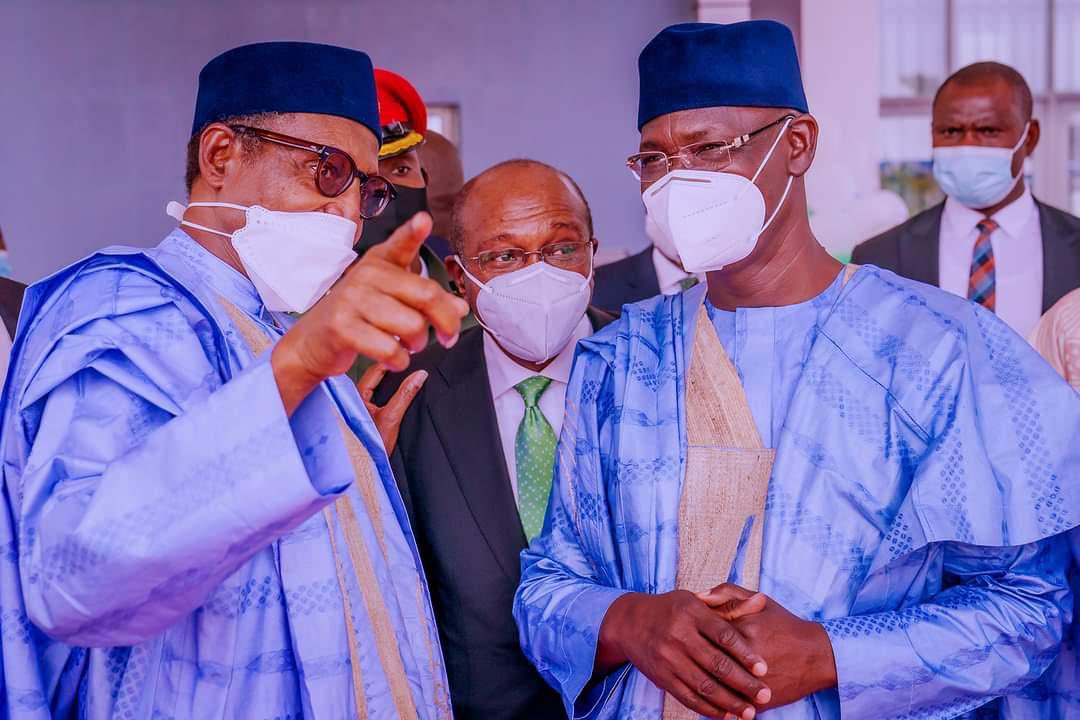
President Muhammadu Buhari has charged the National Council on Climate Change to formulate appropriate policies toward achieving green growth and sustainable economic development for Nigeria.
The president gave the charge while inaugurating the Council before the commencement of the Federal Executive Council meeting in the State House, Abuja, recently.
The president said the inauguration marked the commencement of the implementation of the Climate Change Act 2021 and a new chapter in the renewed response to climate change in the country.
He also directed the Attorney General and Minister of Justice in conjunction with the Minister of Environment to initiate appropriate amendments of “noticeable implementation challenges” inherent in the Act.
While highlighting the losses and damages caused by the recent increasing floods in several parts of the country as well in Pakistan, Bangladesh and other parts of East and Southern Africa, Buhari described climate change as one of the biggest challenges facing humanity.
“It (Climate Change) is complex and dynamic; and requires multidimensional and multi-sectoral initiatives to address its impacts and avert its rapid advance.
“Updated data show increases in sea level rise, heat waves, wild fires, floods, desertification, drying wetlands and many more disruptive climate occurrences.
“The latest Intergovernmental Panel on climate change report warns that rising GreenHouse Gas emissions could soon outstrip the ability of communities to adapt.
“The window for taking decisive steps needed to spare our planet from the gravest impacts of climate change is rapidly narrowing.
“We cannot ignore what is happening in our local environment. The increasing re-occurrence of floods in several parts of the country is a wakeup call,” he said.
The president decried the loss of lives, damage and destruction of infrastructure such as roads, bridges, schools and agricultural production.
Buhari, therefore, reiterated the determination of his administration to strengthen national response to climate change and accelerate the implementation of decisive actions to reduce its impacts on the people and economy.
According to him, Nigeria is a party to the United Nations Framework Convention on Climate Change, which is an established international treaty to combat “dangerous human interference with the climate system”, in part by stabilising GreenHouse Gas concentrations in the atmosphere.
Buhari said: “It is against this background that in Nov. 2021, after COP 26 in Glasgow, I signed the Nigeria Climate Change Act despite noticeable implementation challenges inherent in the Act”.
“ This is to set the framework for mainstreaming climate change action, carbon budgeting and the establishment of the National Council on Climate Change.
“The council is tasked with the responsibility of formulating appropriate policies and other mechanisms for achieving low GreenHouse Gas emissions, including green growth and sustainable economic development for Nigeria.
“In a clear demonstration of our commitments as enshrined in our Nationally Determined Contributions and the Net Zero-Target by 2060, I also approved, on July 25, 2022, the appointment of the Director General and Secretary for the National Council on Climate Change.”
The president, therefore, maintained that those lapses earlier alluded to – which included the establishment of states and Zonal offices creating a huge and costly bureaucracy would not be tolerated.
According to the president, the Act also takes out the Commissioners of Environments from the states as members of Council.
“It also did not make transitional provisions capturing the work of the Inter-ministerial Working Group.
“This group was responsible for Energy Transition, the supervisory oversight of the Ministry of Environment and the establishment of an Executive Management structure at the secretariat level to support the DG in running the Council Secretariat.
“Accordingly, I hereby direct the Attorney General and Minister of Justice in conjunction with the Minister of Environment to initiate the appropriate amendment to reflect these observations,” he said.
Ahead of COP27 in Sharm El Sheikh, Egypt, the president expressed optimism that the National Council on Climate Change would harmonise all issues relating to Climate Change, Energy Transition Plan, Emissions Trading Scheme and the Carbon Trading Framework.
According to him, this is in line with its mandate under the Act, so that Nigeria could have a robust and impactful outing that captures Nigeria’s Climate Change priorities.
He said the composition of the council was a reflection of the magnitude of the problem and the seriousness of the nation’s response.
Buhari added, “it comprises the highest level of governance and a representation of all key sectors of the economy.”
Buhari also used the occasion to thank Vice-President Yemi Osinbajo for heading Nigeria’s Energy Transition Plan, presiding over the global launch of the plan and initiating its marketing by engaging key stakeholders in the United States.
He urged the Council to consolidate on these first steps and ensure a sustained marketing of the plan.
Earlier, the Minister of Environment, Mohammed Abdullahi, thanked the president for “walking the talk” on climate change at the international, regional and national level.
He also lauded him for demonstrating immense leadership towards Nigeria’s quest for net-zero by 2060.
The Council is chaired by the President with the Vice President as Vice Chairman. The Chairman, Nigeria Governors’ Forum, is also a member.
Other members of the Council are the Ministers responsible for Environment; Petroleum Resources; Budget and National Planning; Justice; Mines and Steel Development; Finance; Agriculture and Rural Development; Power; Women Affairs; Transportation; and Water Resources.
The Governor of Central Bank; the National Security Adviser; President of Association Local Governments of Nigeria; a representative of the private sector on climate change or environmental related matters (representative of National Conservation Foundation)are also members of the Council.
Others are; a representative of National Council on Women Societies; a representative of National Youth Congress, and a representative of the Civil Society Organisation.
The Director-General of the National Council on Climate Change, Dr Salisu Dahiru, will serve as Secretary.
The News Agency of Nigeria (NAN) reports that after the inauguration, FEC observed a minute of silence in honour of Ayodele Ogunlade, a former Minister of National Planning, under former Head of State, Sani Abacha, who died on Tuesday aged 88. (NAN)




-

 News3 days ago
RSG Targets Nine Million Residents in Mosquito Net Distribution Campaign
-

 Oil & Energy3 days ago
Aiyedatiwa Signs New Electricity Bill
-

 Oil & Energy3 days ago
NLNG Commissions Research And Innovation Centre In RSU
-

 Maritime3 days ago
Marine Minister Commends President Tinubu On NPERA Bill Assent
-

 News3 days ago
KenPoly Holds Eight Convocations, August 29
-

 News3 days ago
RMAFC Completes Revenue Sharing Review, Proposes New Pay
-

 News3 days ago
RSG Begins Another Phase of Projects Commissioning Today
-

 Maritime3 days ago
NAGAFF Petitions IGP Over Alleged Maritime Police Harassment