Opinion
Mechanism Of Mercenary Mentality
Any activity undertaken by a human being, with monetary and material gains as primary motive or impetus, is one form which a mercenary mentality can take. Like the dangling of a promise of a reward of N36 million for any Nigerian scientist or medical researcher able to find a cure for Coronavirus, mercenaries do things for money, not conviction. Such mind-set born of a worldwide movement into deeper materialism, has some mechanism bearing some observable trends. It’s the opposite of patriotism.
In the history of education in Nigeria, during the colonial era, there was a policy of “Payment by Result”, whereby schools with impressive results received grants from government. How such examination results came about would not be an issue of concern, but what mattered was the “impressive” nature which was the determinant of award of grants. Good results, good grants!
The mechanism of mercenary mentality went to work to craft subtle means of getting impressive school results. School heads and teachers assisted pupils to pass examinations in “flying colours”. It took a long time, after much harm had been done, before obtuse policy makers could figure out that money is a good soldier. Sanctimonious people would talk of examination malpractices but would not search deeper for the causes.
In the university system there is a policy of “publish-or-perish”, whereby promotions of lecturers depend on articles published in “learned” journals, local and international. Like the history of the South Sea Bubble or the Scramble for Africa, humans long for where they can make maximum gain but with minimal investment. The job of teaching demands commitment to the learner as professional priority. Such commitment derives from personal conviction in the worthwhileness of the job and the task involved.
Mechanism of the mercenary mentality went to work to place fame and personal gains in the forefront and commitment to the learner as an unimportant issue. We do not need a microscope to see the result. Who would not want to become a professor at the quickest possible time, if all it would take is to have publications and good rapport with appropriate god-fathers? From fixing of names in other peoples’ works, to several clever tactics, what do we not find in the universities in a hypocritical rat-race to excel?
“The higher you go, the cooler it becomes” is an old maxim which describes the philosophy of the mercenary mentality. To struggle from below is to take the risk of encountering hustlers and predators and so, why not jump to the top by any means, hook or crook? Once at the top, you can afford to pontificate and point out lazy and unpatriotic people.
Would you not want to retire at 70, even when you are 80, with your full salary, benefits and possibly acquire any choice government asset in your custody? To “board last flight” is to run the risk of being left out in grabbing the largesse that Nigeria offers to those in the fore-front. This is why there is hustling, horse trading, rat race, do-or-die affair, etc.
The up-coming version in the mechanism of the mercenary mentality was provided recently by an elder statesman and retired military general, Theophilus Danjuma. Listen to him: “The Nigerian Army under Burutai is working with President Buhari to grab lands from indigenous Nigerian owners and give it to Fulanis from West Africa and turn indigenous Nigerian people and land to modern-day Fulani colony”. Danjuma is not alone in raising this alarm, because, another retired general said so before.
Anyone who had read The Tide newspaper of Friday, February 21, 2020, would recall the scary headline: “Rise Up Against Herdsmen, Danjuma Tells Nigerians”. Ordinary Nigerians battling to find some food for their empty stomachs may not be interested to hear that “Miyetti Allah determines what happens in Presidency” or about the “Army working with Buhari to grab lands, gives same to Fulanis”. Such prospects are scary enough to contemplate.
Mercenaries are not only soldiers fighting a war they know nothing about, but solely for the sake of money and property to loot. Mercenaries are also those who participate in implementation of conspiracies because of ignorance, vengeance, envy or spite, even if they turn around later to shed crocodile tears. For example, we are being told that “the Northern Elders who in 2015 believed that General Buhari had come to redeem the North, have now turned against the President”.
In Shakespeare’s play, The Tempest, we have an illustration of how ambitious Antonio usurped the throne of his brother, Prospero, in collaboration with Alonso, King of Naples who was ill-disposed towards Prospero. Nigerian politicians often see situations better when they have left office, but power remains an ally they rarely forego.
The mechanism of mercenary mentality has an operational system which is built in the mind, with fabrics drawn from intellectual sophistry. No one has disproved the fact that humans are wolves and predators. They can blow hot and cold, depending on where their gain lies, such that the culture of service without reward as a motivator is rare to find. Humans cry wolf when their interest are threatened, but also become wolves when there are booties to share, including land grabbing. You have to be a macho-man to survive.
By: Bright Amirize
Dr. Amirize is a retired lecturer from the Rivers State University, Port Harcourt.

Opinion
Wike VS Soldier’s Altercation: Matters Arising
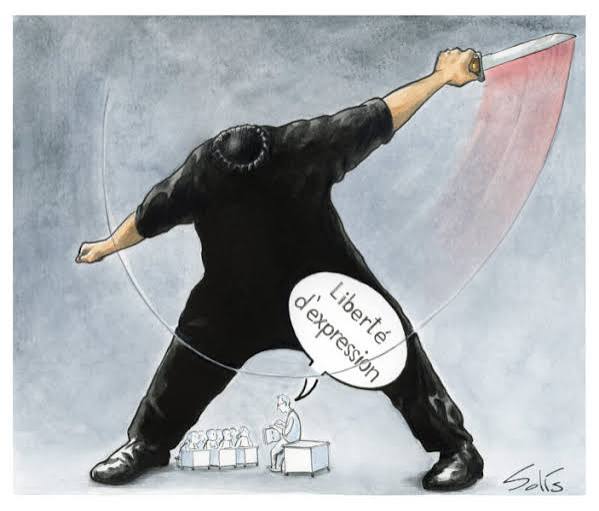
The events that unfolded in Abuja on Tuesday November 11, 2025 between the Minister of the Federal Capital Territory, Chief Nyesom Wike and a detachment of soldiers guarding a disputed property, led by Adams Yerima, a commissioned Naval Officer, may go down as one of the defining images of Nigeria’s democratic contradictions. It was not merely a quarrel over land. It was a confrontation between civil authority and the military legacy that still hovers over our national life.
Nyesom Wike, fiery and fearless as always, was seen on video exchanging words with a uniformed officer who refused to grant him passage to inspect a parcel of land alleged to have been illegally acquired. The minister’s voice rose, his temper flared, and the soldier, too, stood his ground, insisting on his own authority. Around them, aides, security men, and bystanders watched, stunned, as two embodiments of the Nigerian state clashed in the open.
The images spread fast, igniting debates across drawing rooms, beer parlours, and social media platforms. Some hailed Wike for standing up to military arrogance; others scolded him for perceived disrespect to the armed forces. Yet beneath the noise lies a deeper question about what sort of society we are building and whether power in Nigeria truly understands the limits of its own reach.
It is tragic that, more than two decades into civil rule, the relationship between the civilian arm of government and the military remains fragile and poorly understood. The presence of soldiers in a land dispute between private individuals and the city administration is, by all civic standards, an aberration. It recalls a dark era when might was right, and uniforms conferred immunity against accountability.
Wike’s anger, even if fiery, was rooted in a legitimate concern: that no individual, however connected or retired, should deploy the military to protect personal interests. That sentiment echoes the fundamental democratic creed that the law is supreme, not personalities. If his passion overshot decorum, it was perhaps a reflection of a nation weary of impunity.
On the other hand, the soldier in question is a symbol of another truth: that discipline, respect for order, and duty to hierarchy are ingrained in our armed forces. He may have been caught between conflicting instructions one from his superiors, another from a civilian minister exercising his lawful authority. The confusion points not to personal failure but to institutional dysfunction.
It is, therefore, simplistic to turn the incident into a morality play of good versus evil.
*********”**** What happened was an institutional embarrassment. Both men represented facets of the same failing system a polity still learning how to reconcile authority with civility, law with loyalty, and service with restraint.
In fairness, Wike has shown himself as a man of uncommon courage. Whether in Rivers State or at the FCTA, he does not shy away from confrontation. Yet courage without composure often feeds misunderstanding. A public officer must always be the cooler head, even when provoked, because the power of example outweighs the satisfaction of winning an argument.
Conversely, soldiers, too, must be reminded that their uniforms do not place them above civilian oversight. The military exists to defend the nation, not to enforce property claims or intimidate lawful authorities. Their participation in purely civil matters corrodes the image of the institution and erodes public trust.
One cannot overlook the irony: in a country where kidnappers roam highways and bandits sack villages, armed men are posted to guard contested land in the capital. It reflects misplaced priorities and distorted values. The Nigerian soldier, trained to defend sovereignty, should not be drawn into private or bureaucratic tussles.
Sycophancy remains the greatest ailment of our political culture. Many of those who now cheer one side or the other do so not out of conviction but out of convenience. Tomorrow they will switch allegiance. True patriotism lies not in defending personalities but in defending principles. A people enslaved by flattery cannot nurture a culture of justice.
The Nigerian elite must learn to submit to the same laws that govern the poor. When big men fence off public land and use connections to shield their interests, they mock the very constitution they swore to uphold. The FCT, as the mirror of national order, must not become a jungle where only the powerful can build.
The lesson for Wike himself is also clear: power is best exercised with calmness. The weight of his office demands more than bravery; it demands statesmanship. To lead is not merely to command, but to persuade — even those who resist your authority.
Equally, the lesson for the armed forces is that professionalism shines brightest in restraint. Obedience to illegal orders is not loyalty; it is complicity. The soldier who stands on the side of justice protects both his honour and the dignity of his uniform.
The Presidency, too, must see this episode as a wake-up call to clarify institutional boundaries. If soldiers can be drawn into civil enforcement without authorization, then our democracy remains at risk of subtle militarization. The constitution must speak louder than confusion.
The Nigerian public deserves better than spectacles of ego. We crave leaders who rise above emotion and officers who respect civilian supremacy. Our children must not inherit a nation where authority means shouting matches and intimidation in public glare.
Every democracy matures through such tests. What matters is whether we learn the right lessons. The British once had generals who defied parliament; the Americans once fought over states’ rights; Nigeria, too, must pass through her own growing pains but with humility, not hubris.
If the confrontation has stirred discomfort, then perhaps it has done the nation some good. It forces a conversation long overdue: Who truly owns the state — the citizen or the powerful? Can we build a Nigeria where institutions, not individuals, define our destiny?
As the dust settles, both the FCTA and the military hierarchy must conduct impartial investigations. The truth must be established — not to shame anyone, but to restore order. Where laws were broken, consequences must follow. Where misunderstandings occurred, apologies must be offered.
Let the rule of law triumph over the rule of impulse. Let civility triumph over confrontation. Let governance return to the path of dialogue and procedure.
Nigeria cannot continue to oscillate between civilian bravado and military arrogance. Both impulses spring from the same insecurity — the fear of losing control. True leadership lies in the ability to trust institutions to do their work without coercion.
Those who witnessed the clash saw a drama of two gladiators. One in starched khaki, one in well-cut suit. Both proud, both unyielding. But a nation cannot be built on stubbornness; it must be built on understanding. Power, when it meets power, should produce order, not chaos.
We must resist the temptation to glorify temper. Governance is not warfare; it is stewardship. The citizen watches, the world observes, and history records. How we handle moments like this will define our collective maturity.
The confrontation may have ended without violence, but it left deep questions in the national conscience. When men of authority quarrel in the open, institutions tremble. The people, once again, become spectators in a theatre of misplaced pride.
It is time for all who hold office — civilian or military — to remember that they serve under the same flag. That flag is neither khaki nor political colour; it is green-white-green, and it demands humility.
No victor, no vanquish only a lesson for a nation still learning to govern itself with dignity.
By; King Onunwor
Opinion
Ndifon’s Verdict and University Power Reform
Opinion
As Nigeria’s Insecurity Rings Alarm
-
Politics1 day agoSenate Receives Tinubu’s 2026-2028 MTEF/FSP For Approval
-
News1 day agoDangote Unveils N100bn Education Fund For Nigerian Students
-
News1 day agoRSG Lists Key Areas of 2026 Budget
-
News1 day agoTinubu Opens Bodo-Bonny Road …Fubara Expresses Gratitude
-
News1 day ago
Nigeria Tops Countries Ignoring Judgements -ECOWAS Court
-
Featured1 day agoFubara Restates Commitment To Peace, Development …Commissions 10.7km Egbeda–Omerelu Road
-
Sports1 day agoNew W.White Cup: GSS Elekahia Emerged Champions
-
News1 day ago
FG Launches Africa’s First Gas Trading Market, Licenses JEX