
Business
APM Terminals Sets New Safety Record

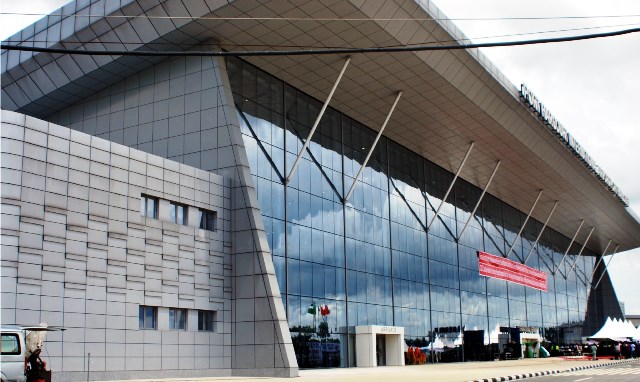
APM Terminals, Apapa, has set a new safety record at the port with 400 days no Lost Time Injury (LTI).
No Lost Time Injury (LTI), a key indicator of the effectiveness of an organisation’s safety programme, means no injury was sustained on the job by an employee or contractor that resulted in the person being away from work due to injury.
The Terminal Manager, APM Terminals Apapa, Mr Steen Knudsen, said this in a statement in Lagos on Monday.
He said the new record was made public at an event to mark the company’s 2022 Global Safety Day in Lagos, with the theme ‘We Learn And We Adapt.’
Knudsen urged the employees to remain safety conscious and to celebrate achieving a huge milestone of going through a whole year without recording any injury.
“All of us here should inculcate the practice of coming forward to report incidents to ensure a more robust safety. Safety is not only for today; safety is tomorrow, day after tomorrow, next week, and so forth.
“Today is about safety and we know the theme, ‘we learn and we adapt’. Reflecting on learning and adapting, and the transformation journey in the last couple of years, we have the ambition to change how we fundamentally do things in APM Terminals.
“We want to be more efficient, give our customers a better experience, deliver more to the Nigerian economy, and do this while ensuring that everyone goes home safe after work.
“In achieving this, learning from the past is critical. We have a lot to learn from happenings in the past. The first stage in any improvement is to realise where you are coming from and improve from there,” he said.
Knudsen added that over the past 16 years since it commenced operations, APM Terminals Apapa had made substantial investment not only in equipment and facility upgrade, but also in continuous training and manpower development.
“We are not only looking at functional skills that enable us work more efficiently and faster, we also look at how we develop our supervisory levels, managerial levels, and front line levels to ensure that we grow the company,” he said.
Also, the Regional Managing Director, Africa and Europe at APM Terminals, Igor Van Den Essen, commended the Apapa team for the major safety milestone, charged them to sustain and improve on the record.
“As we discuss safety while we observe Global Safety Day, we continuously highlight how deeply it impacts our operations and our entire company.
“Being in an asset-heavy industry and due to the nature of our operations, we consider safety to be non-negotiable to us, our people and our partners across the port logistics ecosystem and it is also one of the three pillars of our strategy ‘Safer, Bigger, Better,’”he said.


-

 Featured2 days ago
WASSCE: RSG Distributes Science Materials To Secondary Schools
-
News2 days ago
Xenophobic Attacks: Nigerian Lives More Important Than Foreign Investment – Oshiomhole
-
Rivers2 days ago
MBA Forex Trial Adjourn To June 3, Amid Bereavement … As Court Declines Cost Application
-
News2 days ago
ActionAid Demands Probe Of Govs Using Public Funds For Campaign
-
Aviation2 days ago
Passengers Stranded As Delta Airline From Atlanta Route Back Eight Hours After
-
Business2 days ago
Customs Impound N2.35bn Cocaine, 15 Trailers of Rice
-
Politics2 days ago
2027: Bayelsa Senator Gets Critical Endorsement For Second Term
-

 Politics2 days ago
INEC Sets Rivers South-East Senatorial By-Election For June 20