Connect with us

Editorial

Kudos To Wike On Projects Delivery

Published

on

Port Harcourt, the Rivers State capital and other urban centres have been agog with major activities since
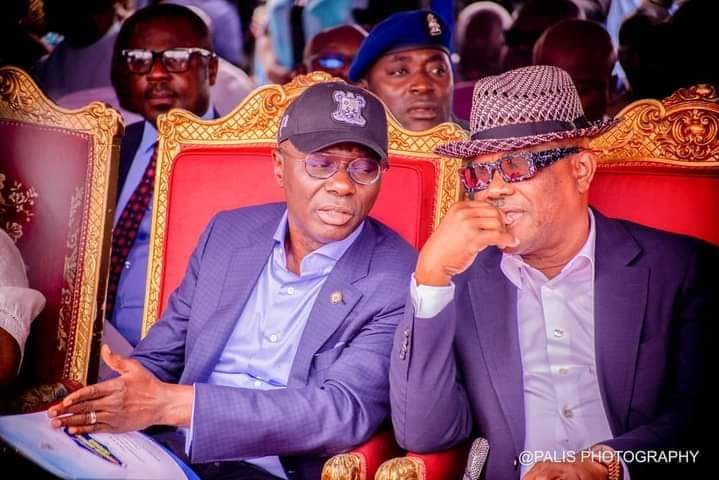
last Monday, as the state government started another round of projects’ commissioning and flag-off across the state. The inauguration started with the unveiling of the Orochiri/Worukwo (Waterlines) Flyover in Port Harcourt City Local Government Area by the Lagos State Governor, Babajide Sanwo-Olu.
Similarly, Governor Nyesom Wike’s administration unveiled the Ogbunabali-Eastern Bypass Road, also in Port Harcourt. The former Sokoto State Governor, Senator Aliyu Wamakko, performed the commissioning. On August 11, the Director-General of the National Youth Service Corps (NYSC), Brig-Gen. M. K Fadah, unveiled the 5,000-capacity NYSC auditorium, while the new State House of Assembly Quarters would be inaugurated by the Speaker, House of Representatives, Rt. Hon. Femi Gbajabiamila today, August 12.
Recall that last Wednesday, August 10, the former Ondo State Governor, Dr Olusegun Mimiko, flagged off the dualisation of Azikiwe-Iloabuchi Road at Diobu in Port Harcourt City. Between August 16 and 26, 10 more projects would either be commissioned or inaugurated across the state. They include the Government VIP Lounge at the Port Harcourt International Airport, Omagwa, in Ikwerre Local Government Area on August 16.
Others are the unveiling of the remodelled Waterlines Building on Port Harcourt/Aba Express Road by Waterlines Junction in Port Harcourt on Wednesday, August 17; flag off of the construction of the 11th flyover at Ikwerre Road by Rumuokwuta/Rumuola Junction in Obio/Akpor Local Government Council on Thursday, August 18; and the inauguration of the 12th flyover at Mgbuoba-Ozuoba/Ada-George Road by Location Junction in Obio/Akpor Council on Friday, August 19.
Additional milestone projects lined up for special commissioning or flag off are the construction of Omagwa internal roads on Saturday, August 20, flag off of Igwuruta internal roads on Monday, August 22, both in Ikwerre Local Government Area, and unveiling of land reclamation, shore protection, road network, drains, power station and water reticulation, as well as housing complex at Ogbum-Nu-Abali sand fill, Port Harcourt, on Tuesday, August 23.
The others are the unveiling of a police station at Ogbum-Nu-Abali sand fill Eastern By-pass area on Wednesday, August 24; Eneka internal roads in Obio/Akpor on Thursday, August 25; and Community Secondary School, Obuama (Harry’s Town), in Degema Local Government Area, Friday, August 26.
Remember that last year, Rivers State was enthralled for about three weeks as distinguished Nigerian citizens joined Wike to either commission or flag off projects in 11 local government areas of the state. They included the Abonnema Ring Road in Akuku-Toru Local Government Area, Bolo internal roads in Ogu/Bolo Local Government Area, Isiodu Road in Emohua Local Government Area, Isiokpo internal roads Phase 2 in Ikwerre Local Government Area and Aluu-Rumuekini Road in Obio/Akpor Local Government Area.
Others were the Mother and Child Hospital, Real Madrid Academy, the 16.6 kilometre dual carriage Saakpenwa/Bori Highway in Khana Local Government Area, and the Sime-Nonwa-Kira Road in Tai Local Government Area, among a host of other projects. Several others were also commissioned. This remarkable development, taking place at a time when most governors use politicking, insecurity, dwindling economy and COVID-19 as excuse for non-performance will remain legendary.
All completed projects are milestones that support meaningful developments. They stand out and have continued to garner credit for the Wike administration from well-intentioned Nigerians and residents of the state. The flyovers, especially add beauty to the Garden City and its surroundings, and their unveiling accentuates another dream realised by the government. They will end the long struggle against the severe traffic congestion at their locations.
Undoubtedly, the projects would restore activities in the inert localities. To claim that the entire people of Rivers State are better off with these projects is to specify the obvious as they would go a long way to promote their socio-economic well-being. Indeed, walking in such splendid structures evokes euphoria and fulfilment in the subconscious of Rivers’ people.
Indeed, The Tide is satisfied with the unfettered initiative by the state governor. We recount how the shattered walls of development and brotherliness were revamped in Wike’s first tenure with sectorial performances and services furnished by strategic institutions of government which have remained efficient under his leadership into his second tenure without any relapse.
The various projects initiated and executed by Wike’s government in parts of Rivers would create employment for a good number of youths in the state. The quantum of civil construction work undertaken by the present administration in developing the state might be cost-intensive, but the overall benefits remain a driving force.
Anyone in the state can attest that the construction of strategic road projects and flyovers has progressed despite Nigeria’s fiscal crisis. We sue for understanding and cooperation from all Rivers people who desire good governance which Wike provides, and urge them to remember the inglorious past when the state was on its knees from where the governor took it up to chart a new course.
Obviously, the government is not neglecting any effort to improve Rivers State. To say that Wike is rapidly transforming the landscape of the state with its gigantic development steps is to affirm the tangible. Within a limited time, the governor has whirled around the entire state into a massive construction site that in every path, substantial development projects are either ongoing or have been finalised.
We join all well-meaning people of Rivers and Nigeria, business organisations and individuals in saluting and exalting the governor in this auspicious celebration of commissioning and launching of projects. The projects on the ground so far indicate an unprecedented transformation of the state, making it a preferred refuge for investors. This gesture is proof of His Excellency’s determination to leave Rivers State better than he met it.

Continue Reading

Editorial

Domesticate FG’s Exit Benefit Scheme 

Published

on

The recent approval of the “Exit Benefit Scheme” by the Federal Executive Council (FEC) stands as a landmark achievement for the administration of President Bola Tinubu. For many observers, this remains one of the most impactful and compassionate policies introduced by the current government. By restoring a sense of financial dignity to those who have dedicated their lives to national service, the administration has demonstrated a clear commitment to the welfare of the Nigerian workforce.
Under this new framework, retirees of the Federal Civil Service are set to receive a gratuity equal to 100 per cent of their last gross annual pay upon retirement. This policy, which officially comes into effect on 1 January 2026, ensures that Federal civil servants are not left stranded the moment they exit the office. It provides a vital financial cushion that has been sorely missing from the lives of many public servants for over two decades.
The primary objective of this scheme is to bolster financial security by providing a significant lump sum payment to eligible employees who have served for at least 10 years. Crucially, this benefit does not exist in isolation; it is designed to work alongside the existing Contributory Pension Scheme (CPS). This dual-layered approach ensures that the immediate transition into retirement is as seamless as the long-term pension disbursements that follow.
It is important to clarify that this new benefit is intended to complement, rather than replace, the current CPS managed by Pension Fund Administrators (PFAs). For years, the pure contributory framework left a void where the traditional gratuity once stood. By reintroducing this payment, the Federal Government is addressing a long-standing grievance regarding the adequacy of the total retirement package available to civil servants.
This policy marks a historic return to gratuity payments for Federal Civil Servants after a lengthy hiatus. Since the pension reforms of the early 2000s, the focus has been strictly on contributions, often leaving retirees with a “waiting period” that can be financially devastating. The return of the gratuity signals a shift back toward a more holistic view of worker appreciation and social security.
Indeed, this payment comes exactly 22 years after the introduction of the Contributory Pension Scheme in 2004. The two-decade gap saw many retirees struggle to adjust to life after service without a substantial initial payout. This intervention demonstrates the Federal Government’s ongoing commitment to policies that promote improved welfare and secure the future of the civil service in a tangible, measurable way.
By reversing the lack of gratuity inherent in the previous purely contributory model, the government has earned the rare and resounding praise of organised labour. The Nigeria Labour Congress (NLC) has rightly described this move as a major welfare upgrade. This endorsement highlights the alignment between the government’s policy direction and the actual needs of the Nigerian worker on the street.
We commend President Tinubu for this watershed approval. The new gratuity payment is a sincere reflection of the administration’s recognition of the dedication, sacrifice, and professionalism inherent in the Federal Civil Service. It acknowledges that those who build the nation’s administrative backbone deserve more than just a handshake and a promise of future monthly stipends when they finally step down.
However, the pursuit of social justice must not end with Federal workers alone. We strongly advocate that this initiative trickles down to the various states. The Governor’s Forum should meet as a matter of urgency to approve and adopt the Federal Government’s template. If the central government can find the means to honour its retirees, the states—who are the primary employers of the bulk of the nation’s workforce—should follow suit.
It is a painful reality that many workers retire from service today with nothing to take home on their final day. Pensions frequently take months to process, and in many jurisdictions, gratuities take “forever” to be disbursed. This is why the Exit Benefit Scheme is the true embodiment of Tinubu’s “Renewed Hope Agenda.” There is perhaps nothing that offers more hope to a weary worker than the certainty of a dignified exit.
Shamefully, several state governments are still battling with legacy gratuity payments from years past. Adopting a scheme like this would serve as an essential cushion while long-term arrears are settled. No citizen should face destitution or death simply because they rendered service to their government. It is time to end the era where retirees survive on mere trickles; even a modest lump sum can be the difference between a dignified retirement and a tragic one.
Specifically, we call upon the Rivers State Government to adopt this scheme to give life to its pensioners. The Federal Government has already provided the successful template; there is no need to reinvent the wheel. We must ask: if political office holders are entitled to generous severance benefits after just four or at most eight years, why should civil servants who serve for 35 years go without a similar “severance” package?
In Rivers State, the need for clarity is urgent. Workers who left the service after June last year face the uncertainty of whether they fall under the Defined Benefit Scheme or the Contributory Pension Scheme. The state government must resolve this administrative ambiguity immediately to prevent a full-blown pension crisis. Domesticating the Federal “largesse” should be straightforward, as Rivers is a state blessed with the necessary resources.
Governor Siminalayi Fubara, a former civil servant, understands the plight of the worker better than most. While we commend his administration for paying one of the highest minimum wages in the country, he has the opportunity to go further by becoming the first governor to implement the 100 per cent Exit Benefit Scheme. With this, he can ensure that Rivers State workers, who deserve the best, are truly rewarded for their service.
Let Rivers lead where others have lagged.
Continue Reading

Editorial

Task Before New IGP 

Published

on

The appointment of Olatunji Disu as Inspector-General of Police following the resignation of Kayode Egbetokun marks a significant turning point for the Nigeria Police Force. Announced by President Bola Tinubu, the change in leadership comes at a time when the country is grappling with serious security concerns. Disu’s emergence has already drawn national attention, given both the urgency of the situation and the expectations placed upon him.
Upon confirmation of his appointment, Disu pledged to justify the confidence reposed in him. Central to his promise is a firm commitment to end impunity and enforce a zero-tolerance policy towards corruption within the force. Such assurances, though commendable, will ultimately be judged by the practical steps he takes in the coming months.
The new IGP also emphasised the importance of public cooperation in effective policing. He rightly noted that no police force anywhere in the world can succeed without the support of the people it serves. This acknowledgement highlights the critical relationship between law enforcement and the community, a relationship that has long been strained in Nigeria.
While congratulating Disu on his elevation, it is important to recognise the enormity of the task before him. He assumes office at a particularly difficult time, as underscored by the President during the decoration ceremony. Nigeria’s security landscape remains fragile, requiring decisive leadership and immediate action.
President Tinubu described the appointment as coming at a defining moment for national security. He urged the new police chief to restore public confidence and improve the institution he now leads. The expectation is not merely to maintain the status quo, but to leave the force better than he met it.
The security challenges confronting the nation are considerable. From banditry and terrorism to organised crime and communal conflicts, the threats are diverse and deeply entrenched. These issues have not only endangered lives and property but have also heightened public anxiety across the country.
Ironically, the police, who are meant to be at the forefront of restoring law and order, are themselves beset by internal challenges. Issues such as poor welfare, inadequate training, and systemic corruption have weakened the institution’s effectiveness. This dual burden makes Disu’s assignment even more complex.
A key priority for the new IGP must, therefore, be to restore peace and rebuild confidence, both within the force and among the general public. For many Nigerians, the police are no longer seen as protectors but as adversaries. This perception, whether wholly justified or not, must be urgently addressed.
Cleaning up the force and restoring its credibility will require more than rhetoric. Disu has already made the necessary commitments, but Nigerians will expect tangible results. Institutional reform must be thorough, transparent, and sustained if it is to yield meaningful change.
Equally important is the welfare of police personnel. Many officers operate under extremely poor conditions, with inadequate facilities and insufficient resources. Numerous police stations across the country are in a deplorable state, lacking basic equipment needed for effective policing.
No organisation can function optimally under such circumstances. If the police are to fulfil their constitutional mandate, they must be properly equipped and motivated. Addressing issues of welfare and infrastructure will go a long way in boosting morale and enhancing performance.
The list of challenges before the new police chief is extensive. From modernising equipment to improving training and discipline, the reforms required are wide-ranging. It is hoped that Disu will take the time to carefully assess these issues and implement practical solutions.
His appointment also comes amid growing calls for the establishment of state police. There is now a broad national consensus that the current centralised policing system is inadequate for addressing local security challenges. This debate has brought renewed attention to constitutional provisions governing policing in Nigeria.
While concerns about the potential pitfalls of state policing remain, its advantages appear increasingly compelling. Managing this transition, if it materialises, will be another critical responsibility for Disu. Ultimately, he assumes office with considerable goodwill, but his success will depend on his ability to translate promises into measurable improvements.
The success or failure of Olatunji Disu will be measured not by promises made but by results achieved. Nigerians yearn for a police force that is professional, accountable, and truly committed to their safety. If Disu can rise to this moment, confront entrenched challenges with courage, and drive meaningful reform, he will not only justify his appointment but also leave a lasting legacy in the annals of policing in Nigeria.
Continue Reading

Editorial

Nigeria: Cushioning Effects Of M’East Crisis 

Published

on

The ongoing crisis in the Middle East between the United States and Israel on one hand and Iran on the other has once again unsettled global stability, with escalating tensions disrupting oil production routes and threatening key supply chains. Conflicts involving major oil-producing nations and strategic waterways have created uncertainty in the international energy market. As history has repeatedly shown, instability in this region often sends shockwaves across the global economy, particularly in energy-dependent countries.
One of the most immediate consequences of this war has been a sharp rise in global crude oil prices. Brent Crude has surged between $105 and $110 per barrel in recent weeks, reflecting fears of supply shortages. This increase has translated into higher fuel costs worldwide, placing immense pressure on both developed and developing economies.
Nigeria, despite being a major crude oil producer, has not been spared. The country’s heavy reliance on imported refined petroleum products has meant that global price increases directly affect domestic fuel costs. Rather than benefiting fully from higher crude prices, Nigerians are grappling with the paradox of rising oil wealth alongside worsening living conditions.
The impact on the cost of living has been severe. Transportation fares across major cities have increased by over 50 per cent, while food inflation has climbed above 30 per cent, according to recent data from the National Bureau of Statistics (NBS). The ripple effect of higher fuel prices has touched every sector, from agriculture to manufacturing, making basic goods increasingly unaffordable for ordinary citizens.
In response to this growing hardship, the Nigeria Labour Congress (NLC) has demanded urgent intervention from the Federal Government to cushion the effects of the recent spike in petrol prices occasioned by the Middle East crisis. The call reflects widespread frustration among workers and the broader population.
The NLC made this demand in a statement titled “Save Nigerians From This Shock: An Urgent Relief Has Become Necessary,” signed by its President, Joe Ajaero. The statement underscores the urgency of the situation and highlights the growing disconnect between government policy and the lived realities of citizens.
We strongly support the NLC’s clarion call and urge the administration of President Bola Tinubu to take immediate and decisive steps to cushion the harsh effects of the crisis on Nigerians. Leadership at this critical moment requires bold, people-centred policies that prioritise national welfare over market orthodoxy.
One such step is the reintroduction of a fuel subsidy, funded by the gains from the current surge in global crude oil prices. The government could choose to subsidise either the finished petroleum products or the crude supplied to local refiners. Providing crude at reduced rates to Aliko Dangote refinery would significantly lower the final pump price for consumers.
This brings into focus the role of Dangote, whose refinery has the potential to transform Nigeria’s energy landscape. Dangote has stated that the Federal Government currently supplies only 30 per cent of the crude required for his refinery, compelling him to import the remaining 70 per cent. For a country that produces millions of barrels daily, this situation is both inefficient and unacceptable.
Beyond fuel pricing, there is a pressing need for direct support to workers. A cost-of-living allowance, a wage award, and targeted tax relief measures would provide immediate relief. At the same time, the government must take concrete steps to revive Nigeria’s dormant public refineries, which have long been a drain on public resources without delivering value.
The sharp rise in fuel prices, now selling at approximately N1,310 to N1,400 per litre in many parts of the country, has deepened economic hardship. For millions of Nigerians, daily survival has become a struggle. Without urgent intervention, the nation risks severe social unrest, as frustration continues to mount among the populace.
It is deeply troubling that the Federal Government appears to have left Nigerians at the mercy of volatile global oil prices triggered by the Middle East imbroglio. This situation has exposed the fragility of the downstream petroleum sector and highlighted the failure to build resilience despite decades of oil wealth.
As long as Nigeria remains tied to a market-driven pricing structure dictated by global fluctuations and continues to neglect its domestic refining capacity, it will remain vulnerable to external shocks. International conflicts and speculative market forces will continue to dictate the economic fate of Nigerian households.
Nigerian workers are being pauperised and subjected to immense suffering. They are not mere statistics; they are the engine of the nation’s economy. When that engine overheats, the entire system risks collapse. Ignoring their plight is not just unjust—it is economically reckless.
Finally, the estimated N30 trillion oil windfall expected from the current crisis must not be squandered as in the past. These resources should be transparently managed and invested in social protection programmes, infrastructure, and economic stabilisation. In addition, Nigeria must develop robust crude storage systems, as seen in other countries, to cushion future shocks. Failure to properly manage the energy situation could further accelerate inflation, compounding the already substantial burden on citizens.
Continue Reading

Trending