
Business
Govt Designates Dry Ports As Ports Of Origin, Destination

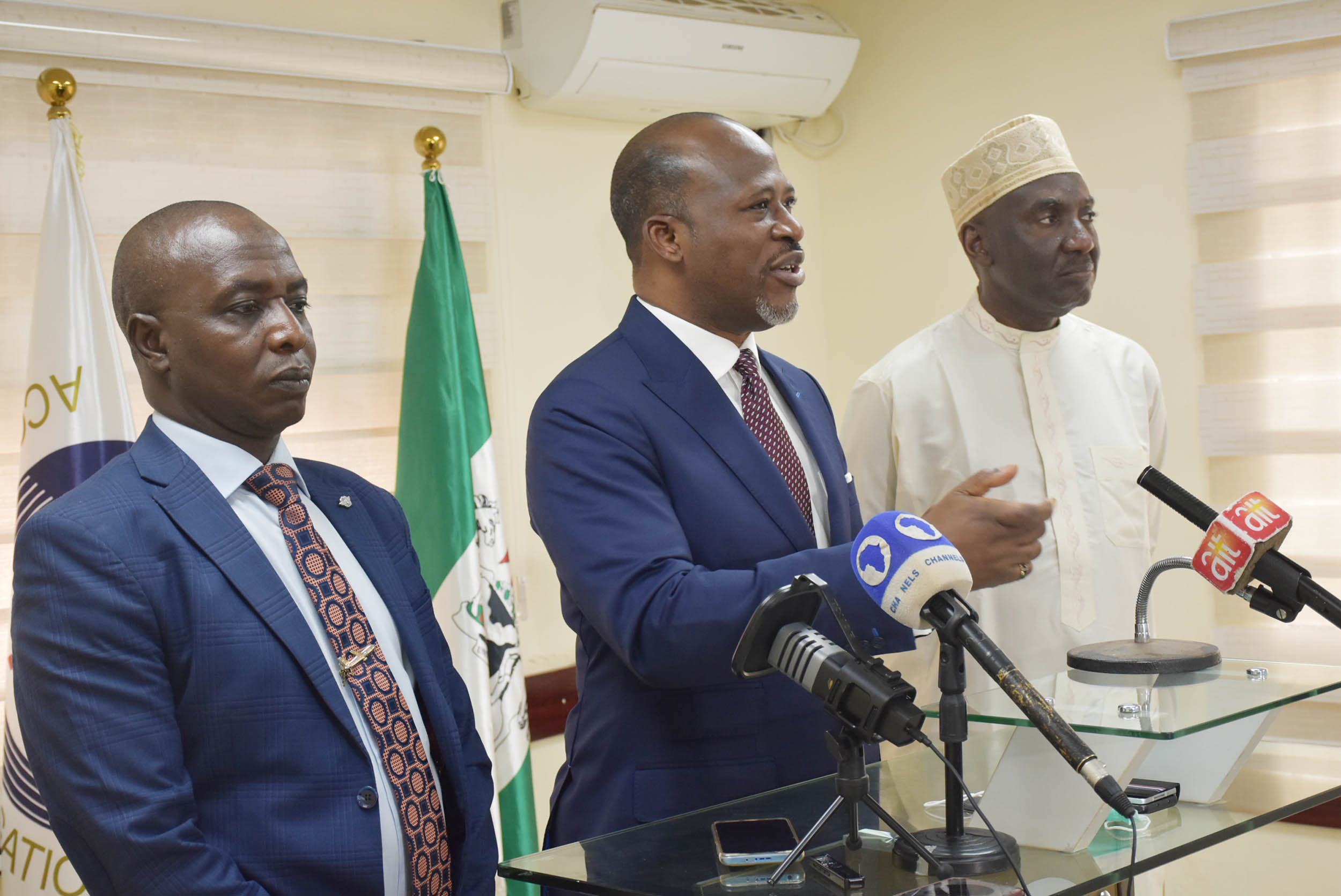
The Federal Government, through its Federal Ministry of Transportation, says it has started moves to designate Inland Dry Ports (IDP’s) as Ports of origin and destination across the country.
Executive Secretary, Nigerian Shippers Council (NSC), Mr Emmanuel Jime, stated this during the launch of the Operational Manual for Inland Dry Ports in Nigeria, which provides the processes and procedures for the Inland Dry Ports.
Mr. Jime, who pledged that operators and the regulators would be mandated to abide by the processes in the manual to address the gaps, boost transparency, and accountability in the sector, said modalities are being put in place.
“The Federal Ministry of Transportation has begun moves to designate Inland Dry Ports in Nigeria as ports of destination and ports of origin to enable them function the same way a seaport will function.
“In addition to this, agencies of government, as present inside the seaports, will be present inside the Inland Dry Ports.
“As a matter of fact, we expect the Inland Dry Ports to be more efficient than the seaports because we are learning from the mistakes made at the seaports in order not to replicate the same at the dry ports.
“As you are aware, the Council is the supervising and implementing agency of the Dry Port projects in the country”, he said.
The NSC Chief explained that activities in the manual include container import by rail, container export by rail, container import by truck, container export by truck, customs controls and empty container storage.
“The Inland Dry Port projects were conceived as part of the Federal Government’s reform programme in the Transport sector to promote efficient transportation, enhance efficiency at our ports and to engender trade facilitation.
“Consequently, the Federal Executive Council granted approval for the establishment of Inland Dry Ports in March, 2006 at six locations across the Country namely: Isiala- Ngwa – Abia State; Erunmu Ibadan- Oyo State; Heipang Jos – Plateau State; Funtua – Katsina State; Maiduguri – Borno State and Dala, Kano State which is to be commissioned very soon.
“Address Dry Port operations procedures as it relates to export and import activities; align Dry Port Operations to international best practices; and ensure standard quality control in dry port operations.
“The Manual, according to him, is based on best international practice adapted to suit the Nigerian context. Indeed each dry port will have its specialties, organisational implementation, layout constraints, and services offered and would therefore amend aspects of the manual on a case-by-case basis.
“It may be pertinent to state that this Manual would be used as a measure of performance by the regulator (in this case, the Nigerian Shippers Council) and will be subjected to future review to be in tandem with obtainable best practices, upon agreement of the two parties (the operator and the regulator).
“The launching of the Manual marks yet another milestone in the successful development and operation of the IDP projects in Nigeria”, he stated.
Earlier, the Minister of Transportation, Alhaji Mu’azu Jaji Sambo, explained that the projects were conceived as part of the Federal Government’s Ports Reform Programme designed, among others, to decongest the seaports, while also taking shipping and port services closer to importers and exporters in the hinterland.
Represented by the Ministry’s Deputy Director, Inland Container Depot, Mr. Ewache Victor, the Minister said in addition to the above six gazetted Inland Dry Ports, approval was also granted for the upgrade of Kaduna ICNL Bonded Terminal to a full-fledged Dry Port.
“This was on the request of the Kaduna State government in 2008 resulting in approval by the Federal Executive Council. In April, 2018, the Kaduna Inland Dry Port was officially gazetted as a port of Origin and Final Destination, considering the level of development and the commitment of the Concessionaire to the project.
“Also, other Inland Dry Ports are being processed in the following locations: Elolo ICD, Kebbi State by Deltatlantic Nig. Limited; Dagbolu ICD, Osun State by Osun State Government; Onitsha ICD, Anambra State by Sea Shipping Agency Limited; Ibadan ICD, Oyo State by CRCC Construction Company Limited; AMES Edo ICD, Edo State by Atlantic Marine and Engineering Services Limited; Bauchi ICD, by Bauchi State Government; Enyimba Economic City ICD, Abia State.”


Business
IPMAN Raises Concern Over Delay In Chinese Refinery Deal …Predicts Lower Fuel Prices Through Competition


-
Rivers3 days ago
Rivers Police Uncovers Firearm Concealed In Loaf Of Bread
-

 Niger Delta3 days ago
Pro-Chancellor Hands Over Okey Onuchuku Peace, Conflict Institute Building
-
Sports3 days ago
Six Nigerians To Play For NBA Teams
-

 Business3 days ago
IPMAN Raises Concern Over Delay In Chinese Refinery Deal …Predicts Lower Fuel Prices Through Competition
-

 News3 days ago
Fubara Reaffirms Commitment To Blue Economy, Private Sector Growth …Calls For Protection Of Marine Resources
-
Business3 days ago
Gas Economy: Decade of Gas, Pi-CNG/ EV Deepen Media Engagement
-

 Politics3 days ago
Senate Defends Passage Of State Police Bill
-
Sports3 days ago
NPFL Warns Newly Promoted Clubs