
Politics
Shekarau, Kwankwaso Team Up Against Ganduje In Kano

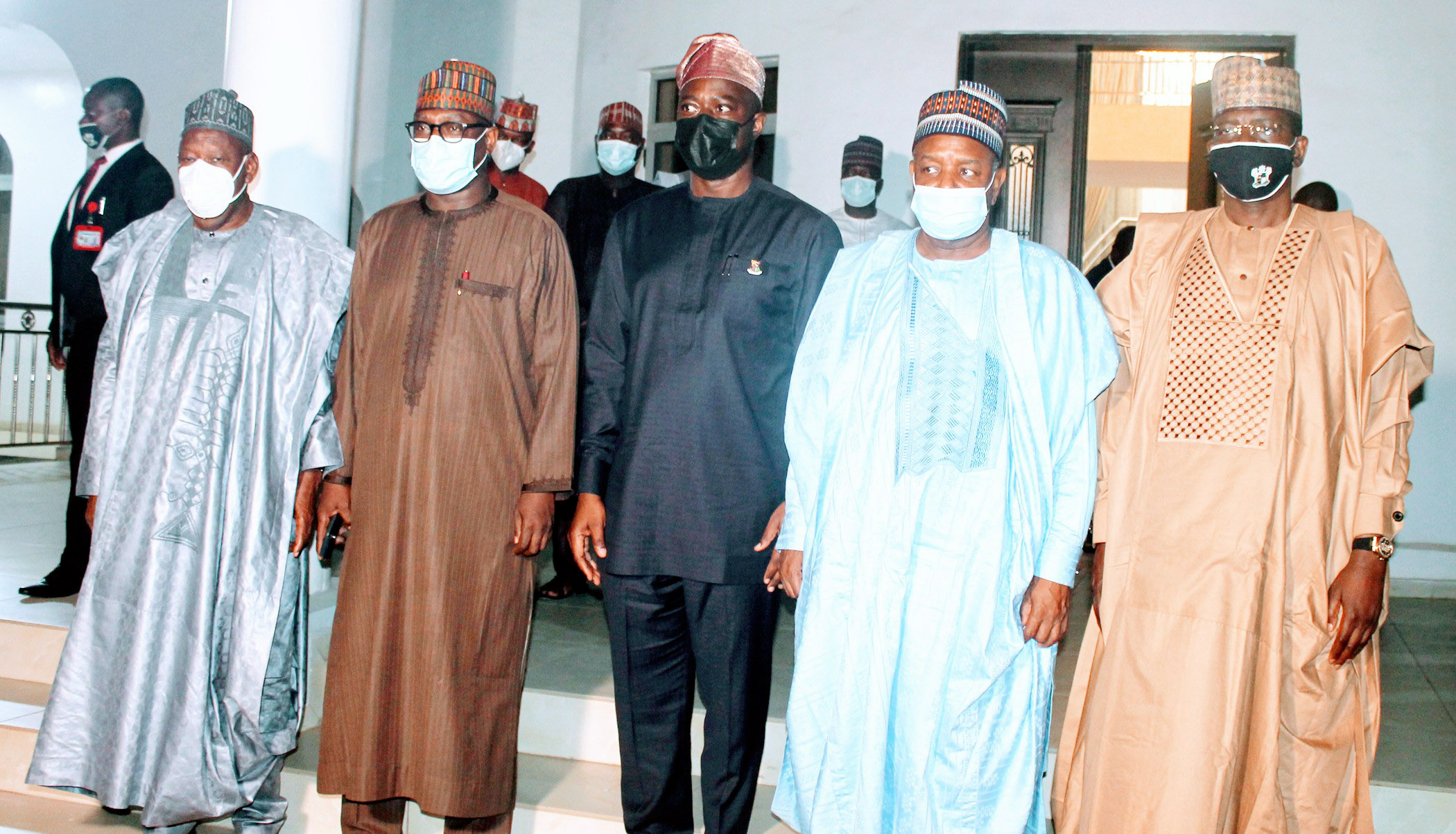
Following the formal defection of former Kano State Governor, Malam Ibrahim Shekarau, from the ruling All Progressives Congress (APC) to the New Nigeria Peoples Party (NNPP), the political alignment in the state has taken a different shape, TheTide source reports.
Shekarau, the Senator representing Kano Central, picked up his NNPP membership card at his Giginyu Ward on Wednesday after several days of back and forth on the defection.
The National Leader of NNPP and its presidential aspirant, Rabiu Musa Kwankwaso, also a former Governor of Kano State, was among the bigwigs of Kano politics that were at the event to receive Shekarau into NNPP; a union some political analysts described as a marriage of convenience.
Our source further reports that Kwankwaso personally handed over Shekarau’s membership card, with the Shura Council, Shekarau’s political structure’s highest decision-making body, also in attendance.
This is the first time that Shekarau and Kwankwaso will go into general elections as members of the same party, and with both of them considered as two of three strongest politicians in the state, their alignment is being seen as a game changer.
Since the crisis within Kano APC led to the emergence of the G-7 faction led by Shekarau in late 2021, observers had forecast that as long as the crisis is left to be resolved via the court system where only one winner would emerge, it would be impossible to have Shekarau and the current Governor, Abdullahi Umar Ganduje in the same party come 2023.
This forecast became evident days before the Supreme Court decided the matter in favour of Governor Ganduje as Shekarau was reported to have said that if the apex court’s decision did not favour them (G-7), they will stop over at the famous Yan Lemo fruits’ market at the entrance of Kano. The insignia of the new but fast growing NNPP is a variety of fruits.
After the apex court’s judgment, a lot of politicking took place, most of them in the dead of the night, to broker peace between Ganduje and Shekarau and convince the latter to rescind his decision to leave the APC, but all were to no avail as both sides could not come to agreement on demands made from each other.
But before Shekarau’s formal defection, some other members of G-7 had all defected to the NNPP and were seen at the forefront of convincing Shekarau to also join them in the new party.
Before this chain of defection, at least 17 members of Kano State House of Assembly had defected from both the Peoples Democratic Party (PDP) and the APC to the NNPP.
All these defections, which culminated with Shekarau’s move on Wednesday, has now changed the permutations and political alignment in Kano State ahead of the 2023 general elections.
Political analysts observed that before the emergence and sudden growth of the NNPP, PDP was hitherto considered as the main opposition in Kano and was expected to provide a formidable competition to the APC in 2023 as it did in 2019.
But with the party (PDP) engrossed with its own leadership problem between the camps of its chairman, Shehu Sagagi (a loyalist of Kwankwasiyya Movement) and that of a former Minister of Foreign Affairs, Aminu Wali, the party has continued to struggle to put its house in order.
In 2019, when the opposition (PDP) was coasting to victory before the election was declared inconclusive, the party had its major strength from Kwankwaso and his Kwankwasiyya Movement, which marshalled supports and votes for its then candidate, Abba Yusuf (popularly known as Abba Gida-Gida) against Ganduje.
Unlike in 2019 when Governor Ganduje had the support of Shekarau to defeat his major challenger, Yusuf, the governor’s candidate in 2023 will not only not be able to call on Shekarau’s support but will now have to contend against the joint force of the NNPP, filled majorly by politicians that felt slighted by him (Ganduje) and APC.
Recall that Ganduje-led APC stakeholders had endorsed the current deputy governor, Nasir Yusuf Gawuna and former Commissioner for Local Government and Chieftaincy Affairs, Murtala Sule-Garo to clinch the joint governorship and deputy governorship ticket of the party.
This decision was one of the developments that led to the mass exodus of APC bigwigs, especially from Kano South to the NNPP.
Kano South is believed to be central to the permutations of all the parties in Kano, and the battle is expected to come from that axis, especially with the latest alignment.
Alhassan Rurum, who is currently a House of Representatives member for Rano/Kibiya/Bunkure, was among those hoping to clinch the governorship ticket of APC before it was handed over to Gawuna, and he was hinging his ambition on the fact that his zone (Kano South) has not produced a governor or deputy since 1992.
Abdulrahman Kawu Sumaila, a former legislative aide to President Muhammadu Buhari, is also targeting the Kano South senatorial ticket, currently held by Senator Kabiru Gaya. This is even as the immediate past Commissioner for Budget and Planning, Nura Dankadai, is planning to unseat the House Leader, Alhassan Doguwa, as representative of Doguwa/Tudunwada at the green chamber.
The ambition of Dankadai, who is believed to be a major local mobiliser in Kano South, may also change permutations at the federal level for APC as the Doguwa is believed to be prepping up to become the Speaker of the House of Representatives in 2023.
Elsewhere, in Kano North, the recent peace parley between Ganduje and Senator Barau Jibrin, another leader of the G-7, seems to have doused the tension in the axis, especially as it was reported that the governor has agreed to step down his senatorial ambition for Barau’s return to the red chamber. Barau was a front runner for the governorship seat until the endorsement of Gawuna. He thereafter abandoned his gubernatorial ambition.
But there are still fears within the APC that unless the party is able to resolve the animosity between Barau and Sule-Garo (the anointed deputy governorship aspirant), the party may still implode, especially with talks of dissatisfaction in the camp of Sule-Garo over the peace parley between Ganduje and Barau.
In Kano Central, Senator Bashir Lado, Abdulkarim A. Zaura and Barrister Ismaeel Ahmed, all in the camp of the governor, are expected to test their popularity at the party’s primaries to know who will contest against Shekarau of the NNPP for the senate seat.
The Kano central has always been seen as a stronghold of Kwankwasiyya while Kano north and south belong to governor Ganduje and APC as evidenced during the 2019 elections. However, many observers see the Kwankwaso/Shekarau merger and the recent high-profile defection to NNPP from Kano south as a serious threat that could lead to the defeat of the ruling APC.
But some APC insiders believe that Ganduje’s reconciliation with Senator Barau of Kano north and the fact that Gawuna hails from Kano central as well as the incumbency factor will help them retain Nigeria’s most populous state.
Commenting, Dr Aminu Hayatu, a political analyst and lecturer at the Department of Political Science, Bayero University, Kano, (BUK), is of the opinion that as much as Kwankwaso and Shekarau’s union has changed the political alignment and permutations in Kano, the real challenge will come after the party’s primaries or shortly after the party retains power.
He said, “His NNPP is no doubt an alternative force that has the promise of neutralising the arrogance of the ruling party, basically in Kano, and the incompetence of the PDP as a supposed opposition.
“But Kwankwaso’s major dilemma is that, most of those defecting to the NNPP are just after what they can personally gain from the party’s elective positions and appointments.”
Hayatu, therefore, believes that while NNPP has the potential to “capture power at least in Kano and some few Northern states maybe, but it may, if care is not taken, run into post-victory crises arising from different kinds of grievances.”


Delegates at the convention, held at the Eagle Square, also produced a new national working committee (NWC) through a consensus arrangement endorsed by stakeholders.
Dr Ben Nwoye was named deputy national chairman (south), replacing Mr Emma Eneukwu, following consultations within the party.
Sources within the party said the decision was influenced by zoning considerations and consultations among party leaders, with Mr Peter Mbah, Enugu State governor, playing a significant role in ensuring Dr Nwoye’s inclusion.
In his acceptance speech, Prof. Yilwatda said his re-election was a call to greater service and pledged commitment to unity within the ruling party.
“We are ready to serve, ready to lead, and we are ready to build the party, together with the nation,” he said.
He added that the new leadership would not “fail or falter” in carrying out its responsibilities.
President Bola Tinubu, Vice-President Kashim Shettima, governors, members of the national assembly, and other party leaders graced the convention.
FULL LIST OF APC NWC
• National chairman — Nentawe Yilwatda
• Deputy national chairman (north) — Ali Bukar Dalori
• Deputy national chairman (south) — Benjamin Obi Nwoye
• National secretary — Surajudeen Ajibola Basiru
• Deputy national secretary — AbdulKarim Abubakar Kana
• National legal adviser — Murtala Aliyu Kankia
• National treasurer — Uguru Mathew Ofoke
• National financial secretary — Haruna Ginsau
• National organising secretary — Muhammad Sulaiman Argungu
• National welfare secretary — Donatus Enyinnah Nwankpa
• National publicity secretary — Felix Morka
• National auditor — Abubakar Maikafi
National women leader — Mary A. Idele
• National youth leader — Dayo Israel
• National leader (persons with disabilities) — Durotolu Oyebode Bankole
• Deputy national financial secretary — Hammam Adamu Ali Kumo
• Deputy national organising secretary — Emeka Okafor
• Deputy national women leader — Zainab Abubakar Ibrahim
• Deputy national publicity secretary — Meseko Durosinmi Josiah
• Deputy national welfare secretary — Christopher Michael Akpan
• Deputy national auditor — Olugbenga Olayemi
• Deputy national legal adviser — Ibrahim Salawu
• Deputy national treasurer — Ben Akak
• Deputy national youth leader — Jamaludeen Kabiru
• National ex-officio (north-central) — Opawoye Oluwatoyin Bunmi
• National ex-officio (north-east) — Adamu Jallah
• National ex-officio (north-west) — Kano Muhammed Jamu Yusuf
• National ex-officio (south-east) — Ikechukwu Umeh
• National ex-officio (south-south) — Francis Kolokolo.
-
Opinion1 day ago
Ozoro Festival: Tradition or Tyranny?
-

 News2 days ago
RSG Reiterates Commitment To Youth Dev
-

 Oil & Energy2 days ago
Transcorp Energy, Renewvia Partner On Renewable Energy Gap
-

 Business2 days ago
NSCDC Discloses Illegal Dump Site In Ikwerre Community
-
Politics24 hours ago
RIVERS WOMEN RALLY SUPPORT, CONTINUOUS PRAYERS FOR TINUBU
-

 Business2 days ago
Yenagoa’s Radisson Hotel Ready December — NCDMB, Other
-

 Rivers2 days ago
Police Launch Community-Centred National Day Celebration In Rivers, Today
-

 Maritime2 days ago
MWUN Raises Alarm Over Port Security Lapses In Lagos