
Opinion
That Needless Hijab Controversy

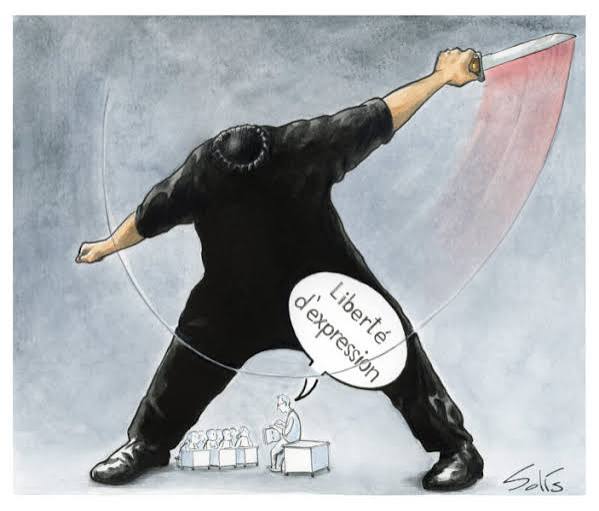
Considering the numerous problems that citizens in the country are grappling with currently, one would have thought that an inconsequential issue like wearing of hijab to school or otherwise should be the last thing on their mind right now. People are being killed every day, the economy is biting harder, the Academic Staff Union of Universities (ASUU) is threatening to embark on yet another strike, the quality of education in Nigeria keeps going down and what some are worried about is who wears whatever clothes to school?
Last week, the lingering controversy over the use or otherwise of hijab by female students in government-funded missionary schools in Kwara State reared its ugly head again with some students of Baptist High School, Ijagbo, in Oyun Local Government Area taking to the streets to protest the use of hijab. The fracas that ensued reportedly claimed one life and left several others injured.
A similar thing happened last year as Muslim and Christian parents in one of the affected schools clashed during a protest, hauling objects at themselves after female Muslim students in hijab were denied entry to the school.
It is disheartening how family members, friends, colleagues and playmates will turn enemies within a twinkle of an eye and start fighting and wounding each other over some negligible thing like clothing. A religious head covering has now become a reason to kill and maim. But have the parents, religious leaders and those in authority in Kwara State stopped to ask what this unnecessary fight is doing to the psyche of these young ones? Have they pondered on the future relationship between these teenagers if in these early days of their lives they are being made to know that there is a difference between Christians and Muslims and that they should not coexist?
Often, we lament about how fractured the country has become. Ethnicity, tribalism, are now the order of the day. We want to remain one indivisible entity, yet by our actions and speeches, we constantly pass a different message to the younger ones. I have a Christian friend whose neighbour is a Muslim. They both have children of the same age bracket. These women forbid their children from relating with children of other religions and tribes in the compound. But behold, at the slightest opportunity, when their parents are away, you will hear “Mary, Aisha, David, Nazir come let us go and play.” That is how pure their minds are. But we adults keep spoiling them.
On the issue at hand, it has been allegations and counter allegations between the Christian leaders and the Kwara State Government over who and what started the controversy and the ownership of those schools. “All the schools are government controlled and fully funded, they are not Christian schools”, Governor AbdulRahman AbdulRazaq of Kwara State was recently quoted as saying, “No doubt, the schools were started by missionaries in Kwara State but in 1974, Yakubu Gowon’s government passed a decree taking over all the schools in the state, so, the missionaries lost schools to states. Kwara State took over the schools but out of sentiment, did not change the names of the schools like most other states did. So, when the hijab issue came up in some schools, they went to court and it was ruled that the students who wish to wear the hijab, could do so. Any private school can have their own uniform and insist on what their students must wear but female students in government schools can wear their hijab, that’s what the court said”, he added.
The governor insisted that he had nothing against Christians, but that the state was only obeying the court’s ruling; that the schools were no longer owned by the missionaries although they retained their names.
On the other hand, the Christian Association of Nigeria (CAN), Kwara State chapter, continues to lay claim on the government-funded mission schools, claiming that it never signed any agreement with the state government allowing the use of hijab in all the grant-aided schools.
Speaking through their state Acting Chairman, Bishop Samson Adewole, CAN, said, “we reiterate for the umpteenth time that at no time did Kwara CAN and stakeholders sign/concede to any agreement or policy with the Kwara State Government on the use of hijab as it is being claimed by the government. The usage of hijab in Christian Missions schools in Ilorin metropolis was forcefully implemented and imposed.”
The association attributed last week’s crisis at Oyun Baptist High School (OBHS) Ijagbo to the government’s delay in responding to CAN’s appeal that the state government should intervene in the crisis brewing there.
Apparently, there is more to this issue than meets the eye. But some of the questions that are begging for answers are: what were the terms of the government takeover of these mission schools? Were the original owners allowed some rights over the administration of the schools? If it was a partial takeover or a sort of partnership arrangement where the two parties have distinct roles to play, then CAN’s insistence that no female student should wear a head covering to school would make more sense.
But if going by the government’s account that those schools in question are now totally government owned, meaning that the government now calls the shots then I do not see the logic in the original owners of these institutions insisting that they must have their way in the ongoing hijab controversy and in other issues for that matter. Yes, as former owners who invested so much in the schools, the government may consult them on certain issues but the government is not obligated to abide by their suggestions. Anyway, the good thing is that the matter is now at the Supreme Court. We wait anxiously to see how it pans out.
Be that as it may, what is needed in Kwara State now is peace and tranquility. Kwara State is rated as one of the few states in Nigeria where religion was never an issue. Members of the two dominant religions related very well and that should not change now because of something as insignificant as a head covering. But the needed peace cannot be gotten if the two parties in this conflict are not willing to shift grounds. If the government’s claim that those schools are now public schools is anything to go by, then the former owners should consider allowing the government’s wishes to prevail.
By: Calista Ezeaku



Quote: “Ogoniland does not
The latest attack by Chief
Instead, the gathering and
The proposal for a unified
The question should be: who
It is easy to criticise
The people are looking beyond
onest people can reach
Society must therefore
Quote: “Privilege should
There is an old saying that
While motivations cannot
A person who benefits from a
This is why citizens should
We must not assume that
By: Michael Abraham
Quote:”Although the Federal
The recent outburst by the
The senator also alleged
They connect ports, airports,
To address these challenges,
Rwanda and Morocco, for
FERMA should also prioritize
Many Nigerians have asked
-

 News2 days ago
RSG Targets Nine Million Residents in Mosquito Net Distribution Campaign
-

 Oil & Energy2 days ago
Aiyedatiwa Signs New Electricity Bill
-

 Oil & Energy2 days ago
NLNG Commissions Research And Innovation Centre In RSU
-

 Maritime2 days ago
Marine Minister Commends President Tinubu On NPERA Bill Assent
-

 News2 days ago
KenPoly Holds Eight Convocations, August 29
-

 News2 days ago
RSG Begins Another Phase of Projects Commissioning Today
-

 News2 days ago
RMAFC Completes Revenue Sharing Review, Proposes New Pay
-

 Maritime2 days ago
NAGAFF Petitions IGP Over Alleged Maritime Police Harassment