Connect with us

Business

Fuel Price Increase: NLC Threatens To Shut Down Nigeria

Published

on

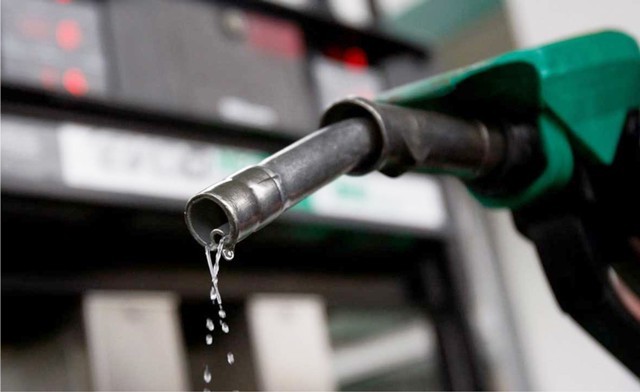
For the umpteenth time, the Nigeria Labour Congress (NLC) has warned the Federal Government against further increase in the pump price of fuel in the country and called on the Nigerian workers to prepare for total war against the fuel price hike.
The organised labour insisted that workers and masses would not accept any further increase in the pump price of fuel in the name of subsidy removal.
The NLC President, Comrade Ayuba Wabba, gave the warning in a New Year message to workers.
He also named Zamfara, Taraba, Benue, Kogi, Cross River, Abia and Imo states as seven states yet to implement the N30,000 minimum wage that took effect on April 18, 2019.
In the message titled “The Year 2022 Felicitations: Keeping Our Hopes And Aspirations Alive In The New Year”, NLC directed the affected states to commence indefinite strikes to force the respective state governments to implement the new wage.
NLC, in a 9-page statement, said the government was not relenting in its determination to push through further increases in the pump price of petrol in the name of “removal of petrol subsidy”.
It said, “We have told the government in very clear terms that Nigerians have suffered enough and will not endure more punishment by way of further petrol and electricity price increases.
“Our position in this regard is predicated on four major grounds. First is our concern on the deceit and duplicity associated with the politics of ‘petrol price increase’ by successive Nigerian governments. The truth is that the perennial increase by the government in the pump price of petrol is actually a transfer of government failure and inability to effectively govern to the poor masses of our country.
“We are talking of the failure of government to manage Nigeria’s four oil refineries and inability to build new ones more than thirty years after the last petrochemical refinery in Port Harcourt was commissioned; the failure to rein in smuggling; and the failure to determine empirically the quantity of petrol consumed in Nigeria.
“The shame takes a gory dimension with the fact that Nigeria is the only OPEC country that cannot refine her own crude oil.
“During the negotiations that trailed the last increase in petroleum prices, Organized Labour made a cardinal demand on government which is that it must take immediate steps to revamp and rehabilitate Nigeria’s refineries.
“A Technical Committee was set up to monitor progress in this regard. As we all know, the work of the Technical Committee, like our abandoned public refineries, has ground to a halt and further negotiations with the government adjourned sine die for nearly one year now.
“As a responsible social partner, we have at different times called on the government to show us what they are doing in response to our demands but silence is the response we get”.

By: Boye Salau

Continue Reading

Business

PENGASSAN Tasks Multinationals On Workers’ Salary Increase 

Published

on

The Petroleum and Natural Gas Senior Staff Association of Nigeria (PENGASSAN) has asked companies in the oil and gas sector to undertake urgent review of salaries of their workers in view of the prevailing harsh economic conditions in the country.
Also, the pensioners of Chevron Nigeria, under the aegis PenCoN, have lauded the President of PENGASSAN, Comrade Festus Osifo and his executive on their unrelenting efforts toward addressing pension abnormalities faced by retired workers in the oil and gas industry.
The association also appealed to the federal government to take necessary measures to check banditry and terrorist activities in parts of the country.
PENGASSAN President, Osifo who addressed journalists shortly after the National Executive Council meeting of the association in Abuja, at the weekend, said that though a lot of success has been recorded in negotiating salary reviews for its members, there are still organisations that have failed to lift their workers from the present harsh economic situation.
He said within this period, PENGASSAN has signed numerous Collective Bargaining Agreements (CBAs) which has brought smiles to the faces of its teeming members.
“This is because we recognise that our job, literally, is how to protect the job of our members, and how to enhance their pay,” he said.
Osifo said that operators in the oil and gas sectors always go for the best qualified professionals to carry out their operations.
“So, the same way they recruit the best, we also challenge them to provide the best condition of service and provide the best remuneration.
“Yes, today, a lot of companies will have achieved successes, but there are still few that we are still discussing at their CBAs, that we are not yet there.
“We still use this opportunity to call on these companies that are still foot dragging, that are still holding back, even with the massive devaluation that has occurred in our country, that still don’t want to fix the remuneration of our members.
“We are calling on them to do the needful, because for us in PENGASSAN we will push without holding back. We will push, using everything in our arsenal, to ensure that the needful is done,” he said.
Osifo spoke of the dispute with the Dangote Refinery group, saying there are still pending issues to be resolved.
“Gentlemen of the press, during the networking session, we also looked at the issues that are plaguing some of our branches, and you know that recently, we had some challenges in Dangote Refinery and PetroChemicals Ltd.
“And within this period, since our last National Industrial Action, we have been engaging them in a lot of conversations, but the issues are not fully resolved. There are still a lot of pending issues.
“Yes, the NEC decided that, yes, let us still consummate that process by pushing those issues, by engaging in dialogue to resolve the issues, and by also engaging all our social partners and stakeholders to get the issues resolved,” he said.
Continue Reading

Business

SEC Unveils Digital Regulatory Hub To Boost Oversight Across Financial Markets

Published

on

The Securities and Exchange Commission (SEC) has launched the Regulatory Hub, a new centralized digital platform designed to streamline collaboration, strengthen oversight, and improve transparency across Nigeria’s financial and capital market ecosystem.
The Commission disclosed this in a statement posted on its website.
According to the commission, the platform connects key regulatory and security institutions including the Office of the National Security Adviser (NSA), the Central Bank of Nigeria (CBN), Economic and Financial Crimes Commission (EFCC), Federal Inland Revenue Service (FIRS), and Corporate Affairs Commission (CAC), enabling them to exchange information securely and in real time.
The launch of this regulatory hub comes ahead of the implementation of new tax laws in January 2026, with agencies such as the FIRS spreading its tentacles across sector to monitor compliance.
According to the SEC Director-General, Emomotimi Agama, the launch marks a significant step toward modernizing Nigeria’s regulatory framework through technology.
“The Regulatory Hub is a major step in our commitment to leverage technology for stronger regulatory synergy. By connecting regulators on one platform, we are building resilience, enhancing market integrity, and promoting investor confidence,” he said.
The SEC said the platform would help reduce bottlenecks in regulatory processes and facilitate faster, more informed decision-making across agencies.
Reinforcing the DG’s comments, the Executive Commissioner, Operations, Bola Ajomale, highlighted the operational benefits of the new system.
“The platform will significantly improve the timeliness and quality of regulatory decision-making. It provides a single window for regulators to share data, respond to requests, and collaborate seamlessly in safeguarding our financial and capital markets,” he said.
The commission believes the Regulatory Hub would support its broader mandate to strengthen investor protection, enhance market stability, and harmonize regulatory activities across the financial sector.
It urged stakeholders to initiate interest by emailing the Commission, adding that once registered, participants would be able to access the Hub and take advantage of its features.
Continue Reading

Business

NAFDAC Decries Circulation Of Prohibited Food Items In markets …….Orders Vendors’ Immediate Cessation Of Dealings With Products 

Published

on

The National Agency for Food and Drug Administration and Control (NAFDAC) has raised an alarm over the growing circulation of banned food products across markets in the country.
The agency, in a Press Release dated 6 December 2025, warned that these items including pasta, noodles, sugar and tomato paste are expressly listed on the Federal Government’s Customs Prohibition List and are illegal to import.
NAFDAC stated that the sale and distribution of such prohibited items violate national trade laws, compromise the integrity of Nigeria’s food control system, and pose significant public health risks, as they have not undergone the agency’s mandatory safety and quality evaluations.

Importers, market traders, and supermarket operators have therefore, been directed to immediately cease all dealings in these items and to notify their supply chain partners to halt transactions involving prohibited products.

The agency emphasized that failure to comply will attract strict enforcement measures, including seizure and destruction of goods, suspension or revocation of operational licences, and prosecution under relevant laws.

The statement said “The National Agency for Food and Drug Administration and Control (NAFDAC) has raised an alarm over the growing incidence of smuggling, sale, and distribution of regulated food products such as pasta, noodles, sugar, and tomato paste currently found in markets across the country.

“These products are expressly listed on the Federal Government’s Customs Prohibition List and are not permitted for importation”.

NAFDAC also called on other government bodies, including the Nigeria Customs Service, Nigeria Immigration Service(NIS) Standards Organisation of Nigeria (SON), Nigerian Ports Authority (NPA), Nigerian Maritime Administration and Safety Agency (NIMASA), Nigeria Shippers Council, and the Nigeria Agricultural Quarantine Service (NAQS), to collaborate in enforcing the ban on these unsafe products.

By: Lady Godknows Ogbulu
Continue Reading

Trending