
News
Budget Padding: Buhari Threatens Sanction Against MDAs

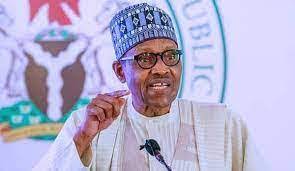
President Muhammadu Buhari has threatened that his administration would not hesitate to punish Heads of Ministries, Departments and Agencies (MDAs) that fraudulently present new projects as ongoing projects in the budget.
This is even as he warned that his administration will sanction those who bring in personnel into the public workforce by illegal recruitment, pad their payroll and retain ghost workers.
According to a statement, yesterday, by Special Adviser on Media and Publicity, Femi Adesina, Buhari made the threat at the 3rd National Summit on Diminishing Corruption in Public Sector, with the theme: ‘Corruption and Coat of Government New Imperatives for Fiscal Transparency’, organised by the Office of the Secretary to the Government of the Federation and the Independent Corrupt Practices and Other Related Offences Commission (ICPC).
According to him, “We reduced the cost of governance by maintaining our promise to complete abandoned or ongoing projects commenced by previous administrations and have ensured that MDAs do not put forward new capital projects at the expense of ongoing projects.
‘‘Government has, however, noted from the activities of the Independent Corrupt Practices and Other Related Offences Commission (ICPC) that some MDAs have devised the fraudulent practice of presenting new projects as ongoing projects.
“Necessary action and sanctions will continue against the heads of such errant MDAs. I am confident that ICPC will continue to maintain the vigilance required of her by the ICPC Act in this regard,” he said.
The president described the summit’s them as auspicious, saying that: “it reminds us of the negative impacts of unnecessary cost of governance and offers an opportunity for critical stakeholders to offer suggestions on ways to further reduce the cost of governance and promote transparency and accountability in government expenditure.
“I am delighted that the Legislative and Judicial arms of government are also under focus on managing the cost of governance because government is a collective and is not the business of the Executive branch alone.
“On August 19, 2020, the Federal Executive Council adopted the National Ethics and Integrity Policy which I launched on September 25, 2020.
“I am delighted that some public officers continue not only to demonstrate the core values of ethics, integrity and patriotism but have been identified for their sterling anti-corruption disposition in their workplace,” he said.
A highpoint of the event attended by the Chief Justice of Nigeria, Ibrahim Tanko Muhammad and a representative of the Senate President, Dr Ahmed Lawan was the presentation of the 2021 Public Service Integrity Awards to three distinguished Nigerians.
They are Deputy Director, Legal, Federal Ministry of Information and Culture, Nelson Okoronkwo; Assistant Commander of Narcotics, National Drug Law Enforcement Agency (NDLEA), Muhammad Ahmad; and a PhD student from Imo State, studying in Japan, Ikenna Nweke.
Okoronkwo, who was recognised for his consistent acts of integrity in the different ministries where he served, is a committee member on fertilizer distribution that led to the recovery of billions of naira from racketeers with collaborators within the Federal Ministry of Agriculture and Rural Development.
He was credited to have reported corrupt practices that led to the Ogoni clean-up investigation in the Federal Ministry Environment.
As chairman, Committee on Illegal Recruitment in the Federal Ministry of Information and Culture, the Deputy Director facilitated the detection and removal of over 3,000 fake employers from the service thereby saving the government millions of Naira in terms of salaries and emoluments.
The NDLEA officer, Ahmad, was recognised for demonstrating the highest ideals and standards of the public service in the discharge of his responsibilities.
Also a recipient of the Chairman/Chief Executive Award for Outstanding Performance and Integrity, Ahmad recently recovered and declared to his agency the sum of $24,500 offered to him as bribe by a drug baron to compromise an investigation of 27.950kg of cocaine, worth billions of Naira.
Nweke, the Nigerian PhD student in Japan who found a wallet containing a very large amount of money and other valuables returned it to the Japanese police.
He declined 10per cent of the money offered to him as a reward.
The Nigerian, who joined the event virtually from his base in Japan, was recognised for his act of ‘‘honesty and integrity,’’ by the president.
On Nweke, Buhari said: “I am also happy to note the ICPC special award to Ikenna Steve Nweke, a Nigerian PhD student from Imo State studying in Japan.
“He has done Nigeria proud in far-away Japan by displaying traditional Nigerian values of honesty and integrity and returning a wallet containing a very large sum of money and other valuables to the police.
“He also declined 10% of the money found as a reward offered to him.
“I join the ICPC in declaring him ICPC CITIZENS ANTI-CORRUPTION VOLUNTEER GROUP ICON.
“He is, indeed, an icon and a beacon for our youths. I also congratulate all those to be awarded the ICPC Certificate of Integrity through their agencies.”
In his remark at the occasion, Chairman of the ICPC, Prof. Bolaji Owasanoye, revealed that the Ministry of Labour and Employment and the University College Hospital (UCH), Ibadan, are among government establishments implicated in cases of illegal recruitment being investigated by the commission.
He also said the review of the 2021 Budget led to the discovery of 257 duplicated projects with a combined worth of N20.138billion.
Owasanoye, who spoke on the theme of the summit: ‘Corruption and Cost of Governance: New Imperatives for Fiscal Transparency’, expressed concern that the cost of governance in the country has perpetually been pushed up by corrupt practices, including illegal recruitments, unilateral and illegal increase of salaries and wages, procurement malpractices and budget padding by some government establishments.
According to him, the commission also uncovered a syndicate of individuals within the service who corruptly employ unsuspecting Nigerians, issue them fake letters of employment, fraudulently enroll them on IPPIS and post them to equally unsuspecting MDAs to commence work.
He disclosed that ICPC is already prosecuting one of the leaders of the syndicate from whom were retrieved several fake letters of recommendation purportedly signed by Chief of Staff to the President, Hon Ministers, Federal Civil Service Commission and other high-ranking Nigerians.
Owasanoye added that ICPC’s projects tracking covered 1,083 projects across the country with exception of Borno and Zamfara due to security challenges.
He said the exercise verified implementation of executive and zip projects of legislators, adding that so far action has been initiated against 67 contractors and forced them back to site and ensured completion of 966 projects worth N310billion some of which were hitherto abandoned.
Addressing Buhari, he stated: “ICPC is committed to supporting the programmes and projects of government one of which is restraining the spiralling cost of governance. This is why the theme of this summit is: ‘Corruption and the Cost of Governance: New Imperatives for Fiscal Transparency’.
“Your Excellency has publicly acknowledged a number of times that your government inherited a number of challenges since 2015 when you assumed office including but not limited to an empty purse and the lack of savings when the economy boomed. A major aspect was the astronomical cost of governance at the federal and sub national levels. This has continued to reflect in the huge wage bill on personnel and operational cost standing at about 70% of annual budget.
“Your Excellency sir, a major push factor on high cost of governance and rising personnel budget is illegal recruitment, illegal and unilateral increase in wages and remuneration by some MDAs, indiscriminate local and international travels, unreasonable demands by some political appointee board members of MDAs without regard for extant circulars on cost management; procurement fraud, budget padding, etc.
“ICPC investigation of some cases of illegal recruitment forwarded to us by Head of the Civil Service of the Federation has so far implicated Ministry of Labour and the University College Hospital Ibadan and a number of corrupt staff of other MDAs at a lower level. This abuse of power is consummated with complicity of compromised elements in IPPIS. These cases are currently under investigation.
“At another level, a syndicate of corrupt individuals within the service corruptly employ unsuspecting Nigerians, issue them fake letters of employment, fraudulently enroll them on IPPIS and post them to equally unsuspecting MDAs to commence work. ICPC is prosecuting one of the leaders of the syndicate from whose custody we retrieved several fake letters of recommendation purportedly signed by Chief of Staff to the President, Ministers, Federal Civil Service Commission and other high ranking Nigerians.
“Sir, the third phase of ICPC’s projects tracking covered 1083 projects across entire country with exception of Borno and Zamfara due to security challenges. The exercise verified implementation of executive and zip projects of legislators. We have so far initiated enforcement actions against 67 contractors and forced them back to site and ensured completion of 966 projects worth N310billion some of which were hitherto abandoned.
“Our findings indicate that the same malady of corruption afflicts executive as well as zip projects thus undermining government projections, escalating the cost of governance and denying Nigeria value for money. These maladies include poor needs assessment that disconnects projects from beneficiaries; false certification of uncompleted contracts as completed, deliberate under performance of contracts incessant criminal diversion and conversion of public property by civil servants, to name just a few.
“Other challenges relate to duplication of projects in the budget. ICPC review found that 257 projects amounting to N20.138billion were duplicated in the 2021 budget leading us to submit an advisory to the HMF which was promptly actioned by the minister to prevent abuse”, he said.
Owasanoye further revealed that the harmony between boards and managements of some establishments had been disrupted because of disagreements bordering on abuse of power and other malpractices
He further said: “Your Excellency, a number of MDAs have mini civil wars going on between the board and management and sometimes within the board. These squabbles revolve around abuse of power prohibited by ICPC Act and unreasonable demands by some board members for privileges contrary to extant circulars and laws and government’s resolve to minimize cost of governance.
“Your Excellency sir, let me commend government’s posture against illicit financial flows that drain resources from the nation. The time to further block leakages is now that government revenues are dwindling and practically threatened.
“ICPC is contributing to government’s efforts by its IFF focused project that has resulted in a major advisory to government with recommendations including prohibiting confidentiality clauses that facilitate fraud and money laundering, prevention of tax evasion, prohibition of illegal tax waivers and all practices that undermine government revenue projections.”
On the commission’s Ethics Compliance Scorecard of MDAs, Owasanoye said only 34.6% of the 360 establishments scaled above the average mark.
He explained: “ICPC’s Ethics Compliance Scorecard of MDAs report for 2021 shows that only 34.6% of the 360 MDAs assessed scored above average in Management Culture and Structure. This poor finding is not unrelated to unstable Boards unable to effectively oversight the institutions.”
Reacting to the ICPC disclosure, Minister of Labour and Employment, Dr. Chris Ngige, said he was the one that initiated an investigation when he discovered the employment scam in his ministry.
In a text message he sent to journalists, he said: “No it’s an ongoing investigation initiated by me. They committed the fraud between May 29, 2019, and August, 2019, when I was temporarily away as minister.
“I raised the alarm in FEC (Federal Executive Council) necessitating HOSF (Head of Service of the Federation) to do preliminary investigations and write ICPC after the internal ministry investigation committee set up by me was stalled by the then permanent secretary.
“ICPC should conclude investigation of 2019 by now…two and half years instead of making it look like a new development.”
Secretary to the Government of the Federation, Boss Mustapha, in his opening remarks said in three years the 60per cent of its overhead expenditure were on travels, maintenance, welfare and stationery in three years.
The SGF stated that it was no longer acceptable for the country’s resources to be expended on frivolities, fake projects and meaningless capital projects.
He added that the federal government is working towards reducing the cost of governance and utilising its resources efficiently.
“As I welcome all of us to the Third National Anti-Corruption Summit, I want to use this opportunity to commend all the Anti-Corruption Agencies for the progress being made in this very necessary campaign that would see Nigeria having more resources, which would have hitherto been unscrupulously diverted, to tackle our development challenges.
“In line with the theme of today’s summit, I speak on the role of the Executive arm of government to lead, as it has been doing, the constant quest for improving cost of governance by ceaselessly reinventing itself. This is imperative because we are dealing with systemic corruption and this implies that corruption has permeated the fabric of society including governance thus the institutionalization of corrupt practices in the machinery of governance must be ruthlessly rooted out.
“Systemic corruption prevents government from maximizing its potential of providing good governance for the people with available little resources especially at this time of COVID-19 pandemic.
“Government is highly worried that about 60 per cent of Federal Government’s Overhead Expenditure in three years (2012 to 2014) was spent on travels, maintenance, local and international training, welfare, office stationery / consumables, honoraria etc. Recent data from the Budget Office indicates that “actual MDAs recurrent spending is still on the rise viz. from N3.61 trillion in 2015 to N5.26 trillion in 2018 and N7.91 trillion in 2020.
“President Muhammadu Buhari’s administration, has, therefore, been unrelenting in making sure that our little resources will no longer be budgeted and/or used for frivolities, hidden in fake projects, unnecessary travel, wasteful overhead costs, meaningless capital projects and remuneration of ghost workers. We also remain focused on getting back our resources that have found their ways into the private pockets of those who fraudulently orchestrate the budget process for their selfish desires.”
The SGF said government’s concerns have always been and would always be continuously reflect and take measures to mitigate the negative consequences of unrestrained cost of governance.
He said: “It is increasingly becoming public knowledge that our anti-corruption agencies, especially ICPC, are doing a lot in the area of prevention and also recovery of diverted or stolen public funds, building the capacity of MDAs to resist corrupt practices, promoting ethical values through the National Ethics and Integrity Policy of government.
“Some of the capacity building measures include System Study and Review of operations of MDAs; Corruption Risk Assessment and the establishment of Anti-corruption Monitoring Units in all MDAs. Recoveries of public funds in recent years have no doubt demonstrated the strong resolve government to stem financial hemorrhages and promote initiatives towards curbing illicit financial flows”.
He added that the Buhari’s administration has so far demonstrated and still continues to demonstrate its determination to fight corruption and improve governance no matter what it takes and howsoever corruption fights back with the stolen resources at its disposal.
He urged Nigerians to support the anti–corruption agencies in its fight against graft, because the fight against corruption is a collective responsibility of all.
In his goodwill message, the Chief Justice of Nigeria, Tanko Muhammad, said the Nigerian Judiciary has been in the forefront in the fight against graft.
He said: “We have put in place a robust mechanism of introspecting periodically to do a self-assessment to see those areas where corruption could surreptitiously creep into the system and quickly nip it in the bud from the outset.
“The National Judicial Council has been carrying out regular disciplinary actions against erring judicial officers to effectively tame the monster within the system. It is not a hidden fact that for any nation to prosper and make meaningful progress, the judiciary must be firm, independent and insulated from any extraneous interference and orchestrated influence, either monetarily or otherwise.”
He said: “Worried by the delays associated with the trial of criminal cases by our courts, particularly those relating to corruption and financial crimes, we decided to set up the Corruption and Financial Crime Cases Trial Monitoring Committee (COTRIMCO) in 2018, with Hon. Justice Suleiman Galadima, a retired Justice of the Supreme Court, as chairman.
“The sole aim of this committee is to fast-track the trial of corruption and financial related crimes in the country; and it has since been working assiduously with various heads of courts, to bring about a significant rise in the dispensation of corruption and financial crime cases in the country.
“Even with the devastating impact of the COVID-19 pandemic in virtually the whole of 2020 and a better part of 2021, a total number of 746 corruption cases were dispensed with. Similarly, the number of forfeited non-cash recoveries made, include 51 automobiles, 16 real estates, 11 barges/tug boats and two schools.
“Between January 2, and November 14, 2021, a total number of 1,144 suspects were convicted of various corruption and financial related crimes, while the number of non-cash forfeited assets has also risen to include: eight aircrafts, seven filling stations, 48 real estates and 149 vehicles, amongst others.
“Similarly, various cash forfeitures were made in hundreds of millions of Naira. We shall not rest on our oars until every trace of corruption and undue exercise of influence to negatively secure unmerited advantage over others is stamped out of our clime.
“It is my fervent belief that if all of us work in harmony with one voice and renewed determination, corruption and allied vices will certainly be on their way out of our beloved country and our voice shall, once again, be loudly heard and respected among the comity of nations.”



The Katsina State Police Command has cautioned applicants for the upcoming police constable recruitment examination to adhere strictly to laid-down procedures and avoid falling victim to fraudsters.
The Commissioner of Police, Ali Umar-Fage, issued the warning in a statement released on Sunday by the command’s spokesperson, Abubakar Sadiq-Aliyu.
He disclosed that the nationwide examination is scheduled to take place from April 28 to April 30 in Katsina State and that the exercise will be conducted at Hassan Usman Katsina Polytechnic along Dutsin-Ma Road.
According to the commissioner, only candidates who successfully passed the recently concluded physical and credential screening will be eligible to sit for the examination.
Applicants have been directed to log on to the official recruitment portal from April 24 to print their coloured examination invitation slips, which contain details of their specific date, time, and venue.
Mr Umar-Fage stated that candidates must present a valid National Identification Number (NIN) slip issued by the National Identity Management Commission (NIMC), bearing a clear photograph, alongside their printed coloured invitation slip and a writing pen at the examination centre.
He added that the approved dress code for the exercise is a white T-shirt, white shorts, and white canvas shoes.
Reiterating that the recruitment process is entirely free of charge, the police chief warned applicants to be wary of individuals or groups seeking to extort money under the guise of facilitating recruitment.

The Rivers State Traditional Rulers Council has pledged to take decisive action to curb the rising cases of gender-based violence (GBV) across the state, in partnership with ActionAid and other relevant organisations.
The commitment was made during an event organised by ActionAid in collaboration with the Rivers State Ministry of Social Welfare and Rehabilitation in Port Harcourt. The programme, titled “Convening of Traditional Rulers for GBV Prevention,” carried the theme, “From Custodians to Champions: Redefining Culture for GBV Prevention and Community Protection.”
Speaking on behalf of the council, the Okilomuibe of Engenni Kingdom, HRM King Moore MacLean Ubuo, said traditional rulers are determined to move beyond mere responses to incidents of violence by adopting proactive strategies.
“We will establish and empower community-led structures, including traditional cabinets and women leaders, to identify early warning signs of violence and intervene before harm occurs,” he said.
King Ubuo added that traditional institutions are committed to enforcing the Violence Against Persons Prohibition (VAPP) Law within their domains, stressing that the longstanding culture of silence surrounding abuse would no longer be tolerated.
“We will ensure that our subjects understand their rights and that the law is respected as the ultimate standard for justice,” he added.
Also speaking, the Rivers State Government emphasised that tackling GBV requires more than policies and enforcement, noting that a transformation in societal attitudes is essential.
Permanent Secretary of the Ministry of Social Welfare and Rehabilitation, Mrs. Lauretta Dimkpa, who was represented by the Director of Child Welfare, Mrs. Fumilayo Adebayo, highlighted the critical role of traditional rulers in shaping societal values.
“As traditional rulers, your voices command respect, your decisions influence behaviour, and your institutions are trusted platforms for conflict resolution and social guidance,” she said.
She urged them to promote cultural norms that uphold dignity, respect, and equality, while also encouraging victims to report abuse without fear of stigma.
In his remarks, the Country Director of ActionAid Nigeria, Dr. Andrew Mamedu, described the gathering as timely, noting that GBV remains a widespread violation of human rights and a major obstacle to sustainable development.
Represented by Dr. Adedeji Ademefun, he cited data showing that 31 per cent of Nigerian women aged 15 to 49 have experienced physical violence, with many cases going unreported due to fear, stigma, and cultural silence.
“National surveys indicate that nearly three in ten women have experienced physical or sexual violence, underscoring the scale and urgency of this crisis,” he said.
Earlier, the Coordinator of the Rivers State Multi-Stakeholders Action Committee, Barrister Evelyn Asimie Membere, described GBV as one of the most persistent human rights violations, cutting across age, class, and geography.
According to her, traditional rulers are uniquely positioned to influence behaviour and drive meaningful change at the grassroots level.
“In many of our communities, your voice carries more weight than any policy or legislation,” she said.
The event brought together key stakeholders committed to strengthening community-based approaches to preventing GBV and protecting vulnerable groups across Rivers State.

A socio-political group, the Tinubu Youths Vanguard Organisation (TYVO), Rivers State chapter, has called on Nigerians to support the re-election of President Bola Ahmed Tinubu in 2027, citing the need to consolidate ongoing economic and infrastructural reforms.
The State Coordinator of the group, Hon. Emmanuel Fubara, made the appeal over the weekend in Port Harcourt on the sidelines of a meeting of the Southern Traditional Rulers Council.
He said granting the Tinubu administration a second term would enable it to fully implement its transformation agenda, particularly under the Renewed Hope initiative.
“It is important that the Tinubu administration is given another opportunity to complete its economic and developmental programmes for the benefit of the country,” he stated.
Fubara disclosed that the group is preparing for its formal inauguration in the State, along with the unveiling of its local government, ward and unit structures, including student and market women wings.
According to him, the organization will be fully mobilised to promote the policies and achievements of the current administration, with a focus on issue-based campaigns aimed at restoring public confidence in the nation’s economy.
He noted that the administration has made strides in revamping the economy and executing key infrastructure projects, including the ongoing coastal road development in parts of the country.
Fubara expressed confidence that the group’s campaign strategies would resonate with Nigerians, adding that opposition voices would be effectively countered through sustained grassroots engagement.
He also urged members of the group to intensify sensitisation efforts across communities, highlighting what he described as visible results of the administration’s reforms.
On security challenges facing the country, Fubara said the situation was inherited from previous administrations but maintained that the current government is taking decisive steps to address it.
He expressed optimism that ongoing efforts, including international collaborations, would significantly curb insecurity in the near future.
When asked whether the group would also campaign for Rivers State Governor, Sir Siminalayi Fubara, the TYVO coordinator said the organisation would take a position at the appropriate time, noting that directives from the All Progressives Congress (APC) would guide its activities.