
Featured
Lekki Massacre: Reps Minority Caucus Demands Sack Of Minister

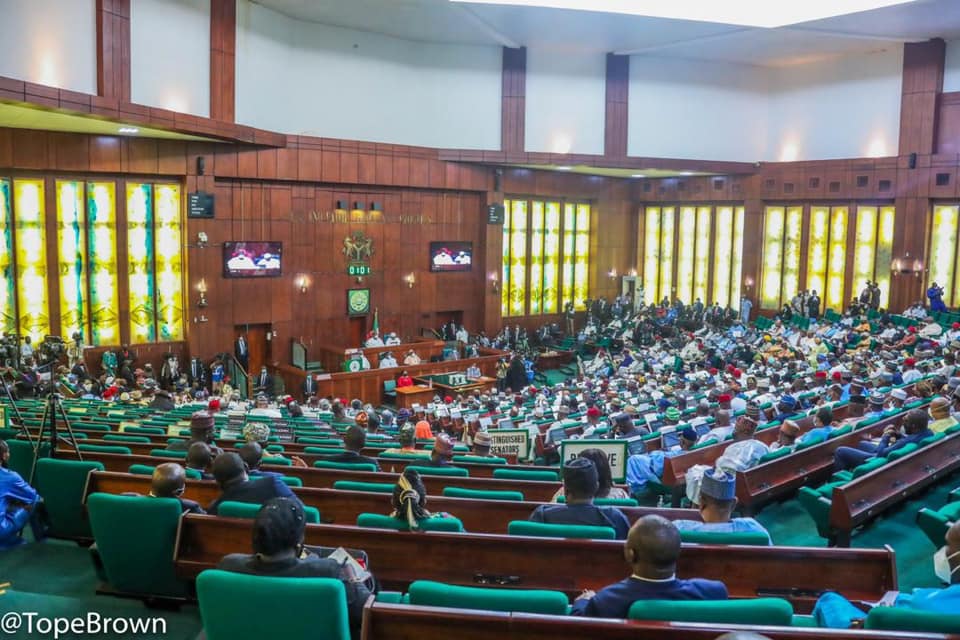
The Minority Caucus in the House of Representatives has reacted to the report submitted by the Lagos State Judicial panel on Special Anti-Robbery Squad (SARS)-related abuses.
On October 19, 2021, the state government inaugurated the panel as part of recommendations put forward during the #EndSARS protests last year.
The report found that the Nigerian Army and police fired live bullets at peaceful protesters at the Lekki Tollgate last year.
It also concluded that the “deliberate absence of officers of the Nigerian Army who were present at the Lekki Toll Gate and who were summoned by the Panel was a calculated attempt to conceal material evidence from the Panel”.
Reacting in a statement, the Minority Caucus said attempts by the Nigerian government officials to cover up the massacre at the Lekki Tollgate suggests a high-level state-backed conspiracy against Nigerians.
The statement, signed by Ndudi Elumelu, the minority leader of the House, queried the motive of the Minister of Information and Culture, Alhaji Lai Mohammed, that made him rush to the media, ahead of the judicial panel, to insist that there were no killings at Lekki Tollgate, even in the face of testimonies of witnesses.
It, therefore, urged the All Progressives Congress (APC)-led administration to come clean on the killings.
The Minority Caucus, therefore, urged Nigerians to remain calm, vowing to leave no stone unturned in using legislative instruments to join forces with other well-meaning Nigerians.
The statement reads, “The Minority Caucus in the House of Representatives, after a thorough review of the report of the Lagos State EndSARS judicial panel, holds that the attempt by officials of the All Progressives Congress (APC)-led Federal Government to cover up the now confirmed bloody massacre of Nigerians youths by security forces at the Lekki Tollgate suggests a high-level state-backed conspiracy against Nigerians.
“The confirmation by the Lagos Panel that there was indeed a massacre at the Lekki Tollgate during the 2020 EndSARS protests in Lagos and that APC government-controlled security forces carted away bodies and mopped up evidence, places a huge burden on the Federal Government which had vehemently denied any killings.
“The Minority caucus is therefore apprehensive as to what furtive motive must have made the Minister of Information and Culture, Alhaji Lai Mohammed, who ought to know the truth, to rush to the media, ahead of the judicial panel, to insist that there were no killings at Lekki Tollgate, even in the face of testimonies of witnesses at the sad event.
“Whereas the proclivity of the APC-led administration to lie to Nigerians on issues is legendry and known to all, our caucus is however shocked that the administration can lie in a matter that has to do with the gruesome killing of citizens, particularly our youths and even attempt to provide official cover to the culprits.






Rivers State Governor, Sir Siminalayi Fubara, yesterday extended interim relief measures to the people of Bille Kingdom as the government intensifies efforts to address the ongoing environmental degradation affecting the area.
This was contained in a statement by the Head of Information and Public Relations Unit, Office of the Secretary to the State Government, Juliana Masi, yesterday.
The governor, during a working visit to Bille Kingdom in Degema Local Government Area, reassured residents of his deep concern for their health and well-being.
He reiterated his administration’s commitment to finding a lasting solution to the persistent gas emissions observed in the community’s land and water sources since November 2025.
Represented by the Secretary to the State Government, Dagogo Wokoma, the governor announced immediate interventions to address urgent needs.
Some of the relief measures include the provision of potable water and essential medical services through the release of ?100 million as palliative support for the affected community.
According to the SSG, “Governor Fubara remains deeply committed to the welfare of the people of Bille Kingdom. Although unable to attend in person due to pressing state engagements, he is fully aware of the situation and determined to tackle the root cause of the environmental challenge”.
The governor assured residents that the state government would not relent in its efforts to provide a permanent solution to the gas emissions, emphasizing that the current intervention is only a temporary measure to ease the suffering of the people.
He further urged members of the community to remain law-abiding and continue supporting his administration, noting that he has consistently demonstrated a track record of fulfilling his promises.
Earlier, the Chairman, Council of Chief for Bille Kingdom, Chief Bennet Dokubo, expressed joy over the State visit, describing Fubara as a leader who listens to the plight of the people.
He urged the governor to critically look into the gas emission which he described as dangerous to human health.
“If we take you into the river, we notice that the entire environment is bubbling and smelling.
“We most humbly urge you to critically look into this situation. This is something strange we have never experienced before. It is not good for human health,” the monarch stressed.

The Federal Government has declared tomorrow (Friday) and Monday, April 6, 2026, as public holidays to mark this year’s Easter celebration.
Minister of Interior, Olubunmi Tunji-Ojo, made the declaration on behalf of the Federal Government through a statement signed by the Permanent Secretary in the ministry, Dr Magdalene Ajani.
The ministe congratulated all Christians in Nigeria and in the diaspora on the joyous occasion of Easter, and urged Nigerians to imbibe the virtues of selflessness, forgiveness, forbearance and love as exemplified by the life and teachings of Jesus Christ.
He reiterated that the goal of the government remains to make decisions that would bring about national rebirth, economic growth, and shared prosperity.
The Tide reports that good Friday will be marked tomorrow, while the Easter Sunday will be celebrated on Sunday across the world.

Rivers State Governor, Sir Siminalayi Fubara, has charged the newly appointed Secretary to the State Government (SSG) and Chief of Staff (CoS) to carry out their duties with discipline, loyalty and a firm commitment to the success of the administration and the wellbeing of the people of Rivers State.
The governor warned that any involvement in unauthorised nocturnal meetings or any conduct capable of embarrassing the government will attract immediate dismissal.
Fubara gave the warning yesterday shortly after the newly appointed Secretary to the State Government (SSG), Dr Dagogo S.A. Wokoma and the new Chief of Staff (CoS), Barrister Sunny Ewule, were sworn in at the Executive Council Chambers of Government House, Port Harcourt.
As part of the ceremony, the Chief Registrar of the State High Court, David Ihua-Maduenyi administered the Oath of Allegiance and Oath of Office on the duo before the governor gave his charge.
Addressing the appointees, Fubara reminded them that their elevation to the new positions was a call to service and not a platform for political grandstanding or the pursuit of personal ambition.
He stressed that their foremost responsibility should be to themselves and to the people of Rivers State, stressing that their conduct must always reflect integrity, restraint and dedication to public good.
Speaking directly to Dr. Wokoma, whom he described as an accomplished academic and mathematician, the governor expressed confidence in his intellectual depth and capacity to deliver on the new assignment.
The office of the Secretary to the State Government, Fubara stressed, demands thoroughness, discipline and a deep sense of responsibility. He charged the SSG to represent the State with honour at all times.
“Your duty includes representing the state government. You need to represent us in a way and manner that will bring honour to us.
“What is important to this administration is to see that the good works that we started and the ones that we met, are concluded in a way that will bring progress and development to our dear state,” he stated.
Turning to the new Chief of Staff, the governor explained that he is expected to ensure smooth administrative coordination, managing official engagements effectively and safeguarding the image of the Government House.
He underscored the sensitive and personal nature of the role and emphasised that the position operates strictly under the authority of the governor.
Fubara stressed that the role does not permit independent political engagements or private strategy meetings without his knowledge and consent.
“Let me sound it here very clearly. Your duty is to make sure that you handle the administrative duties and image making roles perfectly well, liaising with whoever is coming for any official assignment here.
“If you involve yourself in nocturnal meetings and all those things, I will sack you. I’m very serious. What is important to me today is peace, progress and prosperity of this state. I’m not going to compromise anything for it,” he said.
The governor cautioned that involvement of the new appointees in any action capable of bringing the government or his office to disrepute would attract appropriate sanctions.
While congratulating the new appointees, Fubara expressed optimism that they would justify the confidence reposed in them.
He called on all public officials to work together in unity, observing that collective success is stronger and more enduring than individual achievement.
The governor who also addressed the Permanent Secretaries present at the ceremony, directed those of them who have reached retirement age to start preparing their handover notes without delay.
The notice, he said, was not intended to scare anybody but to prepare their minds towards the inevitability of exiting the service one day and to pave way for an orderly transition.
He warned against any attempt to engage in financial misconduct or last-minute irregularities, stressing that he was closely monitoring the system to ensure strict enforcement of accountability rules.