
Politics
APC National Convention Holds Feb, 2022


President Muhammadu Buhari has endorsed February 2022 as a new date for the National Convention of the ruling All Progressives Congress (APC), Chairman of Progressive Governors’ Forum, Alhaji Atiku Bagudu, confirmed this development to State House correspondents at the end of a closed-door meeting with President Buhari at the Presidential Villa, Abuja, on Monday.
The Tide source reports that the meeting was also attended by the Chairman of APC Caretaker Committee, Mai Mala Buni, who is also the Governor of Yobe State, as well as Governor Badaru Abubakar of Jigawa State.
Bagudu, who was not specific on the exact date for the convention in February, said the convention was shifted because four states were yet to complete their congresses.
He said: “Yesterday, November 21, the Progressive Governors’ Forum met, where we congratulated and thanked the Caretaker Committee for working so hard in leading the party. We also thanked the President for supporting them to deliver on their mandate.
“I also explained yesterday that the Progressive Governors’ Forum discussed the issue of national convention of the party and they mandated us to come and discuss with the President as the party’s leader to give the input of the Governors so that the party and the President will consider.
“Part of the inputs we got yesterday was that we still have four states which are in the process of completing their congresses like Anambra; understandably because of the recent gubernatorial election, Zamfara and two others, because of logistic challenges and then, Christmas is around the corner and early January we will be very busy with Ekiti.
“So, the Governors, based on all these, suggested that the party and the President should graciously consider February and the President is favourably disposed to the suggestion.”
The National Caretaker Committee Chairman, Mai Mala Buni, who also spoke on the outcome of the meeting, said: “The Progressive Governors’ Forum after their meeting, has suggested February to the party and the President has concurred so we are going ahead to plan for the convention in February.
“Nigerians should expect more unity and progress as a result of the forthcoming convention.”
On insinuations in some quarters that he might be delaying the convention to extend his tenure as the Caretaker Chairman of the APC, Buni said: “Am I a jobless person who is always trying to extend his tenure; to do what? I have my primary responsibility as a Governor to go back to my state and carry out my primary responsibility.
“What I am here to do is ad-hoc and of course to reposition the party and that is exactly what we have been able to achieve.”



Prof. Amupitan gave the warning on Saturday, in Port Harcourt, Rivers State, during the South-South Zonal Readiness Assessment and Interactive Staff Engagement organised ahead of the 2027 general elections.
He said insecurity remained a potential challenge to the electoral process but stressed that the Commission would not allow threats against its personnel to undermine its constitutional responsibilities.
“Insecurity may pose a challenge, but our collective constitutional resolve is far stronger. Let me again send a clear message from Port Harcourt: anyone who attempts to threaten, intimidate, or harm our ad-hoc staff, NYSC members, or permanent personnel will be brought to justice under the full weight of the law,” he said.
The INEC Chairman, who was accompanied by National Commissioners, directors and technical aides, disclosed that the South-South engagement was the fifth in a series of zonal assessments, following similar exercises in the South-West, North-West, South-East and North-East.
He explained that his physical presence across the geopolitical zones reflected the Commission’s field-first approach, emphasising that electoral integrity must be established through effective operations at the grassroots.
According to him, the assessment would cover operational preparedness across the 123 Local Government Areas in the six South-South states.
On election security, Prof. Amupitan said INEC had moved away from reactive security arrangements traditionally activated around election day to a proactive, intelligence-driven framework known as the “ICCES Tentacle”.
He explained that the framework was designed to extend inter-agency security coordination from national and state headquarters to local government areas and Registration Area Centres, including remote communities.
He identified three critical pillars of the framework as mapping and mitigating security threats, protecting electoral personnel and infrastructure, and guaranteeing safe access to polling units.
The INEC boss said the security arrangement would provide comprehensive protection for electoral personnel, technological infrastructure, including Bimodal Voter Accreditation System (BVAS) devices and server infrastructure, as well as voters.
He added that the framework was intended to ensure that every polling unit, irrespective of its geographical location or history of security challenges, remained safe and accessible for the exercise of democratic rights.
Prof. Amupitan disclosed that the South-South security architecture comprised approximately 60 major operational formations, headquarters and state commands operating under the Inter-Agency Consultative Committee on Election Security (ICCES).
The network, he said, brings together military, naval, air, police and other security and intelligence agencies across the six states.
“Together, this integrated multi-agency network represents the operational backbone that guarantees intelligence-led protection across every riverine creek, coastal axis, and land-based polling unit in the Niger Delta,” he stated.
Providing an overview of the region’s electoral significance, the INEC Chairman said the South-South had the fourth-largest voting bloc in the country, with 15,823,550 registered voters, representing 15.30 per cent of the national register.
Rivers State alone, he said, accounts for 3,736,434 registered voters spread across the 23 local government areas.

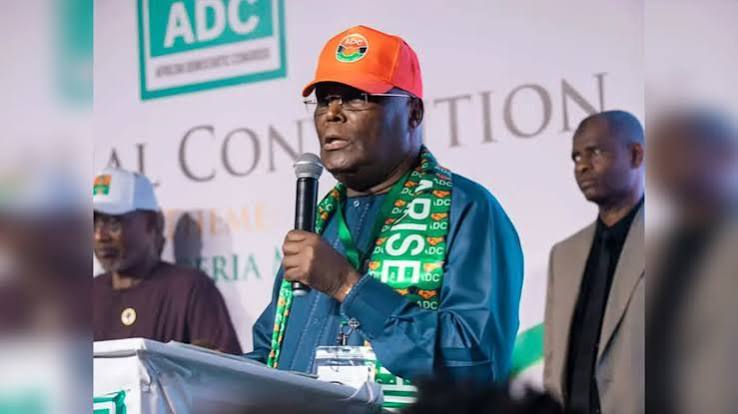
Alhaji Abubakar made the demand following revelations that some INEC registration officers allegedly abused their access to the voter registration system to introduce irregular records into the database.
In a statement issued by his Director of Strategic Communications, Mr Phrank Shaibu, the former vice-president described the development as a serious breach of the Commission’s internal safeguards and raised concerns about the integrity of the electoral process.
He urged INEC to identify the officials implicated in the alleged misconduct and explain what disciplinary or legal measures had been taken against them.
Alhaji Abubakar also called for an independent forensic audit of the preliminary voters’ register to establish the scale of the alleged manipulation, identify affected records and determine how the questionable entries were introduced into the system.
He further insisted that INEC preserve all relevant voter records, image files, system access logs and electronic audit trails to prevent the destruction or alteration of evidence before an independent examination could be conducted.
The former vice-president also demanded that the Commission disclose the identities of companies contracted to produce sensitive election materials ahead of the 2027 polls, arguing that transparency was essential to building public confidence in the electoral process.
INEC’s Director of Information and Communication Technology, Dr Lawrence Bayode, had earlier disclosed during a television interview that some registration officers across the country allegedly used their official login credentials to introduce irregularities into the voters’ database.
Dr Bayode explained that the Commission’s Automated Biometric Identification System helped identify questionable records and establish how some irregularities entered the system.
He, however, clarified that not all suspicious photographs were AI-generated, as some resulted from poor registration procedures.
The development followed public concerns over suspected AI-generated photographs, alleged duplicate entries and other inconsistencies discovered in the preliminary voters’ register published online on October 26, 2026.
INEC has maintained that the published document is a preliminary register and that it is reviewing questionable records ahead of the certification of the final Register of Voters.
The controversy has intensified calls for greater transparency and accountability in the management of the voters’ register as preparations gather momentum for the 2027 general elections.
-
Opinion4 days ago
Ancestorial Worship: My Take (1)
-

 Education21 hours ago
PAMO MEDICAL UNIVERSITY -Nullifies Arrest warrant on VC
-
Niger Delta22 hours ago
PANDEF Seeks 50% Oil Derivation Allocation Increase
-
Rivers20 hours ago
Don Seeks Repositioning Of Tech Education For Dev
-

 Education21 hours ago
IAUE MOVES TO END GHOST WORKERS SYNDROME AS 400 NEW NON-TEACHING STAFF UNDERGO MANDATORY ETHICS TRAINING
-

 News23 hours ago
Fresh Ebola Scare As NCDC Records Two Cases
-
News23 hours ago
Customs Partners EFCC, NDLEA, Others To Tackle Money Laundering, Terrorism Financing
-

 News4 days ago
FG Must Address Nigerians’ Concerns On Reforms -Shettima …Warns Against Misuse of AI, Social Media