
Nation
Obasanjo Hails Chinese Party, CPC At 100

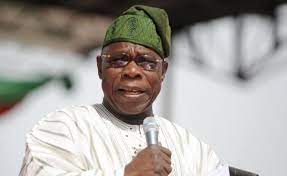
Former President Olusegun Obasanjo, has extolled the Communist Party of China (CPC) for the remarkable achievements it has recorded in the various spheres of China since it was founded 100 years ago.
In a goodwill message addressed to Chinese President Xi Jinping, who is the General Secretary of the CPC and Premier of the State Council of the People’s Republic of China, Li Keqiang and members of the Standing Committee of the CPC, Obasanjo declared that China’s growth and strength were unstoppable.
Obasanjo noted that since the establishment of diplomatic relations between Nigeria and China in 1971, Nigeria’s relationship with China has developed into one of the most important bilateral relationships maintained by either country.
The relationship, he added, has broadened and deepened with China’s growing power and interest in securing its regional interests, particularly within the South China Sea, and taking its place as a major global actor.
China and Nigeria, Obasanjo further noted, have signed a number of agreements on trade, economic and technological cooperation, as well as in the area of investment protection.
Obasanjo said, “In May, 1999 when Nigeria returned to constitutional democracy, I visited China twice in 2001 and 2005, respectively with my Chinese counterpart reciprocating both visits. The combination of domestic political and economic reforms and policy re-alignment enabled Nigeria to re-open dialogue and cooperation with major trading partners.
“As a result, there was evidence of growth in the country’s trade relations with its traditional allies, as well as emerging economies such as India and China. Indeed, by 2004-2005, China has succeeded in displacing other countries such as the United States, United Kingdom and the Netherlands as Nigeria’s biggest trading partner.
“During former President Hu Jintao’s visit to Nigeria in 2006, as Nigerian President, I remember making the following remarks, ‘From our assessment, this twenty-first century is the century for China to lead the world. And when you are leading the world, we want to be close behind you. When you are going to the moon, we don’t want to be left behind’.
“Today, China is one of the most important lenders of development finance to Nigeria. Chinese firms and finance play a prominent role in Nigeria’s infrastructure development. This is notably in the construction of railway lines and road reconstruction across the country. Nigeria marked symbolic progress of railway service in July, 2016, when its first completed standard gauge railway modernization project, Kaduna to Abuja, assisted by China was put into commercial operation. The light rail, the first of its kind in West Africa, fully reflects China’s technology, quality and speed.
“As of 2017, Nigeria was China’s largest engineering contract market, second largest export market, third largest trading partner, and major foreign direct investment destination in Africa. Nigeria is also the first African country to accept Chinese renminbi (RMB) in its foreign reserve. China and Nigeria have maintained a steady development of Lekki and Ogun free trade zones in the Southern part of the country. The zones aim to attract foreign investors and manufacturers to optimize Nigeria’s industrial structure and improve its national living standard.
“Clearly, the relationship has become more economic as China evolved from a political power to a global economic giant. The growing trade and presence of Chinese finance in Nigeria has also led to changing narratives about increased migration on both sides. China has also contributed to the development of Nigeria’s human capital. Many Nigerian students now study in Chinese schools – with a few on scholarships.
“China’s visibility in Africa’s infrastructural landscape is clear. From the landmark $200million African Union Secretariat building in Addis Ababa, Ethiopia, which was a gift in 2012 by China, to the roads, airports, railways, universities and libraries, Chinese investment in Africa increased from around $75million in 2003 to $2.7billion in 2019. Africa has also served as a market for Chinese manufacturing and as a source of raw materials.
“Chinese companies are also building education and training facilities in Nigeria. Nigeria was the first African country to establish a cultural centre in China, and the Chinese Cultural Centre was established in Nigeria in 2013. Every year, many cultural and academic groups from both countries visit each other, promoting art and people-to-people exchanges between the two countries.
“Let me conclude with a poser I raised in the Vol. III of my memoir, My Watch: Now and Then, ‘What events are we to watch for in the future?’ China’s growth and strength remain unstoppable. How China uses its increased power will matter to the world. Technology will keep moving. Africa must be innovative, shrewd and resourceful to know where and how to jumpstart technology, not by re-inventing the wheel but by being only a step behind the cutting edge of science and technology and by being part of the creation of relevant technology for our needs, development and progress. Africa must not be detached from the world of science, technology and innovation led by China,” Obasanjo wrote.
In the message, the former president congratulated the Chinese community all over the world and the entire good people of China on the 100 years celebration of the CPC, which he said, was the second largest political party in the world.
“I am, indeed, pleased and honoured for the opportunity accorded me to send in my goodwill message in support of the centenary celebration. I bring to you the good wishes of the entire people of my great country, Nigeria.
“Founded in 1921, the Communist Party of China (CPC) has always been committed to its original aspiration and mission of seeking happiness for the Chinese people and rejuvenation for the Chinese nation. It is important to note that, China’s success can be ascribed to its political system. The party has led the country from the era of Chairman Mao to become the economic powerhouse it is today. At $16.64trillion GDP, it’s the second largest economy after USA with $22.68trillion GDP.
“The Peoples’ Republic of China is sometimes referred to as a modern day miracle and continues to draw the attention of the entire world for the remarkable progress it has made in economic development, science and technology. There are several important elements that led China to the Superpower status. One of the factors that have contributed immensely to the growth of the country is the leadership of the party. Indeed, the party exercises overall leadership over all areas of endeavour in every part of the country, and thus guides the socialist modernization of China.
“With the founding of the People’s Republic of China, headed by Mao Zedong who is regarded as the Founding Father of Modern China, China’s leaders began their exploration of the road to socialist industrialization and modernization. Working towards the goal of economic modernization, their strategy moved from ‘national industrialization to four modernizations’. Mao was responsible for many of the political initiatives that transformed the face of China.
“Following Mao’s death in 1976, the new leader, Deng Xiaoping, commenced a series of reforms that radically changed China. Deng encouraged international trade and allowed foreign capital investment. The result has been China’s phenomenal entry into world markets and a booming economy. The economic reforms that were introduced by Deng Xiaoping in the late seventies have transformed the Chinese economy and produced a period of spectacular growth. With Deng Xiaping’s reform policies of the 1970s and 1980s, China’s dramatic growth and modernization and attendant industrial, energy and market expansion needs brought it into greater contact with Africa,” Obasanjo also said.

Nation
Zabbey Emerges Social Impact Man Of The Year 2025 …Reaffirms Commitment To Ogoni Transformation


The Project Coordinator of the Hydrocarbon Pollution Remediation Project (HYPREP), Prof. Nenibarini Zabbey, has been named Social Impact Man of the Year 2025 by Daily Independent Newspapers.
The award was presented at the Independent Awards 2025 Silver Jubilee Edition held at Eko Hotels and Suites, Lagos, as part of activities marking the organisation’s 25th anniversary of editorial excellence.
Managing Director and Editor-in-Chief of Independent Newspapers, Steve Omanufeme, said the award recognises individuals who have demonstrated exceptional leadership and transformative impact in their respective fields. He explained that recipients emerged through a rigorous process involving public voting, editorial board scrutiny, and assessment by a panel of judges.
Omanufeme noted that Zabbey’s selection reflects his outstanding contributions to environmental restoration and community development in Ogoniland through the Ogoni cleanup project.
With over two decades of experience spanning research, advocacy, capacity development, and administration, Zabbey has, within three years of leading HYPREP, implemented people-focused initiatives aimed at improving livelihoods and restoring degraded ecosystems.
Under his leadership, the project has reportedly created more than 7,000 direct jobs and facilitated the training of thousands of youths and women in high-demand skills, including mechatronics, cybersecurity, commercial diving, underwater welding, and data analytics.
HYPREP has also trained over 5,000 beneficiaries across 21 vocational skill areas, providing start-up kits to support entrepreneurship and economic empowerment.
In the area of environmental sustainability, the agency has established 31 environmental clubs in secondary schools and trained 2,500 youths with International Maritime Organization (IMO) certification to support shoreline cleanup and mangrove restoration efforts.
The project has recorded significant ecological milestones, including the cleanup of over 1,000 hectares of shoreline and restoration of 560 hectares of mangroves. This progress contributed to the designation of Ogoni mangrove wetlands as a Ramsar Site of international importance.
Beyond environmental remediation, HYPREP has expanded its social intervention programmes to include educational grants and scholarships for over 1,000 students, support for small and medium-scale enterprises, and skills training for persons living with special needs.
Infrastructure and healthcare development have also featured prominently, with ongoing projects such as the Ogoni Specialist Hospital, a Cottage Hospital, the Ogoni Power Project, and the Centre of Excellence for Environmental Restoration. The agency has further strengthened emergency healthcare delivery by donating five ambulances to medical facilities in the region.
Additionally, potable water has been provided to more than 40 communities, alongside the construction of wind-powered water systems in underserved areas.
Speaking on the award, Zabbey described it as a validation of HYPREP’s integrated approach to environmental restoration, healthcare improvement, and economic empowerment.
“We remain committed to delivering a cleanup that not only restores the environment but also improves livelihoods in line with the Renewed Hope Agenda of President Bola Ahmed Tinubu,” he said.
HYPREP, in a statement, expressed appreciation to the management of Independent Newspapers for the recognition, the Federal Ministry of Environment for its oversight role, and the Ogoni communities for their continued support and collaboration.
The agency was established by the Federal Government of Nigeria to implement the recommendations of the United Nations Environment Programme (UNEP) report on Ogoniland and restore areas impacted by oil pollution.
Nation
Rivers State Judiciary Counters NBA National Position over Contempt Ruling, Says Judge Acted Within the Law
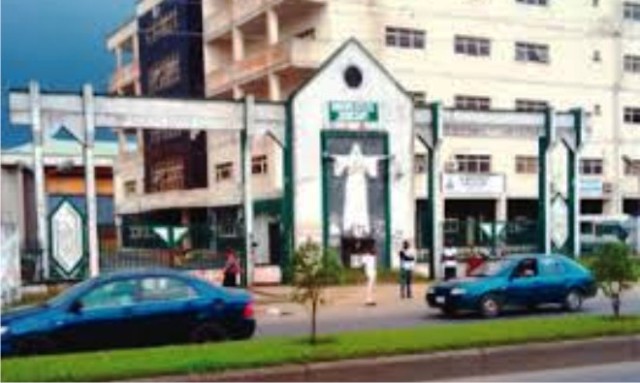
The Rivers State Judiciary has faulted the Nigerian Bar Association National over its March 26, 2026 press release condemning the jailing of a lawyer for contempt, insisting the trial judge acted lawfully to protect the court’s integrity.
In a rejoinder issued by Chief Registrar High Court,David D. Ihua-Maduenyi, Esq., the judiciary said it was necessary to “set the records straight” following reactions to the NBA’s statement on the contempt conviction of Mrs. Lovinah Ugbana Benjamin.
Titled: “JUDGES MUST NOT BULLY LAWYERS OR
ABUSE POWER TO PUNISH FOR CONTEMPT AS A TOOL
FOR INTIMIDATION OF LAWYERS”
RE: IN THE MATTER OF CONTEMPT OF COURT BY MRS.
LOVINAH UGBANA BENJAMIN
IN SUIT NO.
PHC/301/2016 CORAM C. NWOGU J., OF THE HIGH
COURT OF RIVERS STATE.
The state judiciary explained that case in question is Suit No. PHC/301/2016 before Justice Chinwendu Nwogu of the Rivers State High Court, where Mrs. Benjamin served as defence counsel.
The statement read thus
“We are compelled to make this rejoinder regarding the
incident of the conviction for contempt and subsequent
unconditional discharge of Mrs. Lovinah Ugbana Benjamin,
Learned Counsel for the Defendants in the above suit by Hon.
Justice Chinwendu Nwogu of the High Court of Rivers State in
order to set the records straight, and not allow the
misinformation, misconception and reactions arising from the
NBA National Press Release in the matter to fester as reality or
truth.”
In the suit under reference wherein the said Learned
Counsel appeared for the Defendants, the Learned Counsel
attempted to mislead the Court by her signed and filed final
written address, by knowingly and falsely presenting non-
existent facts and evidence of a witness. When confronted by the
Court, she admitted that what she stated in her final written
the address was not true and she was unapologetic.”
“The to uphold the dignity and integrity of the Court, which the
said Learned Counsel treated with clear and brazen contempt, the
Court after following due process, convicted her for contempt and
sentenced her to prison for 3 days only, instead of the 3 months
statutory term due to passionate plea from the Bar.”
“According to the statement the suggestion of the NBA National in paragraph 10 of the
Press Release under reference that “where a court considers
counsel’s conduct improper, the proper course is to invoke
recognised disciplinary mechanisms, including referring
counsel to the Legal Practitioners Disciplinary Committee
(LPDC), rather than resorting to summary punitive measures”,
is not an invariable rule because the act of the Defence Counsel
constitutes contempt in facie curiae which the Court can punish
instantly, hence the action of the Judge is not an abuse of power
or an act of intimidation.”
“Nevertheless, due to the numerous calls from respected
members of the Bar to the offices of the Chief Registrar and the
Honourable Chief Judge for the release of the said Learned
Counsel, and the intervention of the NBA Port Harcourt Branch
delegation led by its Chairman, Mrs. Cordelia U. Eke to the Judge.
in his Chambers in the morning of 26/03/2026 where the
delegation upon learning the true facts of the incident, apologised
and pleaded for the release of the said Learned Counsel.
“The Judge
having accepted the apology signed a production warrant and
upon her production in court and oral application by Mrs. Cordelia
U. Eke, discharged her unconditionally that same morning.”
The statement further stated that It is therefore shocking to read later that day the NBA
National Press Release signed by its President and Secretary, Mazi
Afam Joseph Osigwe (SAN) and Dr. Mobolaji Ojibara respectively,
fiercely threatening and hastily advocated the following ultimata and
the immediate release of the affected
Counsel.
:That the Hon. Chief Judge of Rivers State
immediately investigate the circumstances
surrounding this incident and take
appropriate administrative action.
That appropriate disciplinary steps be taken
by the National Judicial Council, where
necessary.
That the remand of Mrs. Lovinah Ugbana
Benjamin under the circumstances be
condemned and set aside”
“That all NBA branches in Port Harcourt and
its environs and all legal practitioners
boycott the proceedings before the Court of
Hon. Justice Nwogu for a period of 7 days if
Mrs. Lovinah Ugbana Benjamin is not
released within 24 hours.
“It seems to us that it is either the NBA Port Harcourt Branch
leadership did not relate the true position to the NBA National or
if they did, the NBA National decided to speak daggers, not peace
to impugn the Judge as a villain.
“We find the position of the NBA National on this subject very
offensive and embarrassingly raising a feeling of acrimony against
the Judge in particular, and the High Court bench of Rivers State
in general. We categorically state that the Hon. Justice Chinwendu
Nwogu is one of our respected and respectful Judges with
unblemished integrity.
We view this Press Release as an isolated departure from the
enterprising and amiable leadership of the NBA National,
especially its President, whom we hold in high esteem and
admiration.”
“Whilst we appreciate the concern of the NBA National in
bringing attention to the event of 25th March 2026, we assure that
the Bench and the Bar in Rivers State remain veritable partners
in the administration of justice.
“We firmly restate that the Bench in Rivers State holds the Bar
in high esteem and this event would not disrupt the cordial
relationship between the Bench and the Bar.”