
Nation
FG Launches NUCOP To Crash Crude Production Cost, Boost Competitiveness

Efforts to achieve the $10/barrel crude production target deepened, yesterday, as the Federal Government officially launched the Nigerian Upstream Cost Optimisation Programme (NUCOP).
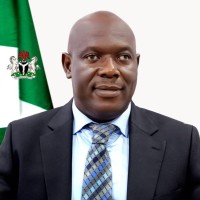
Speaking at the launch, the Minister of State, Petroleum Resources, Chief Timipre Sylva, said that the aim of the new initiative was to boost industry collaboration and process enhancement.
According to him, of all the nine priority areas given to the ministry as its operational mandate, reduction of crude oil extraction cost remains pivotal.
He said that the ministry has since identified some initiatives to tackle the challenges stacking against lower production cost, adding that the cost in Nigeria was exceptionally high compared to other oil-producing nations like Iran and Saudi Arabia.
Sylva added that high cost would rob the country its desire to attract investments and remain globally competitive.
He added that capital expenditure, operational cost, policy-related elements, weak collaboration, capacity and capability issues, facility reliability, single sourcing syndrome, high magnitude of crude loss, multiplicity of tariff, among others, are issues that need to be urgently tackled.
“Members of the NUCOP are officials of the Petroleum Ministry, DPR, NCDMB, PETAN, NNPC, among others”, he said.
“They’ve found short and medium-term solutions. Average total cost is now below $30/barrel for JV contract and less than $20 for PSC. We need to do more. Engagement should reach a consensus on cost reduction.
“We are making a case for shared services. Our target is 3mpd daily production and 40 billion barrels reserves”.
Sylva assured the gathering that the executive arm of government was on the same page with the legislature to pass the Petroleum Industry Bill (PIB) this year.
“We want to position Nigeria as the best designation for investment in the hydrocarbon sector. The benefits of NUCOP are many. It includes; reducing the contracting cycle to three months or less, prompting efficiency, profitability and competitiveness. Its success is dependent on collaboration of stakeholders”, he added.
In his remarks, the Group Managing Director of the Nigerian National Petroleum Corporation (NNPC), Mr Mele Kyari, said Nigeria must pull down production cost, describing it as a self interest pursuit.
“There’s a global energy transition. Less cost-efficient companies cannot survive today. $50/barrel production cost cannot survive. There are issues around synergy that we’ve not achieved.
“There are issues of security. Many companies are hiring their own armies and we can’t continue like that. Issues of taxes and others have to be addressed. Our practices must change so that service providers can deliver.
“So, we can achieve economic growth and our partners can derive benefits. It’s not CSR but pure business. We must have the best of fiscal environment and policies so that cost of operation can come down and our target is at least $10/barrel.
“If we do these, tax benefits will increase and profit margin will increase. This is a task that must be done. This partnership will help the country. Crude has hit the $60 and it comes with a product price increase. We are trying to keep the country wet. We are engaging with labour. No provision for subsidy in the budget”, the NNPC boss explained.
In his remarks, the Chairman, Senate Committee, Upstream, Albert Bassey Akpan, said there was a need to take a second look at production cost for Nigeria to remain competitive.
“We must pay attention to the passage of PIB and pass it before the end of 2021. We need to look at tax structure and security issues. There is need for relevant stakeholders to harmonize their logistics structure”, he said
Also commenting, the Executive Secretary of the Nigerian Content Development and Monitoring Board (NCDMB), Mr Simbi Wabote, said that the discussion on cost reduction was long overdue.
He assured of the board’s support and collaboration towards achieving the target.
“Cost reduction comes with some pain and what’s important is how the business will survive to sustain jobs. Local content is a panacea for cost reduction. There is massive cost savings when Nigerians run the business unlike when expatriates flood the business”, he noted.
For the President of the Petroleum and Natural Gas Workers Senior Staff Association of Nigeria (PENGASSAN), Comrade Festus Usifo, he urged the gathering to look at expatriates’ costs as many of them are earning fat pay doing jobs capable Nigerians should handle.



The Hydrocarbon Pollution Remediation Project (HYPREP) has commemorated the 15th anniversary of the release of the United Nations Environment Programme (UNEP) Environmental Assessment Report on Ogoniland, reaffirming its commitment to restoring the environment and improving the livelihoods of affected communities.
In a statement signed by the Project Coordinator, Prof Nenibarini Zabbey, to commemorate the anniversary, HYPREP described the anniversary as a significant milestone in Nigeria’s environmental restoration efforts, noting that the project has made remarkable progress in implementing the recommendations of the landmark UNEP report released on August 4, 2011.
The UNEP report had revealed extensive oil pollution across Ogoniland, severe environmental degradation, and serious public health risks resulting from decades of petroleum operations. It also recommended an initial $1 billion fund to commence the cleanup of the affected communities.
According to HYPREP, the Federal Government formally launched the Ogoni clean-up in 2016, while the Project Coordination Office was established in 2017 to drive the implementation of UNEP’s recommendations.
Zabbey said the current administration has continued to prioritise the project under the Renewed Hope Agenda.
Providing an update on the cleanup, the Project Coordinator disclosed that 30 of the 65 contaminated sites identified by UNEP have been fully remediated, while work is ongoing at several medium- and high-risk locations. It also stated that more than 1.5 million mangrove seedlings have been planted as part of what it described as the world’s largest restoration of oil-degraded mangroves, with over 1,000 hectares of shoreline already rehabilitated.
Zabbey further revealed that 49 Ogoni communities have been connected to potable water schemes through multiple water projects and booster stations aimed at providing safe drinking water across the region.
In the health sector, he said the 100-bed Ogoni Specialist Hospital in Kpite and the 43-bed Cottage Hospital in Buan are nearing completion, adding that several existing health facilities have been upgraded with modern medical equipment, while five ambulances have been donated to improve emergency healthcare services. The Project Coordinator also disclosed that a three-year human health biomonitoring study is being conducted in collaboration with the World Health Organization’s International Agency for Research on Cancer (IARC).
On economic empowerment, Zabbey stated that the Project has created more than 8,000 direct jobs and trained thousands of Ogoni youths and women in various vocational and technical skills, including software development, cybersecurity, aviation, commercial diving, seafaring, mechatronics, and creative arts. The project also reported awarding scholarships to more than 1,000 students, providing grants to small businesses, and supporting persons living with special needs through skills acquisition programmes.
The statement further highlighted ongoing legacy projects, including the Ogoni Power Project and the Centre of Excellence for Environmental Restoration, which it said is about 96 per cent complete. HYPREP also welcomed the recent designation of the Ogoni Wetland as a Ramsar Site of International Importance and pledged to continue promoting biodiversity conservation and sustainable management of the ecosystem.
Marking the anniversary, Zabbey said the progress achieved over the past 15 years demonstrates the collective commitment of government, development partners, stakeholders, and local communities to restoring Ogoniland. He called for renewed collaboration to sustain the cleanup effort, promote environmental sustainability, and support the long-term development of the region. 3
-

 News2 days ago
RSG Targets Nine Million Residents in Mosquito Net Distribution Campaign
-

 Oil & Energy2 days ago
Aiyedatiwa Signs New Electricity Bill
-

 Maritime2 days ago
Marine Minister Commends President Tinubu On NPERA Bill Assent
-

 Oil & Energy2 days ago
NLNG Commissions Research And Innovation Centre In RSU
-

 News2 days ago
KenPoly Holds Eight Convocations, August 29
-

 News2 days ago
RSG Begins Another Phase of Projects Commissioning Today
-

 News2 days ago
RMAFC Completes Revenue Sharing Review, Proposes New Pay
-

 Maritime2 days ago
NAGAFF Petitions IGP Over Alleged Maritime Police Harassment