Connect with us

Environment

FG To Review National Policy On Climate Change

Published

on

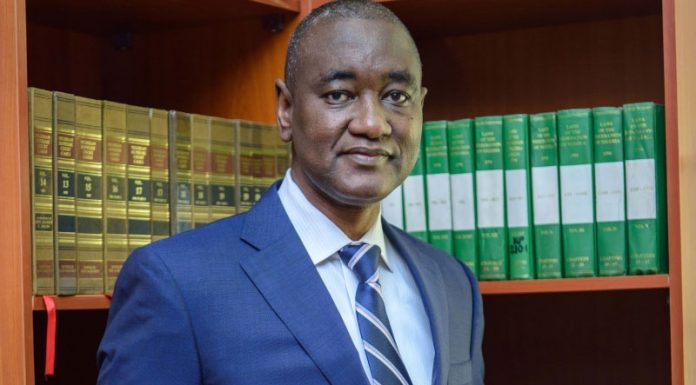
The Minister of Environment, Dr Mohammad Abubakar, says the Federal Government is reviewing the National Policy on Climate Change in order to fulfill the country’s Paris Agreement obligation.
Abubakar made the disclosure at the opening session of a two-day South West Regional Sensitisation Workshop on Climate Change held in Lagos.
He said that the Federal Government was advancing policies and initiatives aimed at addressing significant challenges occasioned by climate change.
According to him, the initiatives included proactive measures to revive Lake Chad; increasing forest cover, deployment of smart renewable energy solution, reverse desertification and land degradation, promote awareness campaigns and youth engagement in climate governance.
“The Federal Government has also developed a Sectoral Action Plan (SAP) for the implementation and fulfillment of our country’s obligation under the Paris Agreement and goals of the Nationally Determined Contribution (NDC).
“We have also embraced issuance of Green Bond to raise finance for implementation of green projects and have received support from the Green Climate Fund to review the National Adaptation Plans and Technology Needs Assessment,” he said.
Abubakar said the ministry had also received support from the Green Climate Fund to review the National Adaptation Plans and Technology Needs Assessment.
The minister said that the government would not relent in creating more awareness on climate change through sensitisation activities in the six zones in the country.
He, however, condemned the open burning of confiscated goods by some government agencies, saying the trend contributes to the effect of climate change in Nigeria.
“Open burning of confiscated goods has been the practice of NDLEA, Customs, and other government agencies and I must say, it is not the best way.
“Whatever they are burning, there are items that can be recycled and converted to materials that can be useful.
“We need to find other ways to dispose these goods for the safety of the environment,” he said.
In his presentation, Dr Yerima Tarfa, the Director, Department of Climate Change, said Nigeria must devise new ways to tackle environmental challenges especially in the five sectors contained in the NDC.
The sectors include  Agriculture, Transportation, Oil and Gas as well as Power and Industry.
He said that: “We are emitting a lot of carbon dioxide through agricultural practices, so we have to find a way of engaging in environmental friendly and planet smart agriculture.
“The transportation sector is a major contributor to greenhouse gases because of the combustion that emits from the vehicles on the road.
“The world is now moving to electric cars as a way of reducing the effect on climate change.
“We have also realised that waste sector is also one of the major contributor to the emission of greenhouse gases and we reviewing our NDC to include the sector”.
Tarfa noted that tackling climate change required the efforts of religious bodies, non-governmental organisations, manufacturers, and individuals.
Also speaking, the Lagos State Commissioner for Environment,  Tunji Bello reiterated the state’s commitment toward addressing climate change challenges through collaboration with stakeholders.
Bello, who was represented by Mr Michael Bankole, said  the collaboration was pertinent to delivering on Nigeria’s Nationally Determined Contribution on reduction of climate change.
“It is no longer news that the impact of climate change is experienced all over the world.
“Protecting the environment and addressing climate change is our collective responsibility.
“Therefore, I urge all stakeholders to work  closely so as to fulfill the promise of creating a sustainable environment for our future,” he said.

Continue Reading

Environment

WDC: Rivers State Deputy Governor, Prof. Odu  Call Inclusion Of Woman And Girls Decision Making 

Published

on

The Deputy Governor of Rivers State, Ngozi Nma Odu, has called for greater inclusion of women and girls in decision-making processes across all sectors, stressing that amplifying their voices is critical to national development.
Rivers State Deputy Governor, Prof. (Mrs.) Ngozi Nma Odu (Right), Launching the CIFAL Nigeria’s Voices of Experiences during the Mentoring the Next Generation and Joint Commemoration of UN International Women’s Day and World Water Day at the Rivers State University Complex,
She made the call during the launch of the “Voices of Experience” mentorship programme and the joint commemoration of the International Women’s Day and World Water Day at Rivers State University on Tuesday.
Odu underscored the burdens borne by women, particularly in rural communities, where they play central roles in water sourcing and food production. She reaffirmed support for initiatives that promote gender advocacy, noting that women’s lived realities must inform policies.
She also stressed the need to sustain the 30 per cent affirmative action for women’s inclusion, urging women to emulate pioneers such as Margaret Ekpo and Funmilayo Ransome-Kuti, who championed women’s rights in Nigeria’s past.
Drawing from local experience, Odu recounted how women in Egi community mobilised to demand change by peacefully protesting at an oil facility, demonstrating the power of collective action.
She further advocated partnerships with CIFAL Nigeria and UNITAR to deepen mentorship for young people, noting that such collaborations are essential for building inclusive governance and transferring values to future generations.
The Vice-Chancellor of the university, Isaac Zeb-Obipi, emphasised the need to recognise women’s contributions globally, particularly in water management. He called for increased investment in women’s education and empowerment to ensure access to clean water.
Zeb-Obipi also pledged to align the institution’s academic and research activities with the United Nations Sustainable Development Goals, while commending CIFAL Nigeria for its innovative programmes.
In her keynote address titled Inclusive Leadership: Building Institutions that Reflect All Voices, former Commissioner for Information, Ibim Semenitari, lamented declining female political representation. She noted that women’s participation, which rose from 1.8 per cent in 1999 to about 8 per cent in 2007, has dropped to roughly 4 per cent.
According to her, the issue is not participation but systemic exclusion, describing it as “a justice problem.” She also decried barriers facing youths and persons with disabilities, including limited access to leadership opportunities and inclusive education systems.
Director of CIFAL Nigeria, Ihuoma Njemanze, said the centre aims to bridge generational gaps by engaging young people—particularly digital natives—in conversations on women’s empowerment and sustainable development.
She disclosed plans to create platforms for dialogue, global exchanges and capacity-building initiatives aligned with UN goals.
Also speaking, Herritta Ogan identified cultural and institutional barriers as persistent obstacles to women’s advancement, while highlighting weak mentorship among women as a critical gap.
The event featured mentorship sessions, panel discussions and award presentations, reinforcing calls for inclusive leadership and sustained advocacy for gender equality.
Continue Reading

Environment

FG Alls For stronger Partnerships, Women Inclusion In Water Governance

Published

on

The Federal Government has called for stronger collaborations and increased participation of women in water governance to ensure equitable access to water and sanitation nationwide.
The Minister of Water Resources and Sanitation, Prof. Joseph Utsev, made the call at a news conference to commemorate the 2026 World Water Day.
He said the day, instituted by the United Nations, highlights the importance of freshwater and promotes sustainable management of water resources globally.
Utsev noted that the theme, “Water and Gender: Where Water Flows, Equality Grows,” underscores the link between water access, sanitation and gender equality, aligning with Sustainable Development Goals (SDGs) 5 and 6.
The minister stressed that inclusive governance and women’s participation are essential for sustainable development and national growth.
Utsev said the ministry had constructed and rehabilitated over 6,700 water schemes, providing safe drinking water to more than 32 million Nigerians.
“Rural interventions have benefited over two million people, while about 500 additional projects were implemented across Benue, Jigawa, Gombe, Nasarawa, Bauchi, Borno, Yobe, Ogun, and Niger states.
According to the minister, the ministry has completed two National Water Quality Reference Laboratories in Asaba and Umuahia to enhance monitoring and protect public health.
“The Dadin Kowa irrigation scheme delivered 2,000 hectares of land to farmers, including women, while micro-irrigation projects were completed in Jigawa, Oyo, and Kwara, with additional schemes underway in Kebbi,” Utsev said.
“Other dams recording progress include Mangu, Adada, and Ogbesse, while Alau Dam in Borno is being strengthened to improve flood control and water supply to Maiduguri,” he added.
The minister said the National Water Resources Institute had trained over 1,500 youths in plumbing, drilling, and water technology, while 24 water-use licences were issued to ensure equitable allocation of resources.
He noted that River Basin Development Authorities had developed over 154,000 hectares of irrigable land, benefiting more than 1.6 million farmers.
Utsev reaffirmed government’s commitment to inclusive water access and dignified sanitation, urging all stakeholders to collaborate to ensure no one is left behind.
“Water must become a force for equality, empowerment, and sustainable development,” he said, commending development partners, state governments, civil society organisations, and traditional institutions for their support.
He stressed that sustained investment, stronger coordination across federal, state, and local levels, and political will are key priorities, with women’s meaningful participation in planning and decision-making central to success.
The ministry’s Permanent Secretary, Dr Emanso Umobong, said World Water Day highlights the critical link between water and gender, noting that access to safe water directly affects women’s health, education, and economic empowerment.
Umobong was represented by Dr Adebiyi Tajudeen, Director, Finance and Accounts Department in the ministry.
She said gender-responsive water systems are essential to equitable and inclusive societies, and thanked development partners, civil society, and the diplomatic community for their support.
Umobong added that advancing water and sanitation is a direct pathway to achieving SDG 6 and SDG 5, emphasising that gender-inclusive governance strengthens system sustainability and resilience.
She outlined strategies including gender-responsive planning, targeted financing for schools and health facilities, robust data systems, and partnerships promoting women’s leadership at all levels.
“World Water Day is not merely ceremonial; it is a global call to action,” she said, urging stakeholders to amplify the message: “When water flows, equality grows”.
She added that tangible projects demonstrate the impact of gender-responsive water governance, citing functioning schools, operational clinics, thriving markets, and resilient communities.
Highlights of the event included the presentation of the 2026 UN World Water Development Report, Water for All People: Equal Rights and Opportunities, by Dr Enang Momah from UNESCO.
The report said gender inequalities undermine global water security, disproportionately affecting women and girls, who, in spite of managing household water, remain underrepresented in governance and technical roles.
“Unequal access also affects health, education, livelihoods, and safety, currently, 2.1 billion people lack safely managed drinking water, with women and girls spending 250 million hours daily collecting it”.
The report warned that climate change, water scarcity, and disasters worsen these inequalities, calling for stronger action to ensure equal rights, participation, and opportunities in water management.
The Tide source reports that a sensitisation and awareness campaign was held at the Lugbe axis to promote safe water use, especially among vulnerable populations.
The event also featured the distribution of sanitary products to women and girls, as well as the presentation of trophies to winners of the hygiene video skit competition.
Continue Reading

Environment

Environmentalists Raise Alarm As World Loses 10m

Published

on

Vice-Chancellor of Igbinedion University, Okada, Prof. Lawrence Ezemonye, on Thursday raised concerns over accelerating global deforestation, revealing that an estimated 10 million hectares of forests are lost every year.
Ezemonye raised the concern during activities marking the International Day of Forests at the university in Edo.
According to him, the level of deforestation poses far-reaching environmental and socio-economic threats.
Ezemonye said that Nigeria was not insulated from the trend, citing data from the Food and Agriculture Organisation which ranked the country among those with the highest deforestation rates in Africa.
“The consequences of this loss are grave,” he said, pointing to rising cases of flooding, desertification, ecosystem collapse, displacement of communities and the worsening impacts of climate change.
Describing the annual observance as more than ceremonial, Ezemonye said it should serve as a rallying point for urgent action.
He added that universities must play a central role as “custodians of knowledge and incubators of solutions.”
The V-C reaffirmed the institution’s commitment to environmental sustainability, emphasising that it remained a core institutional value beyond academic discourse.
The commissioner, who was represented by the Permanent Secretary, Mr Victor Otamere, said “protecting the forests is protecting our lives.”
Adams said that the state government had taken steps to safeguard forest resources, including the establishment of the Edo Forestry Commission.
The Chairman of the Forestry Commission, Mr Valentine Asuen, represented by Area Forest Officer for Ovia North East, Mrs Joan Omosigho, acknowledged the mounting pressure on forest resources and urged Nigerians to take responsibility for its protection.
Nwangwu listed the activities to include agricultural expansion, urbanisation and illegal logging.
He urged participants to move beyond rhetoric and commit to practical actions that would reverse environmental degradation.
The Tide reports that event, themed “Forests and Economies”, drew attention to the critical role forests play in sustaining livelihoods and supporting global economic systems.
Continue Reading

Trending