Oil & Energy
Power: FG Targets 7,000 Megawatts By 2021
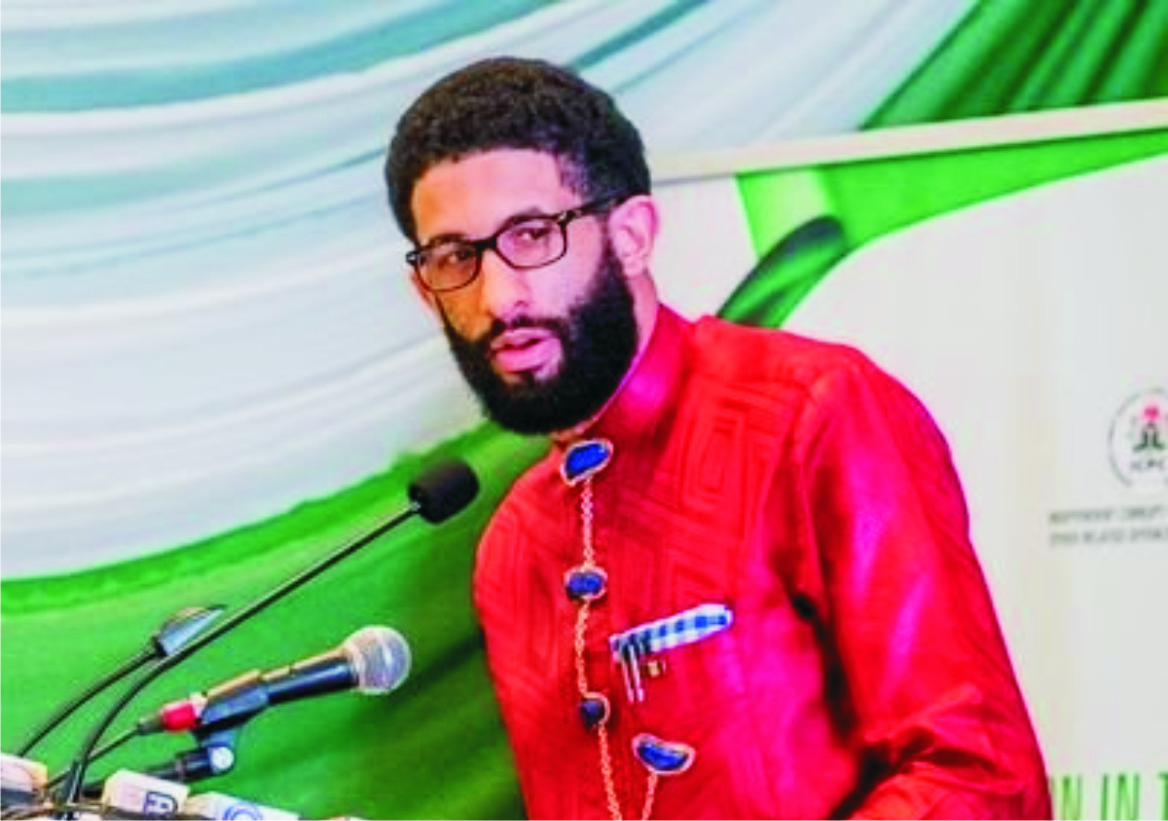
Senior Special Assistant to President, Muhammadu Buhari on Public Affairs, Ajuri Ngelale, has urged Nigerians to expect better performance from the current administration as efforts are in place to revive the power sector.
Ngelale, who is also a member of the Presidential Power Initiative, said President Buhari had engaged processes to ensure that the transformation in Nigeria’s power sector is visible to all by 2021.
“Nigerians have got the right to be sceptical, they were told that we would be generating 40,000 megawatts by 2020 and all of that, and that has not happened.
“So, we understand that if government says something about the power sector, Nigerians are very sceptical, but we are asking our people to pay attention to what is happening right now.
“Earlier this year, around July, the Federal Government signed an MoU with Siemens a global engineering giant based in Germany.
“As a result of the meeting with Angela Merkel (German Chancellor) and President Muhammadu Buhari in the State House, they agreed that the German Government would step in and assist us with the development of our power sector.
“So, what we are telling Nigerians and we are saying it openly for them to hold us to account, is that by December 2021 we would have increased our distribution capacity from 3000 megawatts to about 7000 megawatts.
“Which means Nigerians will see more than double the capacity they have been seeing over the last several decades within the next two years”, he said.
Ngelale said due to some challenges in the sector, Nigerian government is currently focused on distribution.
“Mr President has said we need to deal with distribution before we touch anything else, let Nigerians be seeing the power that we are already generating.
“While that is going on, as we get towards 2021, we are also building the Ajaokuta to Kaduna to Kano Gas Pipeline but along that pipeline, there is going to be three power plants.
“One in Abuja, Kaduna and Kano; each power plant is going to generate 1,350 megawatts; if you put all that together, that is of course more than 4000 megawatts of new power.
“And that is separate from the Mambilla Hydro Power Project that’s about 3500 megawatts that we are currently at the end of negotiations with Chinese Government”.
Ngelale, while expressing Government’s excitement at the project, reiterated that by 2023, power distribution would have risen to 11,000 megawatts.

Oil & Energy
Take Concrete Action To Boost Oil Production, FG Tells IOCs
Speaking at the close of a panel session at the just concluded 2026 Nigerian International Energy Summit, the Minister of State for Petroleum Resources (Oil), Senator Heineken Lokpobiri, said the government had created an enabling environment for oil companies to operate effectively.
Lokpobiri stressed that the performance of the petroleum industry is fundamentally tied to the success of upstream operators, noting that the Nigerian economy remains largely dependent on foreign exchange earnings from the sector.
According to him, “I have always maintained that the success of the oil and gas industry is largely dependent on the success of the upstream. From upstream to midstream and downstream, everything is connected. If we do not produce crude oil, there will be nothing to refine and nothing to distribute. Therefore, the success of the petroleum sector begins with the success of the upstream.
“I am also happy with the team I have had the privilege to work with, a community of committed professionals. From the government’s standpoint, it is important to state clearly that there is no discrimination between indigenous producers and other operators.
“You are all companies operating in the same Nigerian space, under the same law. The Petroleum Industry Act (PIA) does not differentiate between local and foreign companies. While you may operate at different scales, you are governed by the same regulations. Our expectation, therefore, is that we will continue to work together, collaborate, and strengthen the upstream sector for the benefit of all Nigerians.”
The minister pledged the federal government’s continued efforts to sustain its support for the industry through reforms, tax incentives and regulatory adjustments aimed at unlocking the sector’s full potential.
“We have provided extensive incentives to unlock the sector’s potential through reforms, tax reliefs and regulatory changes. The question now is: what will you do in return? The government has given a lot.
Now is the time for industry players to reciprocate by investing, producing and delivering results,” he said.
Lokpobiri added that Nigeria’s success in the upstream sector would have positive spillover effects across Africa, while failure would negatively impact the continent’s midstream and downstream segments.
“We have talked enough. This is the time to take concrete actions that will deliver measurable results and transform this industry,” he stated.
It would be noted that Nigeria’s daily average oil production stood at about 1.6 million barrels per day in 2025, a significant shortfall from the budget benchmark of 2.06 million barrels per day.
Oil & Energy
Host Comm.Development: NUPRC Commits To Enforce PIA 2021
Oil & Energy
PETROAN Cautions On Risks Of P’Harcourt Refinery Shutdown
The energy expert further warned that repeated public admissions of incompetence by NNPC leadership risk eroding investor confidence, weakening Nigeria’s energy security framework, and undermining years of policy efforts aimed at domestic refining, price stability, and job creation.
He described as most worrisome the assertion that there is no urgency to restart the Port Harcourt Refinery because the Dangote Refinery is currently meeting Nigeria’s petroleum needs.
“Such a statement is annoying, unacceptable, and indicative of leadership that is not solution-centric,” he said.
The PETROAN National PRO reiterated that Nigeria cannot continue to normalise waste, institutional failure, and retrospective justification of poor decisions stressing that admitting failure is only meaningful when followed by accountability, reforms, and a clear, credible plan to prevent recurrence.
-
Sports3 days agoArsenal Women End Man City’s Invincibility
-
Sports3 days agoU-20 WWC: Falconets claim qualifier win
-
Sports3 days agoInsurance Deepen Enyimba’s Trouble
-
Sports3 days agoYouth Olympics preparation Gears up
-
Sports3 days agoCologne Youth Team Set Crowd Record
-
Sports3 days agoTornadoes Set For NPFL exit over Stadium Ban
-
Sports3 days agoPalmer Stars As Chelsea Compound Wolves Woes
-
Sports3 days agoBarca Pull Out Of Super League Project