
Politics
Still On Autonomy Of Judiciary And Legislature

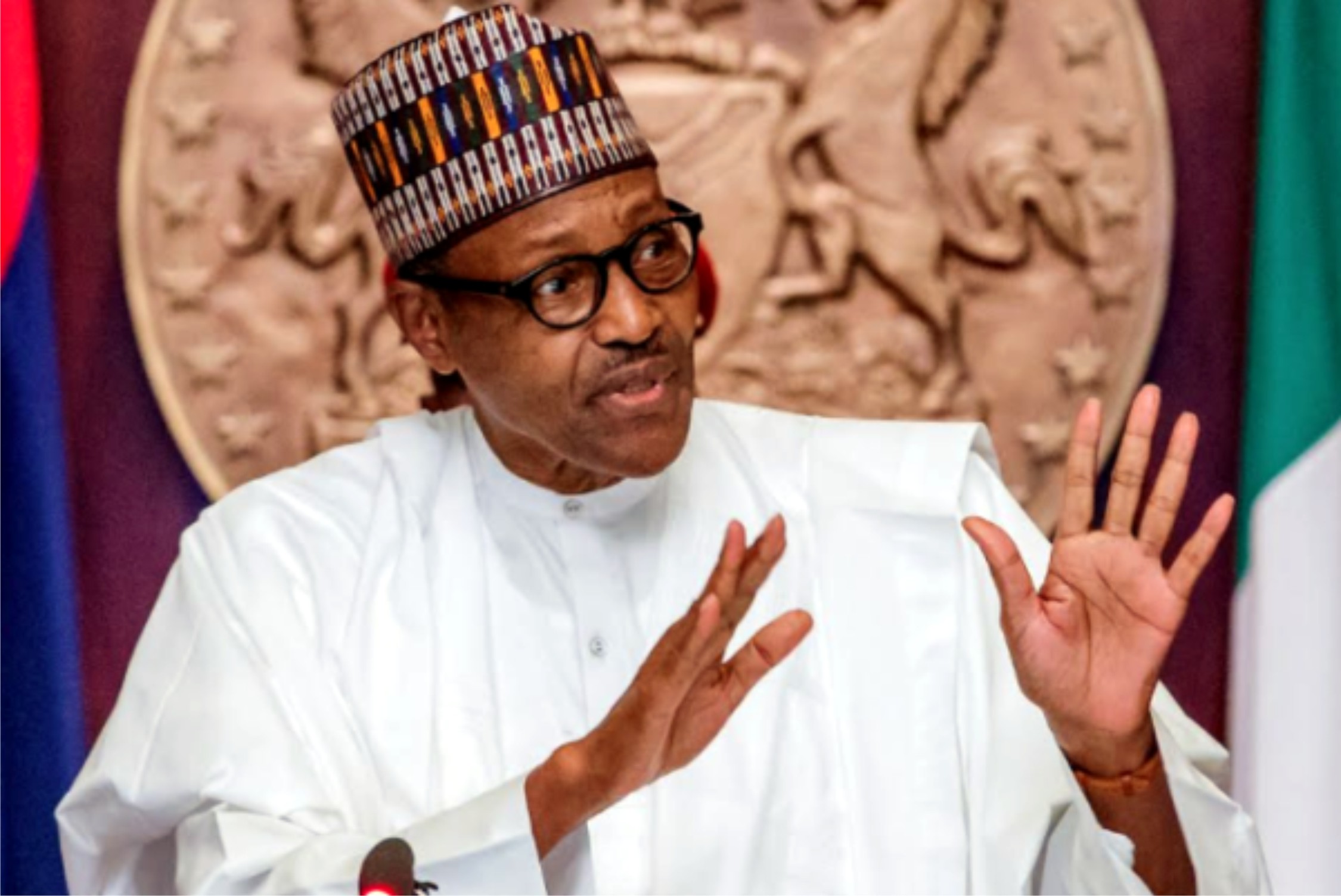
In 2018, President Muhammadu Buhari assented to the constitutional amendments, granting financial autonomy to state legislature and state judiciary.
Also, the president later inaugurated Presidential Implementation Committee on Autonomy of the State Legislature and State Judiciary.
Buhari directed the members of the committee to be meticulous and diligent in the discharge of their duties.
He said that the setting up of the committee was necessitated by the realisation that legislative and judicial autonomy were necessary preconditions for nation’s democracy to endure.
According to him, the committee is expected to foster effective implementation of the autonomy constitutionally granted the state legislature and judiciary in the 1999 Constitution (as amended).
Further to Buhari’s assent, on May 16, Nigerian state governors on the platform of the Nigeria Governors’ Forum (NGF), expressed their commitment to work with the Federal Government to implement the law.
The then Chairman of NGF, former Governor Abdulazeez Yari of Zamfara, said: I align with the motion that the legislature and judiciary autonomy is a necessary precondition for an enduring democracy’’.
The governors observed that the autonomy would ensure that “money due to the judiciary will go to the account of the judiciary directly and money due to the legislature will go to the account of the legislature directly.
“It is intended to ensure that money for the judiciary is not spent on the judiciary or on the judiciary but it is spent by the judiciary for the judiciary and on the judiciary and the same goes for the legislature’’.
Irrespective of the constitutional provision for the independence of the three arms of government and the efforts of the Buhari administration to promote this in governance, the legislature and the judiciary in states are still battling to remain independent, reports have shown.
A survey across the states shows that the judiciary and the legislature still depend on the executive arm of the state government for their survival.
The Speaker of the House of Assembly in Ondo State Bamidele Oleyelogun, said that although the process of becoming autonomous had been initiated, the House had been waiting for Governor Oluwarotimi Akeredolu for final endorsement.
Oloyelogun said that all arrangements had been made and necessary documents required from the legislative arm of government for full implementation of autonomy of the judiciary and the legislature had been submitted to the executive.
Oleyelogun, said “much now depends on the executive arm of government for full implementation’’.
However, a lawyer, Mr Seun Sogbeso, said that state governments had not given both legislative and judiciary arms of government free hand to operate.
Sogbeso said that every government would always want to be in charge of the two arms of government, adding: “it is hard to see the arms of government being free’’.
Similarly, in Ogun, the Speaker of the Assembly, Olakunle Oluomo, said that the implementation of financial autonomy for the state legislature had yet to be implemented in the state.
Corroborating Oluomo, the Chairman of the Ogun chapter of the Nigeria Bar Association, Mr Olu Alade, admitted that the law had to be put into effect.
In spite of this, he noted that since the constitution had granted autonomy and the president had demonstrated willingness and determination to implement it, autonomy would soon be operational.
In Ekiti State, the Speaker of the House of Assembly, Mr Funmiyi Afuye, said that the state was still in the various stages of implementation of the 2018 Act which supported autonomy for the state’s assembly.
Also speaking, the Deputy Chief Registrar of the State High Court, Mr Ariyibi Apuabi, said that the judiciary arm of government in the state had yet to enjoy autonomy.
Apuabi, however, disclosed that a committee had been set up to hasten its implementation for the judiciary.
Reviewing the situation of the implementation, Mr Kayode Martins, the Chairman of Judiciary Staff Union of Nigeria (JUSUN) in Oyo State, accused governors of frustrating the implementation process, adding that a presidential executive order would fast track the process.
He said that the national body of the body was doing everything possible to ensure that the president issues an executive order on autonomy.
In the same vein, the Deputy Majority Leader of the Oyo State House of Assembly, Mr Kunle Akande, admitted that the executive had yet to grant financial autonomy to the assembly.
Akande, however, said that efforts towards the financial autonomy for the assembly had started that would be completed soon.
Lawmakers in Kwara State believe that the legislature has been enjoying autonomy without interference by the executive in its affairs.
The Chairman of Kwara House of Assembly Committee on Ethics, Privileges and Judiciary, AbdulGaniyu Salaudeen, said that the legislature would continue to remain independent to achieve the desired result.
Some lawyers in the state, however, argued that without financial autonomy, no institution or establishment of government could be totally free from interference.
In the North-Central part of the country, reports show that some states, especially, in Benue, Plateau and Kogi, have yet to begin the implementation of financial autonomy for the judiciary and the legislature.
However, reports indicate that there is partial implementation of the directive in Nasarawa State and the Niger.
The Speaker, Benue State House of Assembly, Mr Titus Uba, said that the state judiciary and the legislature had yet to be granted autonomy, but that the process had started.
The Chief Registrar, Plateau State Judiciary, Mrs Ladi Madaki, said that the bill or template on the issue had passed second reading at the State House of Assembly.
“Until and unless it is passed in to law by the House, we can’t have a functional and effective independent judiciary,’’ he said.
The Chief Registrar of Kogi High Court, Mr Yahaya Ademu, said: “we are still operating the old system; we are still receiving subventions from the state government. The last we received was that of July salary.
“The problem is from the Federal Government. The committee has submitted its report; we are waiting for the presidential directive. I think that is what is delaying it’’.
The Nasarawa State House of Assembly Clerk, Mr Ego Maikeffi, said that the financial autonomy of the Assembly had yet to begin.
“A bill for a Law to Provide for Self Accounting of the state House of Assembly has been passed by the fifth assembly but was not signed into law by the immediate past governor of the state.
“We have been receiving our monthly subvention that is salary and overhead as we had been doing in the previous years from the executive,’’ he said.
The Chief Judge of Niger State, Mr Aliyu Mayaki, also noted that the state judiciary enjoyed partial financial autonomy.
According to him, the head of courts no longer have to go cap-in-hands to the governor asking him for funds.
He attributed many of the infrastructure development and reform of the state judiciary to the partial autonomy it enjoyed.
In Cross River, the Registrar of the state judiciary Mr Edem Okokon, said: “nothing has been done to actualise the Federal Government’s directives on the implementation of financial autonomy of the judiciary.
“We have yet to receive any document from the Federal Government to that effect, maybe it is due to normal government bureaucracy.’’
Similarly, the immediate past Speaker of the Edo State House of Assembly, Mr Kabiru Adjoto, said: “I can tell you that we enjoyed a substantial level of compliance in Edo, especially as it regards funding.
“The parliament got what it wanted from the government in terms of fund based on budget performance.’’
In his view, the Chairman, Ikorodu Branch of the Nigeria Bar Association (NBA) in Lagos State, Mr Bayo Akinlade, said that major issues, including salaries of judges, magistrates and high ranking civil servants as well as building of infrastructure, were still handled by the executive arm.
“There is partial compliance with the law as to the financial autonomy of the judiciary as I observed in Lagos State.
“Monies are still paid into government accounts and go through a lot of bureaucratic structures for release; that is why we have courts with no fans, no air conditioners, bad generators and minimal chairs not sufficient for the lawyers and the litigants to seat,’’ Akinlade said.
A member of the Lagos State House of Assembly, Mr Tunde Braimoh, noted that there was the need for compliance.
But the Chief Registrar, High Court of Justice, Gombe State, Mr Abdulsalam Jatau,said that financial autonomy had yet to be implemented in the state.
According to him, every requirement of the judiciary is being taken care of by the executive in terms of training, basic office facilities and maintenance of the courts.
He, however, expressed optimism that financial autonomy for the judiciary would help to address some of their challenges.
“The condition of our courts is pathetic, especially area and magistrates’ courts; we will do everything humanly possible to address these problems,’’ he said.
Also, The Acting Chief Register, Hajiya Aisha Abubakar in Yobe State, said: “all judiciary finances come from the executives, meaning they have powers or control over the judiciary,’’
Abubakar added that another major constraint that affected the autonomy of the judiciary was the role the executives played in the appointment of chief judge.
Sharing similar sentiments, the Adamawa branch chairman of Judicial Staff Union of Nigeria (JUSUN), Alhaji Baba Gurin, said that the judiciary in the state was waiting for the implementation of the autonomy.
Mr Solomon Kumangar, the Director-General, Media and Communication to Governor Ahmadu Fintiri of Adamawa State, said that the governor was committed to the autonomy and is working towards that.
The Director of the El-Kanemi Peace and Development Centre, Mr Grema Kyari, observed that there ought to be community advocacy and mobilisation to facilitate successful implementation of the implementation of financial autonomy to state legislature and judiciary.
“Awareness creation on civic right is necessary to stem the undemocratic trend and guarantee autonomy for the legislature,’’ Kyari said.
All in all, Nigerians insist that stakeholders should ensure that the implementation of financial autonomy to state legislature and judiciary is effective to strengthen democracy.
Olaitan is of the News Agency of Nigeria (NAN)
Kayode Olaitan



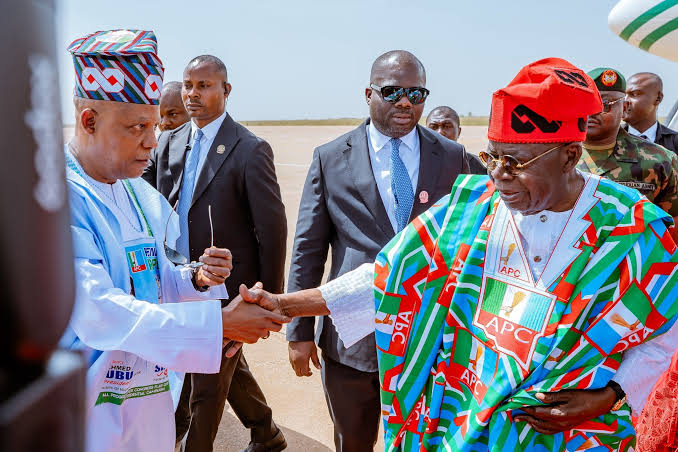
The campaign rally, held at the Kaduna Township Stadium, attracted Vice-President Kashim Shettima, APC governors, party leaders, federal and state lawmakers, political stakeholders and supporters from across the country.
The flag-off marks the beginning of the APC’s drive to secure a second presidential term for President Tinubu, with the party expected to promote its achievements, defend its economic reforms and outline its policy priorities under the proposed Renewed Hope 2.0 agenda.
Kaduna’s selection for the campaign launch underscores the strategic importance of the North-West, a region with a substantial voting population and considerable influence on presidential election outcomes.
The APC faces a significant challenge in Kaduna, where the Peoples Democratic Party’s presidential candidate, Alhaji Atiku Abubakar, defeated President Tinubu in the 2023 election. The rally therefore provides the ruling party an opportunity to strengthen its grassroots structures and regain electoral support in the state.
Addressing supporters, Vice-President Shettima appealed to Northern voters, highlighting President Tinubu’s political relationships with prominent Northern leaders, including Alhaji Abubakar, Mallam Nuhu Ribadu and the late President Muhammadu Buhari.
The Vice-President’s appeal reflects the APC’s determination to consolidate its support in the North as the party intensifies preparations for the presidential contest.
The Renewed Hope 2.0 agenda is expected to feature prominently in the campaign, providing a platform for President Tinubu to explain his administration’s economic policies and outline plans for another term.
However, the President’s record on economic reforms, rising living costs, petrol prices, employment, infrastructure and insecurity is expected to attract considerable scrutiny during the electioneering period.
-
 Education1 day ago
FCE Yola Graduates 3,555 Teachers , Seeks Upgrade to University
-

 Sports1 day ago
Nigerian Trio Target Titles At PFL Africa Finals
-

 Niger Delta1 day ago
Diri Restates Stance On Lagos-Calabar Coastal Highway
-

 Niger Delta1 day ago
C’River, NUJ Pay Tribute To Late Guardian Editor
-

 News1 day ago
NDLEA Recovers Tons Of Illicit Drug Consignments In Nine States
-

 Opinion1 day ago
Checking Voter Apathy In Nigeria’s Electoral Process
-

 Politics1 day ago
2027: DICKSON’S EX-ALLY VOWS TO WORK AGAINST NDC INTEREST IN BAYELSA
-
 Politics1 day ago
2027: GROUP PLEDGES 40,000 SUPPORTERS FOR COALITION CANDIDATES IN RIVERS