
News
Election: Tribunal Fixes Tomorrow For Atiku, PDP’s Motion On INEC’s Server

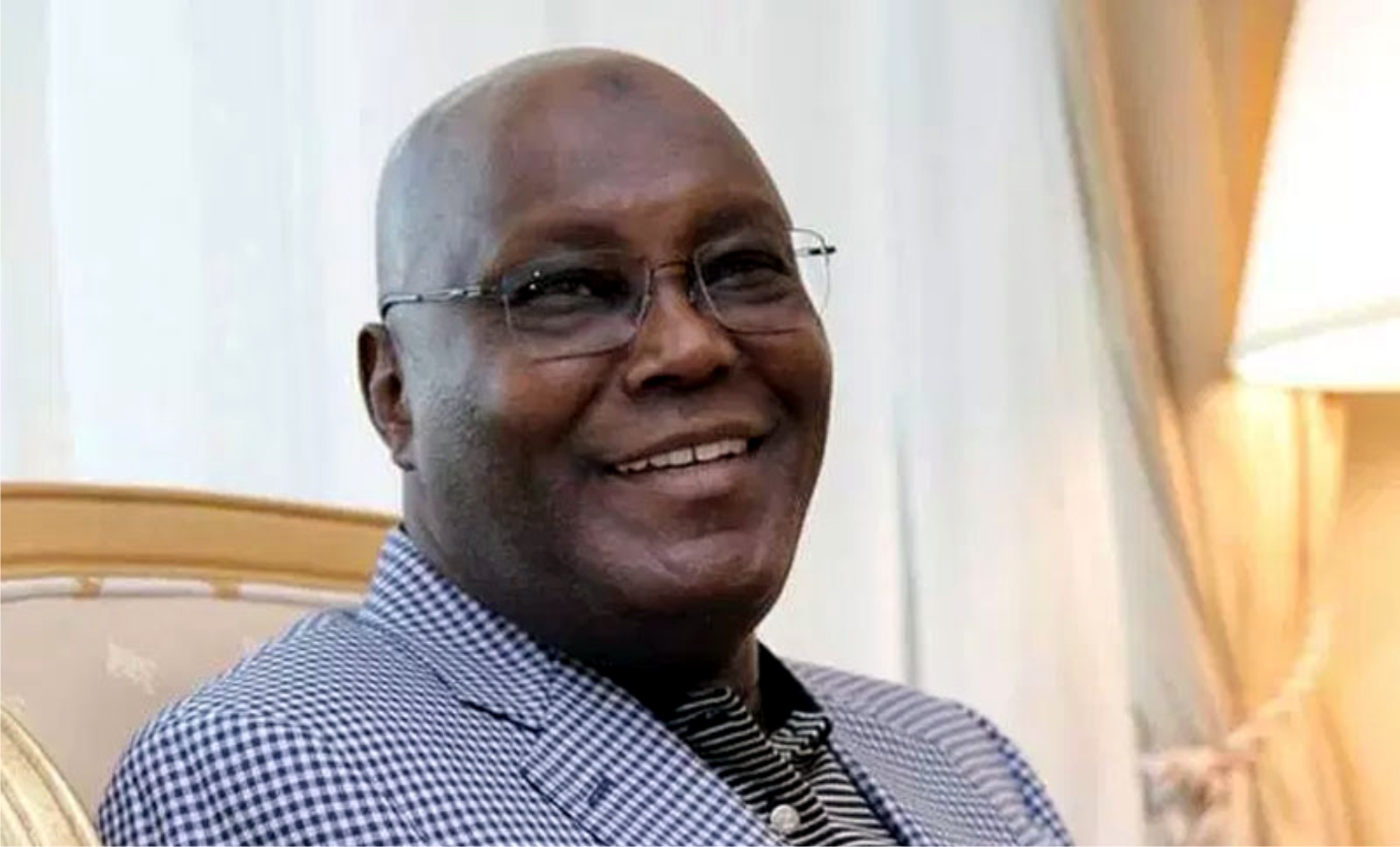
The Presidential Election Petitions Tribunal yesterday fixed Thursday for hearing of the Peoples Democratic Party and Alhaji Atiku Abubakar’s application for access to the Independent National Electoral Commission’s electronic server.
The PDP’s presidential candidate in the February 23, 2019 election and his party are challenging the victory of President Muhammadu Buhari and his All Progressives Congress at the poll.
The Independent National Electoral Commission, Buhari and the APC are the respondents to the petition.
The Justice Mohammed Garba-led five-man tribunal also, yesterday, reserved its rulings on nine applications it heard in respect of the petition yesterday.
Leading Justices Abdul Aboki, Joseph Ikyegh, Samuel Oseji, and Peter Ige on the panel of the tribunal, Justice Garba said the date for the rulings would be communicated to the lawyers representing the parties in the case.
INEC had declared that Buhari and APC the winner of the February 23 election polling 15,191,847 votes to defeat his closest rival, Atiku, who polled 11,262,978 votes.
But Atiku and the PDP, in their petition filed on March 18 to challenge the outcome of the poll, contended that “from the data” obtained from INEC’s server, “the true, actual and correct results” showed that they polled a total of 18,356,732 votes to defeat Buhari whom they said scored 16,741,430 votes.
By calculation, Atiku and PDP claimed to have defeated Buhari by 1,615,302 votes.
However, in its reply filed on April 10 to counter the petition, INEC urged the tribunal to dismiss the petition, insisting that the petitioners’ claims were false.
It said, through its lead counsel, Yunus Usman (SAN), that it collated the results of the election manually and never transmitted them electronically.
It added that it kept no server where results could have been transmitted electronically and stored as alleged by the petitioners.
However, the petitioners, in their application filed on May 8, maintained that INEC kept “central servers” in which “information was recorded and stored in database packets relating to accreditation of voters and transmission of results from the presidential election”.
They sought to be permitted to inspect the said servers and the card readers used for the conduct of the poll, examine and analyse the information obtained from them.
They also prayed for the tribunal’s permission to be allowed to file a report of their inspection, examination and analysis of the content of the facilities.
The applicants filed 13 grounds to back their application and their claims in it.
Part of the grounds of the application acknowledged that INEC was constitutionally and statutorily vested with the responsibility to conduct and manage the presidential election and set up electronic data central servers.
They stated, “The 1st respondent, as the body constitutionally and statutorily vested with the responsibility to conduct and manage the presidential election, set up electronic data central servers for the purposes of storage of transmitted accreditation data and results from smart card readers deployed for the election in an apparent bid to ensure relative transparency of the process.”
They added that “the Electoral Act, 2010 (as amended) itself acknowledges network data by recognition given to the website of the Independent National Electoral Commission in section 71 of the Electoral Act, 2010 (as amended). We also submit that section 84 of the Evidence Act, 2011 recognises computer data, and evidence generated therefrom.
“Thus, the general framework of the law accommodates such data retrievable from computers, of which a server is a storage component.”
Maintaining that INEC deployed the servers for the conduct of the February 23 poll, they said as part of the grounds of their application, “the results of the election were electronically transmitted to the 1st respondent’s Central Server”.
They added that notice had given INEC “notice that reliance will be placed on the extract of the electronic data from the said Central Server as of February 25, 2019”.
They added, “It will work tremendous hardship and grave injustice to refuse access to the contents of the central server that will assist the honourable court in the just consideration and determination of the issues involved in this matter or to allow a Party suppress or withhold access thereto.”
The application along with another one filed on May 5 would be heard by the tribunal on June 13.



The Rivers State chapter of the All Progressives Congress Christian Leaders Forum has expressed strong confidence in the capacity of All Progressives Congress (All Progressives Congress) candidates in the state to deliver effective governance if elected into office in the coming elections.
The State Coordinator of the forum, Archbishop Lucky Aroh, made this known during a breakfast and thanksgiving meeting held in Port Harcourt, where leaders gathered to pray for the stability of the party and the safety of its candidates ahead of the 2027 general elections.According to him, the meeting was convened to seek divine intervention for peace, unity, and security among APC candidates across Rivers State.
“Today we are praying for APC stability in Rivers State and the security of our candidates that have been elected to contest the 2027 elections. It is a breakfast meeting,” Aroh said.
He further expressed optimism that the party’s candidates would not disappoint the people if entrusted with leadership responsibilities.
“They will not fail when elected into office. We are here as fathers of the land to let them know, and I must tell you the truth that these are the authentic people that will do well in Rivers State,” he added.
Speaking earlier, the National Chairman of the forum, Professor Olanrewaju Abraham, commended the Rivers State chapter for organizing the programme, noting that the national body of the forum believes strongly in the power of prayer.
He stated that political leadership provides an opportunity to influence society positively, including advancing moral and spiritual values, while expressing confidence that APC candidates at all levels would emerge victorious in the upcoming elections.
Also speaking, the Rivers State Women Leader of the APC, Hon. Darling Amadi, praised the forum for its commitment to prayers for peace, stability, and the protection of party candidates.
Represented by the Deputy Women Leader of the party in the state, she described the initiative as commendable and urged other political and support groups within the party to emulate the gesture in promoting unity and stability.
By: John Bibor, Menebe Emmanuel & Fortune Paibi
Prominent businessman and philanthropist, Elder Anthony Osagwe-Ogo, was celebrated in grand style as he marked his 70th birthday anniversary, with distinguished Nigerians, business leaders, and golf enthusiasts gathering to honour his remarkable contributions to society.
The colourful celebration took place at the Port Harcourt Golf Club, where friends, associates, and well-wishers converged to pay tribute to the revered elder statesman.
Chairman of the occasion, High Chief (Dr.) Ikenna Okafor, described the celebrant as a detribalised Nigerian whose generosity, humility, and commitment to humanity have earned him admiration across different communities and backgrounds.
According to Dr. Okafor, Pa Osagwe-Ogo’s impact on society and the development of his community remains unparalleled. He noted that members of the golfing community are proud to be associated with a father figure who consistently promotes the welfare and well-being of those around him.
He further stated that the history and growth of the Port Harcourt Golf Club cannot be told without acknowledging the significant role played by the celebrant, whose wisdom, encouragement, and leadership have helped sustain the club over the years.
“We are here to celebrate a man who has impacted humanity positively, a peace-loving individual and an epitome of hope for the younger generation. We pray to emulate his virtues. Today, we celebrate a bridge-builder, a trailblazer, and an iconic leader whose life continues to inspire many,” Dr. Okafor said.
He expressed delight at the large turnout of guests from various walks of life, describing it as a testament to the respect and affection Pa Osagwe-Ogo commands within and beyond Rivers State.
In his response, the celebrant, Pa Anthony Osagwe-Ogo, expressed profound gratitude to God for preserving his life and granting him the privilege of attaining the milestone age of 70.
He also thanked members of the Port Harcourt Golf Club, family members, friends, and associates for identifying with him during the celebration and for their unwavering support over the years.
The event featured the cutting of the birthday cake, presentation of awards to deserving members of the club, goodwill messages, and moments of celebration among guests.
The ceremony was attended by notable personalities from the business community, the golfing fraternity, and other sectors, all of whom joined in celebrating the life and legacy of the respected elder statesman.
Rivers State Governor, Sir Siminalayi Fubara, and the Permanent Secretary of the Rivers State Ministry of Information and Communications, Dr. Honour Kuru Sirawoo, have been honoured with awards of recognition in connection with the 2026 Democracy Day celebrations held in Port Harcourt.
The awards, which formed part of activities marking Nigeria’s Democracy Day on June 12, were formally presented on Tuesday at the Ministry of Information and Communications in Port Harcourt.
Presenting the awards was Hon. Abdul Hameed Oladipupo Alli, popularly known as “Mr. Nigeria,” Publisher of Asiwaju Trumpet Magazine and Achievers World International Magazine.
Governor Fubara was recognised for his efforts in sustaining peace, stability, and a conducive political atmospherJohn Bibor / Menebe Emmanuel / Fortune Paibie in Rivers State. The organisers noted that his administration has fostered harmony and strengthened civic participation across the state.
Dr. Sirawoo, on the other hand, was honoured for his exemplary administrative leadership and significant contributions to effective information management within the Ministry of Information and Communications.
Representing Dr. Sirawoo at the presentation ceremony, Dr. Christian Davies received the award on his behalf and expressed gratitude for the recognition. He described the honour as a reflection of Dr. Sirawoo’s unwavering commitment to professionalism, excellence, and dedicated public service.
Dr. Davies assured the organisers that the award would be formally conveyed to the Permanent Secretary.
The event also featured the presentation of commemorative publications highlighting major governance and civic milestones in Rivers State, including Easter celebrations, Workers’ Day activities, the Governor’s third anniversary in office, and Democracy Day programmes.
Organisers of the awards commended the Rivers State administration for what they described as sustained peace, political stability, and improved civic engagement, noting that these achievements have contributed significantly to the state’s continued development.
By: Jessica Sambol