
News
Military Dissociates Self From Call To Overthrow Govt …16th Birthday: Hundreds March For Leah In UK, US …Lawyers Raise Alarm Over Threat To National Security

The Defence Headquarters yesterday dissociated the Armed Forces of Nigeria from the circulation of document, calling for the overthrow of the democratically elected government led by President Muhammadu Buhari.
In a statement issued by Navy Capt. Muhammed Wabi, Deputy Director of Defence Information, the DHQ accused a group, “Nigerian Continuity and Progress’’ as being behind the document.
Wabi alleged that the document called for the setting up of an “interim government’’ in place of the elected government
“The Armed Forces of Nigeria wishes to dissociate itself from the rascality and intentions as espoused in a document being circulated by a faceless group named Nigerian Continuity and Progress calling for support of a revolution to oust the current democratically elected government and in its place establish an illegitimate interim government.
“The AFN outrightly condemns the undemocratic and demonic actions of the author of the document.
“Accordingly, members of the public are enjoined to discountenance the content of the documents being circulated by NCP and equally condemned in totality, the call to derail our hard-earned democracy,’’ the statement said.
It said that the armed forces was “very mindful of its constitutional responsibilities’’ and would not be misled into any act that would undermine democracy as enshrined in the 1999 Constitution as amended.
“The AFN remains unflinchingly loyal to the Constitution, as well as President Muhammadu Buhari and Commander-in-Chief of the Armed Forces of the Federal Republic of Nigeria.
The statement said all relevant law enforcement agencies had been advised to unravel those behind the seditious document for appropriate actions.
Meanwhile, hundreds of people will today storm Nigeria’s Mission House in the United Kingdom and United States of America for prayer vigils as part of a global concern for the 16th birthday anniversary of Leah Sharibu, one of 110 girls abducted from their school in Dapchi by Boko Haram.
After spending 449 days in captivity, the girl would be marking her 16th birthday today.
There would be activities in Abuja, Jos, Lagos, Yola and Port Harcourt in addition to other events by Panam Music World, John Praise Foundation for Human Development and Prof. Mercy Ade-Davies International Foundation.
A statement by the UK group said: “Please join us to pray and protest from 1-1:30pm, the address is: 9 Northumberland Ave, Westminster, London WC2N 5BX. You can still speak up for Leah now.”
There would also be an event at the US Senate building on Capitol Hill today in Washington. In a related development, pupils of primary schools in Jos had a peaceful march and the same time, prayed for her safe return.
The pupils drawn from different schools called on the Federal Government to secure schools so that innocent children are not made to suffer for things they know nothing about.
Speaking at the mini rally, the President of Leah Foundation, Dr. Gloria Samdi-Puldu appealed to the Federal Government to honour its promises of freeing Leah from captivity.
In a related development, the Christian Lawyers Fellowship of Nigeria (CLASFON) has expressed dismay over the continuous downward slide of the state of security in the country.
The body noted that the security challenges were evident in various cases of killing of innocent and hapless citizens and non-citizens whose security and protection is the primary function of government.
A communique jointly issued at the end of the President-In-Council meeting of CLASFON at Aba, Abia State and signed by the National President, Arome Okwori and National Secretary, Olatunji Omole, yesterday, said, “CLASFON is saddened at the continuous downward slide of the state of security in our nation as evidenced in various cases of killing of innocent and hapless citizens and non-citizens whose security and protection is the primary function of government.
“Incidences also abound in the daily kidnap and abduction of citizens and non-citizens in most states of the federation.
“CLASFON calls on the President and Commander-in-Chief of the Armed Forces of the Federal Republic of Nigeria, to take seriously the responsibility of the protection of the lives and properties of all residents of Nigeria as provided by the Constitution and other relevant laws.”
Analysing the recent general election in the country, it noted, “CLASFON observes with dismay the widespread irregularities and total disregard for the rules of engagement as contained in extant laws by major stakeholders that characterised the general elections conducted recently by the Independent National Election Commission (INEC).”
CLASFON urged the Federal Government to heed the call for electoral reforms with a view to giving Nigeria an electoral system that would dignify Nigeria in the comity of truly democratic nations.
“CLASFON further calls on members of the recently constituted Election Petition Tribunals at all levels who are perceived to have personal interest by reason of their personal affiliations to recuse themselves in the interest of justice, good conscience and fair play.
“CLASFON observes with grave concern the persistent failure of the government to work assiduously to facilitate the release of Leah Sharibu and other abducted school girls.
“CLASFON calls upon the Federal Government of Nigeria to leave no stone unturned to secure the release of Leah Sharibu and other girls in the custody and captivity of the Book Haram insurgents.
“CLASFON observes with dismay the flagrant disregard of the Constitution in the arrest and continued detention without charge of the traditional and community leaders of the Adara Chiefdom in Kajuru Local Area of Kaduna State.
“CLASFON calls on the governor of Kaduna State to respect the rule of law as enshrined in the Nigerian constitution in compliance with his oaths of allegiance and of office,” participants at the meeting observed.
Participants observed with dismay the neglect of the welfare of the staff of Kogi State Judiciary by the non-payment of their salaries resulting in the deterioration and near collapse of the justice system in Kogi State.
“CLASFON also observes the unconstitutional means deployed in driving Government Policy by the Kogi State governor. We view steps taken in this direction as a flagrant usurpation of the powers conferred on constitutional organ and tantamount to dictatorial despotism.
“The said action of the governor led to the strike that has shut down the courts for several months thereby denying common citizens’ access to justice. We, therefore, demand that the governor of Kogi State should follow constitutional means in driving governance since Nigeria is a constitutional democracy,” the communique explained.



The Socio-Economic Rights and Accountability Project (SERAP) has sued the Federal Government at the ECOWAS Community Court of Justice over alleged diversion, irregular expenditure and failure to account for N78.8bn allocated to cash-transfer and social-protection programmes.
SERAP, in a statement released by its Deputy Director, Kolawole Oluwadare, yesterday, said the allegations involved the Ministry of Humanitarian Affairs and Poverty Reduction, the National Cash Transfer Office and the National Social Safety Nets Coordinating Office.
The allegations were documented in the Auditor-General of the Federation’s 2024 Annual Report, published on August 7, 2026.
According to the report, the findings covered various periods between January 2023 and December 31, 2024.
In the suit, marked ECW/CCJ/APP/42/26 and filed last week, SERAP is seeking a declaration that the government’s failure to account for the funds violates Nigeria’s international human rights obligations.
The organisation is also asking the court to order the government to provide a comprehensive account of the questioned funds, investigate the alleged irregularities, recover any money improperly spent or diverted where established, and strengthen financial oversight of social-protection programmes.
SERAP argued that the alleged financial irregularities could undermine the rights of vulnerable Nigerians to social security and an adequate standard of living, including access to food, clothing and housing.
The statement party read, “The funds were intended to benefit over 3.2 million households across 35 states, whose access to financial assistance has been affected by the allegations made by the Auditor-General.”
The suit, filed by SERAP’s lawyers, Kolawole Oluwadare and Kehinde Oyewumi, stated that the government’s failure to investigate the allegations and recover any improperly spent funds violated its obligations to protect vulnerable households.
“The failure to investigate the N78.8 billion cash-transfer scandal, account for the questioned funds and recover any unlawfully spent amounts violates Nigeria’s obligations to protect the human rights of vulnerable households,” the suit partly read.
The organisation said it instituted the case to protect affected households and ensure accountability for public funds allocated for their benefit.
“SERAP brings this public-interest case to protect the interests of affected households and ensure accountability for public funds allocated for their benefit,” it stated.
The organisation maintained that cash-transfer programmes could help address extreme poverty and enable vulnerable people to meet their basic needs, but argued that the government had a duty to ensure the funds were properly managed.
“The right to social security cannot be effectively realised merely by establishing a formal cash-transfer programme where the State fails to maintain reasonable systems for identifying beneficiaries, maintaining records, reconciling disbursements, monitoring expenditure, investigating irregularities and remedying losses,” the statement further stated.
According to SERAP, the Auditor-General questioned approximately N33.751bn reportedly transferred to more than 3.2 million households across 35 states in 2023, noting that adequate records to verify the payments and reconcile beneficiary records were not provided.
The report also identified N36.744bn in payments allegedly made without prepayment audits, N4.616bn in unsupported expenditures, N350.182m for enrolment, N89.511m for store purchases and N17.422m in diesel advances.
SERAP said the suit was brought under Article 9(4) of the ECOWAS Court Protocol to protect affected households and ensure accountability for public funds intended for social protection.
“The issue is whether the government has discharged its obligations under applicable human-rights treaties to safeguard resources allocated for social protection, investigate documented financial irregularities, provide effective remedies and ensure that those resources are applied for their intended purposes,” it stated.
The organisation also cited the constitutional responsibility of the Auditor-General to audit and report on the public accounts of the Federation and the offices and agencies of the Federal Government, describing the findings in the annual report as important official records of public expenditure.
It relied on Articles 1 and 2 of the African Charter on Human and Peoples’ Rights, arguing that the government had obligations to give effect to protected rights and ensure that failures in administering social-protection programmes did not result in discriminatory exclusion or unequal access to benefits.
“The Nigerian government has the obligation to take effective measures to prevent and address corruption and related misuse of public resources. The government has failed to take appropriate measures in response to the allegations made by the Auditor-General”, the statement added.
SERAP said it had previously urged President Bola Tinubu and relevant authorities to account for the questioned funds, publish audit records, investigate irregular expenditures, recover any funds unlawfully spent or diverted and take appropriate action against those responsible.
Following the publication of the Auditor-General’s report, the organisation issued a public statement and sent a letter dated September 5, 2026, requesting action on the findings. It also sought payment and beneficiary records, verification documents and an explanation for the missing REMITA records.
“The deadline given to the government to address the Auditor-General’s findings had elapsed without adequate action,” it stated.
The organisation further cited Articles 1 and 21 of the African Charter, alongside Article 9 of the United Nations Convention against Corruption, as requiring effective measures to protect rights and resources, promote transparent public financial management, investigate irregularities and recover public funds where losses or improper expenditure were established.
SERAP also relied on the works of legal scholar Kolawole Olaniyan, including Corruption and Human Rights Law in Africa, published by Hart Publishing in 2014, and Ownership of Proceeds of Corruption in International Law, published by Oxford University Press in 2023. It said the publications provided persuasive academic authority on corruption’s effects on human rights, public resources, accountability and international legal remedies.
“SERAP accordingly submits that the Auditor-General’s findings cannot be treated merely as administrative irregularities where public funds allocated for social protection may have been lost, improperly spent or left unaccounted for, and the government fails to take effective corrective action,” the statement added.
SERAP is asking the court to direct the government to conduct an independent, prompt and effective investigation into the identified irregularities, recover public funds improperly spent, diverted or lost where established, and take appropriate legal or administrative action against those found responsible, in accordance with due process.
It also wants the government to strengthen financial accountability, beneficiary verification, auditing, reconciliation and oversight mechanisms to prevent a recurrence of the alleged irregularities and ensure that eligible vulnerable households receive their intended benefits.
The organisation is further seeking an order restraining the government from administering or disbursing cash-transfer and social-protection funds without adequate accountability and oversight mechanisms, as well as appropriate remedies for any established adverse effects on beneficiaries’ protected rights.
No date has, however, been fixed for the hearing of the suit.
The Federal Government has released N38.93bn to 166 public tertiary institutions nationwide under the Needs Assessment Revitalisation Fund to address infrastructure deficits and improve teaching and learning facilities.
The intervention covers 79 universities, 46 polytechnics and 41 colleges of education, with universities receiving the largest share of the allocation.
The Federal Ministry of Finance disclosed this in a statement issued on Sunday by its Head of Media, Efe Ovuakporie, explaining that the funds would support approved projects in beneficiary institutions.
The statement read, “The Federal Government has disbursed N38.93bn to 166 public tertiary institutions nationwide under the Needs Assessment Revitalisation Fund.”
According to the ministry, the university component accounts for N28.5bn, while N5.8bn has been allocated to polytechnics and N4.7bn to colleges of education.
According to the ministry, the university component accounts for N28.5bn, while N5.8bn has been allocated to polytechnics and N4.7bn to colleges of education.
An analysis of the allocations by PUNCH Online showed that universities would receive approximately 73.2 per cent of the announced N38.93bn intervention, making them the largest beneficiaries.
Polytechnics would account for about 14.9 per cent, while colleges of education would receive approximately 12.1 per cent.
The ministry explained that the intervention was intended to address longstanding infrastructure challenges in public tertiary institutions and support the implementation of agreements reached between the Federal Government and the Academic Staff Union of Universities.
It stated, “The intervention forms part of the Federal Government’s efforts to address the needs of public universities and support the implementation of agreed measures under the Memorandum of Understanding between the Federal Government and the Academic Staff Union of Universities.”
The Needs Assessment Revitalisation Fund is designed to support improvements in institutional infrastructure and other identified needs, particularly in public universities, where inadequate facilities have remained a recurring concern in negotiations between the government and academic unions.
The ministry said the latest disbursement would enable beneficiary institutions to begin new projects or continue previously approved interventions aimed at improving their operational capacity.
“The funds are expected to enable beneficiary institutions to commence or advance approved projects addressing critical infrastructure and other identified institutional needs, with the overall objective of strengthening the quality of tertiary education in Nigeria,” it added.
The government also emphasised the need for coordination among the Federal Ministry of Finance, Federal Ministry of Education and beneficiary institutions to ensure that the released funds produced measurable improvements.
It noted that effective collaboration would be necessary to translate the financial intervention into improved infrastructure, institutional capacity and learning conditions.
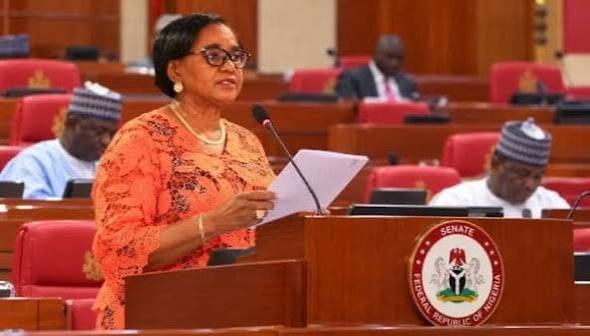
The bill to approve the establishment of the Federal University of Agriculture, Emughan, Abua-Odual Local Government Area of Rivers State has passed third reading.
The Bill, titled “A Bill for an Act to Amend the Federal Universities of Agriculture Act, Cap. F22, Laws of the Federation of Nigeria, 2024” was sponsored by Senator Ipalibo Harry Banigo representing Rivers West Senatorial District.
The bill seeks to amend the existing Federal Universities of Agriculture Act to provide for the establishment of the proposed institution in Emughan community in Rivers State.
The passage of the bill by the Senate marks a significant legislative milestone towards the establishment of the proposed university.
When established, the institution is expected to expand access to higher education, promote agricultural research and innovation, develop skilled manpower, and contribute to the economic growth of Rivers State and Nigeria at large.
According to a statement made available to The Tide, the bill, having passed the Third Reading in the Senate, will now proceed to the House of Representatives for concurrence as part of the legislative process towards its enactment into law.
The bill underscores Senator Banigo’s commitment to advancing educational opportunities and strengthening agricultural development in Rivers State.
By: Kevin Nengia
-

 Niger Delta2 hours ago
C’River, NUJ Pay Tribute To Late Guardian Editor
-

 Niger Delta2 hours ago
Diri Restates Stance On Lagos-Calabar Coastal Highway
-

 News4 hours ago
NDLEA Recovers Tons Of Illicit Drug Consignments In Nine States
-

 Opinion2 hours ago
Checking Voter Apathy In Nigeria’s Electoral Process
-
 Oil & Energy3 hours ago
S&P Global Warns Hormuz Energy Shock Could Become A Global Food Crisis
-

 Oil & Energy3 hours ago
Gas Reserves Hit 215 Trillion Cubic Feet
-
 News4 hours ago
Rivers Community Raises Alarm Over Alleged Security Invasion
-
 Niger Delta3 hours ago
AKSG Concludes Plans To Station Naval Base At Ibeno Creek