
Business
Appraising Nigeria’s Business Climate Since 2016

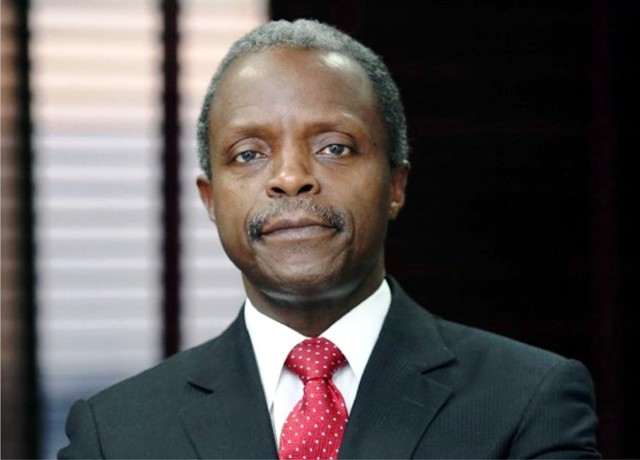
The Federal Government in 2016 established the Presidential Enabling Business Environment Council (PEBEC), to boost Nigeria’s Ease of Doing Business (EoDB) reforms.
To give teeth to EoDB chaired by Vice President Yemi Osinbajo; in 2017, as acting President, Osinbajo signed the Executive Order (E001).
E001 was aimed at giving the desired zing to the implementation of the Voluntary Assets and Income Declaration Scheme (VAIDS).
PEBEC’s model colligates with global best practice and includes a strong performance tracking element that is measured by the World Bank Ease of Doing Business Index (DBI), which is reported annually.
The DBI is an annual ranking that objectively assesses prevailing business climate conditions across 190 countries based on EoDB indicators.
Speaking at the 2nd PEBEC Awards, held recently in Abuja, Osinbajo said that the Federal Government had implemented no fewer than 140 reforms on ease of doing business in the past three years.
He said he was delighted to celebrate the phenomenal successes of the PEBEC reforms and recognition of those who made it possible.
“Our incredibly selfless and committed private sector partners and the sterling performance of many in the public sector; in the past three years, Nigeria has implemented more than 140 reforms to make doing business in Nigeria easier.
“Some of the successful reforms include the ability to reserve a business name within four hours.
“Complete the registration of a company within 24 hours online.
“Apply for and receive approval of a visa-on-arrival electronically within 48 hours.
“File and pay taxes online; and access specialised small claims commercial courts in Lagos and Kano States.
“The World Bank also reported in 2018 that 32 states of Nigeria improved their ease of doing business environment, led by Kaduna, Enugu, Abia, Lagos and Anambra States.”
He said that in 2019, PEBEC set a goal to move Nigeria into the top 100 on the 2020 World Bank Doing Business Index (DBI).
Osinbajo said that to achieve that, Nigeria would continue to pursue the implementation of reforms across all indicators.
He said that the indicators included implementation of legislative reforms, specifically the passage of the new Companies and Allied Matters Act and the Omnibus Bills.
The vice president listed others as the expansion of the regulatory reform programme started with NAFDAC and NAICOM, to include other regulators; the establishment of a National Trading Platform for ports and concession of major international airports.
“PEBEC has now commenced the fourth 60-day National Action Plan (NAP 4.0) on the Ease of Doing Business.
“NAP 4.0 is running from March 1 to April 29, 2019. It aims to deepen the reforms delivered over the past three years and drive institutionalisation.
“We have highlighted key action items in all of the focus areas to ensure we drive sustainability
“Some of the targets achieved in the last NAP 3.0 include driving registration for utilisation of the National Collateral Registry to facilitate access to credit for SMEs.
“Clearance of all pending NAFDAC registration applications to improve efficiency; and creation of a strengthened single joint cargo examination interface in all airports and seaports for import and export to reduce the time spent at the ports.
“NAP 4.0 will focus on initiatives such as enforcing compliance with Service Level Agreements (SLAs) across all indicators/focus areas, driving the passage of the Companies Allied Matters Bill 2018 for improved effectiveness of company law in Nigeria,” he said.
He said that other areas of reforms were enhancing efficiency in the small claims court, and enhancing the application and approval system for visas on arrival, among others.
According to him, the council will continue to work with all MDAs, the National Assembly and other key stakeholders.
In her address, Coordinator of PEBEC and Senior Special Assistant to the President on Industry, Trade and Investment, Dr Jumoke Oduwole, said the award was to appreciate MDAs which had contributed in the implementation of PEBEC mandate.
She said that the reforms were aimed at reducing bureaucratic bottlenecks and improve perceptions about Nigeria’s business environment.
Oduwole said that NAP 4.0 would enable the federal, state governments and the private sector to deliver impacts to Nigerians.
“The award is to give pat on the back of agencies and private sectors carrying out these reforms to ensure sustainability of the reforms,” she said.
On his part, Mr Okechukwu Enelamah, the Minister of Industry, Trade and Investment, said the award was a landmark in the journey of creating an enabling business environment in Nigeria.
He said that PEBEC was a foundation for creating a Nigeria that the citizens deserved.
The awards which came under various categories were presented to various government agencies and private establishments.
The awardees were: Corporate Affairs Commission, National Assembly Business Environment Roundtable, Nigeria Economic Summit Group, Nigerian Bar Association, Department for International Development, World Bank Group, Federal Inland Revenue Service, KPMG, Nigerian Ports Authority, Nigerian Stock Exchange, among others.
Notable among the awards was the World Bank’s sub-National Award for Reformed States in 2018, which went to Anambra, Abia, Lagos, Enugu and Kaduna States.
Governor. Okezie Ikpeazu of Abia State, said he was excited over the award and was dedicating it to God and Abia people.
“But I must acknowledge the dark room team–the various ministries and departments and agencies that reformed and reformed quickly.’’
Ikpeazu said that the award was in line with the promotion for the Enyimba Economic City.
He said that his ambition was to make Abia investment destination, not only in Nigeria but in Africa, adding that the only way to do it was to ensure that the ease of doing business was enhanced.
“We become a sub-national leader in this sector and by the grace of God, we will achieve this.
“Abia is an investors’ haven and I think by NBS statistics, we are number three in terms of investment in Nigeria. And we want to be number one and we can do it.
“The Enyimba Economic City is alluring; it is compelling; it is irresistible; this is the place to go,’’ he said.
The governor appealed to investors to come to Aba and invest, as the city would soon enjoy uninterrupted power supply.
Without doubt, the Ease of Doing Business in Nigeria has improved, concerted effort should be made to sustain it, to enable the country achieve its target of moving into the top 100 on the 2020 World Bank DBI.
Okoronkwo writes for News Agency of Nigeria.
Chijioke Okoronkwo



The Nigeria Inter-Bank Settlement System (NIBSS) has said that Bank Verification Number (BVN) enrolments rose by 6.8 per cent year-on-year to 67.8 million as at December 2025, up from 63.5 million recorded in the corresponding period of 2024.
In a statement published on its website, NIBSS attributed the growth to stronger policy enforcement by the Central Bank of Nigeria (CBN) and the expansion of diaspora enrolment initiatives.
NIBSS noted that the expansion reinforces the BVN system’s central role in Nigeria’s financial inclusion drive and digital identity framework.
Another major driver, the statement said, was the rollout of the Non-Resident Bank Verification Number (NRBVN) initiative, which allows Nigerians in the diaspora to obtain a BVN remotely without physical presence in the country.
A five-year analysis by NIBSS showed consistent growth in BVN enrolments, rising from 51.9 million in 2021 to 56.0 million in 2022, 60.1 million in 2023, 63.5 million in 2024 and 67.8 million by December 2025. The steady increase reflects stronger compliance with biometric identity requirements and improved coverage of the national banking identity system.
However, NIBSS noted that BVN enrolments still lag the total number of active bank accounts, which exceeded 320 million as of March 2025.
The gap, it explained, is largely due to multiple bank accounts linked to single BVNs, as well as customers yet to complete enrolment, despite the progress recorded.
-

 Sports3 days ago
Tinubu Lauds Super Eagles’ after AFCON bronze triumph
-

 Sports3 days ago
Fulham Manager Eager To Receive Iwobi, Others
-

 Sports3 days ago
AFCON: Lookman gives Nigeria third place
-

 Sports3 days ago
“Mikel’s Influence Prevent Some Players Invitation To S’Eagles Camp”
-

 Sports3 days ago
Man of The Match award Excites Nwabali
-

 Sports3 days ago
Remo, Ikorodu set for NPFL hearing, Today
-

 Sports3 days ago
Police Games: LOC inspects facilities in Asaba
-

 Niger Delta3 days ago
INC Polls: Ogoriba Pledges To Continuously Stand For N’Delta Rights … Picks Presidential Form