
Business
Operators Task CBN, NDIC On Ailing Banks

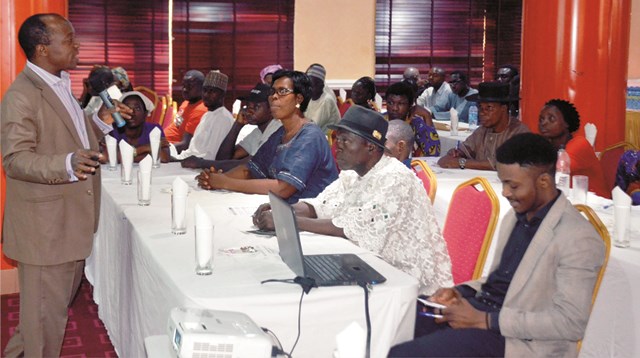
Capital market operators have urged the Central Bank of Nigeria (CBN) and the Nigeria Deposit Insurance Corporation (NDIC) to map out strategies to manage ailing banks rather than outright liquidation.
They stated this in separate interviews while reacting to the liquidation of Fortis Microfinance Bank Plc.
The operators said that CBN and NDIC should rather manage the affairs of any distressed financial outfit instead of resorting to liquidation in the interest of depositors, shareholders and the economy in general.
NDIC recently announced the official liquidation of Fortis Microfinance Bank and its branches nationwide.
Managing Director, APT Securities and Funds, Malam Garba Kurfi, said that operators expected the apex bank and NDIC to manage the affairs of Fortis Microfinance instead of liquidation.
Kurfi said that management of the bank’s affairs would have been better for the depositors and existing banks that had business relationship with Fortis.
“We expect the CBN and NDIC will rather manage the affairs of the bank before liquidation as that could have been better for the depositor.
“Liquidation will affect the existing banks that have business relationship with Fortis Microfinance Bank which can extend to other banks,” he said.
Kurfi said that appointing a new management and resale of the bank would have been better for entire economy rather than liquidation.
He, however, commended the Nigerian Stock Exchange (NSE) for being proactive in suspending the bank from trading in November due to non compliance with post listing requirements.
National Coordinator, Progressive Shareholders Association of Nigeria (PSAN), Mr Boniface Okezie, said that shareholders remained the victims without any compensation.
Okezie said that regulators must device other means of solving the problems in the financial industry instead of aggravating it through liquidation.
He said that regulators should take over the bank through bail out by appointing a new management to oversee its affairs instead of resorting to liquidation.
He said that microfinance banks must be adequately protected at all times by NDIC and CBN, noting that not much had been done.
Publicity Secretary, Independent Shareholders Association of Nigeria (ISAN), Mr Moses Igbrude, said that it was unfortunate that shareholders were subjected to suffering without due compensation.
Igbrude said that uncertainties and losses in the banking sector in the past few years were immeasurable.
“The anxiety and the question in mind of shareholders now is, which bank is next to go down?.
“Nobody knows which bank is stronger and that is what Fortis Microfinance Bank has shown”, he said.
Igbrude called on the shareholders to be cautious and careful when investing in banks stocks to avoid burning their fingers.
He said that government and regulators should bear in mind the effect and reputational risk sudden take over of distressed banks was having on the stock market and the economy.
Our correspondent reports that Fortis Microfinance Bank was licensed by CBN in 2007 and listed on NSE as the first private sector led Microfinance Bank in 2012.
The shares was suspended from trading on the floor of the NSE for failing to adhere to standard corporate governance and extant post-listing requirements that made it mandatory for quoted companies to submit their financial statements within stipulated timelines.
It had also been grappling with protracted governance crisis and internal breakdown of management controls which ultimately led to the resignation of its interim Managing Director, Mrs Bunmi Lawson; now the eventual collapse of the bank.


Nkpemenyie Mcdominic
Reports say that the training is designed to equip youths with practical technical skills for employment in the oil and gas and construction sectors, with emphasis on employability, safety, competence and self reliance.
In attendance at the flag-off ceremony this week, at the Petroleum Training Institute (PTI) Conference Hall, Effurun, were stakeholders, dignitaries, and political representatives, among others.
Dafinone, represented by his Chief of Staff, Adelabu Bodjor, said the initiative reflects a deliberate political investment in human capital development across Delta Central.
He explained that the training focuses on rigging and scaffolding, noting that “both are essential technical competencies required in industrial operations, construction projects, and oil and gas installations”.
Bodjor added, “The programme is intended to reduce dependency among youths by providing job-ready skills capable of supporting long-term economic opportunities and self-sufficiency. The initiative aligns with Senator Dafinone’s broader development agenda, which prioritises practical skill acquisition as a pathway to sustainable empowerment.”
Also addressing the participants, the NCDMB, Felix Omatsola Ogbe, represented by Mr. Teddy Bai, commended Dafinone for sponsoring the programme, describing it as “a timely response to critical manpower gaps in the industry”.
Bai explained that rigging and scaffolding remain safety-sensitive skills required across fabrication yards, offshore platforms, and construction sites, stressing that the programme bridges the gap between certification and practical competence.
He also charged the training consultant, OROH Contractors Limited, to maintain strict standards of professionalism, safety, and discipline, while urging participants to remain committed, focused, and disciplined throughout the exercise.
The Senate Liaison Officer for Sapele Local Government Area, Chief Patrick Akamuvba, , described the programme as a major step in strengthening human capital development in Delta Central.
Akamuvba said scaffolding and rigging skills are in high demand across residential, commercial, and industrial construction projects, noting that the training offers real employment opportunities for beneficiaries
He urged participants to prioritise knowledge and certification over short-term material expectations, stressing that discipline and seriousness would determine their long-term success.
He also cautioned youths against social vices and distractions, advising them to remain focused to maximise the opportunities provided by the programme.
-
News1 day ago
Obuah’s Victory Excites Former Lawmaker as APC Primaries Conclude in Rivers West
-

 Politics3 days ago
APC PRIMARIES: FUBARA’S WITHDRAWAL, HISTORIC SACRIFICE FOR NATIONAL STABILITY ……. GROUP
-

 News3 days ago
Court Sentences Seven To Death Over Murder Of Cleric In Rivers
-
News1 day ago
105 Nigerians Killed In S/Africa In Seven Years
-

 Sports3 days ago
PH Arsenal Community Set For Streets Procession, Saturday
-

 Politics3 days ago
IPAC Flays INEC Over Election Guidelines Judgement
-

 Politics3 days ago
NDC To Adopt Electronic Voting For Future Primaries
-

 Niger Delta1 day ago
Royal Father Endorses PH Arsenal Community, Pledges To Support