
Politics
2019: The Prospects, Expectations

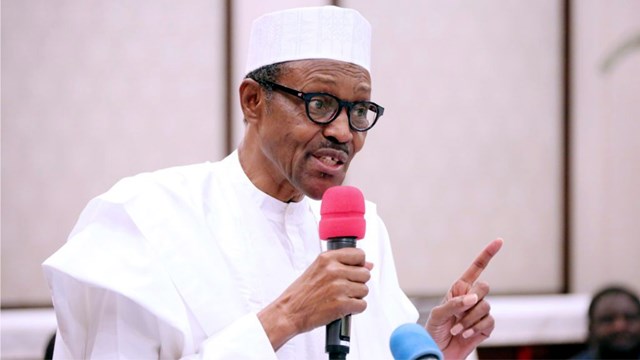
Just as everything with a beginning also has an end, 2018 faded away last Monday. Amongst numerous feelings attached to the outgone year, many a Nigerian would describe it as a year of tension and ambiguous direction with virtually no clues as to how better 2019 would turn out.
Expectedly, however, and depending on the divide, Nigerians, cut across such lines as party, religion, ethnicity, etc. would disagree and agree over how successful and developed or otherwise Nigeria had been, not only in 2018, but in the last three years plus.
While this is normal of political inclinations, it is also normal for politicians to also not accept clear failures in governance. Whether such failure is deliberately instituted out of selfish actions and or inactions, or out of ignorance in what constitutes governance, is usually not important.
In the same vein, it is normal for politicians to always claim to be doing what is right for the polity, even when their actions glaringly state otherwise. But, of course, there can hardly be anything normal in a people failing to truly assess how governance affects them and seek to make deliberate adjustments for the better.
This is what 2019, which crept into life on Tuesday, means for Nigeria as the citizenry seek to enthrone new leadership in all segments of governance, with particular focus on the Presidency in February 2019.
Former Lagos State Governor and All Progressives Congress (APC) national stalwart, Asiwaju Bola Tinubu, no doubt toed this line in his New Year message to Nigerians when he said “The nation is on the verge of an election to determine our collective fate. We can either choose to continue forward or return to the old ways that held us back for so long. Just as 2018 must turn into 2019, we must also continue to move forward.
“We must enter the New Year and see it as a new day for Nigeria. Thus, I ask you to perform your civic duty to vote with utmost faith, responsibility and the best interest of the country at heart”.
The question is what constitutes “the best interest of the country?”
Knowing that politicians, particularly their Nigerian versions, can never accept their flaws and faults, it has become an intrinsic tradition to always weigh what amounts to the interests of a country from the perspectives of those affected by the actions and inactions of those in government, especially people or organisations respected by the standard of given societies.
Former President Olusegun Obasanjo, who falls under this fold, in February 2018, served as a forerunner to what can unarguably be the heart beat of the Nigerian populace regarding how they had fared under the present administration, as well as what is required of Nigerians in 2019, regarding what is good for them.
According to him, “like all countries, Nigeria has many challenges. That, by itself, is not what we should worry about. What should matter is how, when and with what instruments we address or fail to address these challenges or create more problems”.
Obasanjo, who noted this while declaring his membership of the Coalition for Nigeria Movement (CNM) in his home in Abeokuta, stated that government under Buhari took nation-building for granted, because it had lost faith with giving continued attention to every citizen, and hence ceased to give a considerable segment of the citizenry a feeling of belonging and a stake in their country.
An example, the former President said, is that while the “Federal Character Principle”, as espoused in the Nigerian constitution, serves as guide to the leadership “to search for competent holders of major offices to be distributed within the entire nation”, in order to avoid concentration of power in a few ethnic hands or geographical places, government under President Muhammadu Buhari had reneged on this principle in appointing leadership of the security apparatus of Nigeria.”
The result of this, according to Obasanjo, was that the spate of violence, criminality, organised crime, insurgency and terrorism did not “receive sufficient proactive ameliorative responses through transformational leadership – a determined leadership that brings cohesion and wholesomeness to the polity”.
In the face of high-powered insecurity, there can hardly be development, no matter what reasons are given, or what level of evasiveness is instituted.
The implication of Obasanjo’s concerns were that a key cause of the failure of the present Buhari-led government is that there had not been an inclusive and popular participation in governance in pursuit of the country’s genuine political, economic, and overall social life.
On its part, the Coalition of United Political Parties described 2018 as a year when poverty, job loss and impunity were promoted by the present administration.
The coalition, through its first national spokesperson, Imo Ugochinyere, said the current report by The World Poverty Clock shows that Nigeria has overtaken India as the country with the most extreme poor people in the world. India has a population seven times larger than Nigeria’s.
In more practical terms, the implication of this is that about 86.9 million Nigerians now live in extreme poverty. This number represents nearly 50% of its estimated 180 million populations. The expectation is that as Nigeria faces a major population boom, it will become the world’s third largest country by 2050. What this portends for the country will better be imagined.
In the face of the fore-going, what may amount to succour came as President Buhari’s new year message on Monday, that elections in 2019 will not be a “do-or-die-affair”.
“Elections need not be do-or-die affair, and we should not approach that eventuality in a democracy with trepidation and mortal fear. Happily, a large number of presidential candidates have committed to peace and peace we shall have,” the President said.
The snag in Mr. President’s declaration can however be seen when placed side-by-side with the highly encumbered issue of his refusal to assent to the 2018 Electoral Act, which seeks to further institute free and fair elections in Nigeria, an improvement from 2015.
This makes more sense considering that ahead of the 2015 general elections, Nigeria’s democratic process got a notable boost following the introduction of electoral reform that saw, for the first time, the defeat of an incumbent President.
Why further improvement to the electoral process should not be encouraged at this stage of Nigeria’s hyped development can hardly be for the interest of the people, knowing that year in, year out, what Nigerians have wanted has not changed: provision of basic amenities by their elected officials, infrastructural development across board, ensuring a favourable business environment and adequate security, regular power supply, etc.
It has still not changed, and those who come into power have always known this. The problem has always been how they (the supposed people’s representatives) hope to give the people these basic needs.
Achieving these basic needs, among others, without making it look so unnecessarily herculean is what Nigerians want in 2019, however small such achievement may be. If a government therefore, does not show any commitment to this, the government has no business in governance.
Soibi Max-Alalibo


Mr Ojukwu, who recently returned to the interim National Working Committee led by Senator Esther Nenadi Usman, noted that the party had 34 elected members in the House of Representatives, eight Senators, and 80 members at the state Houses of Assembly after the 2023 general elections.
“Now we lost all of them,” he said. “I don’t think we have as many as five members in the National Assembly.”
The former national officer of the LP talked to journalists in Abuja and said he chose to join the caretaker committee led by Senator Nenadi-Usman because they are now the officially recognized leaders of the Party.
“I chose to work with the caretaker committee to help save the Labour Party, for the benefit of the party. I also want to use this chance to ask my colleagues at the national, state, and local government levels to come together and help rebuild our party.
“Another election is around the corner. We lost everything we have. They have left to other political parties. So I’ll reach out to all my friends in the other group to get together and work on making this party stronger again.
“The caretaker committee has formed a reconciliation committee. Let’s come together and talk so that we can restore the first opposition political party in Nigeria.”
Mr Ojukwu, who was part of the Julius Abure’s group, said there are no more factions in the LP.
He added, “There is a court ruling, and since it is valid, the right people are in the correct positions.”
He urged Barr Abure and others to drop the legal cases they have filed because they are not helping the party.
“Litigations are killing political parties”, he said. “They’ve seen many political parties disappear because of legal battles, and the Labor Party is losing support every day, which makes me feel sad.”
Mr Ojukwu said he did not think joining the Senator Nenadi-Usman’s NWC was a betrayal of the Abure group, describing himself as “the oxygen” of that faction.
“I’m with this group because of the verdict. But I never betrayed anybody. Rather, I was betrayed,” he added.
-

 Business1 day ago
NERC Amends Order on Meter Tampering, Power Bypass For Discos
-

 News1 day ago
Police Arrest Nigerian, Two Others For Kidnapping In Edo
-

 Business1 day ago
Nigeria, AFC sign $1.3 billion deal to build alumina refinery
-

 Rivers24 hours ago
KENPOLY Rector Promises To Prioritise Students’ Welfare
-

 Rivers24 hours ago
Don, Stakeholders Urge Environmental Laws In N’Delta
-

 News1 day ago
NDLEA Arrests Ex-Councillor With 40kg Skunk, Recovers Drugs In Diapers
-

 Nation2 days ago
Perm Sec Explains Success Of FGM Elimination Programme In Rivers
-

 Rivers1 day ago
ADIAFRICA Flags-off Free Eye Screening Outreach In PH