
Business
‘FG Needs More Borrowing To Fund Infrastructure’

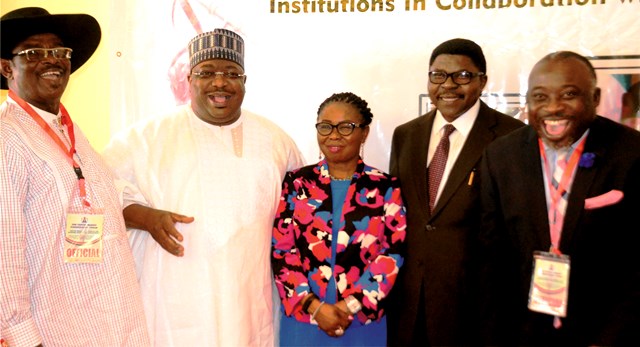
The Federal Government is expected to take more loans if its plan to fund infrastructure is to be realised, says a senior analyst at Agusto & Co, Mr Jimi Ogbobine.
Ogbobine said this at a training for financial journalists during the Finance Correspondents Association of Nigeria’s annual workshop in Lagos yesterday. He said government was expected to deploy about N1.6 trillion to fund infrastructure this year.
He said that the training, entitled, “Analysis of the Macroeconomic Environment’, organised by Rand Merchant Bank, was meant to deepen journalists’ knowledge of the economy and financial industry developments.
Ogbobine said the bulk of financing for infrastructure would come from borrowing with a larger share being domestic debts.
He also said funding the capital budget would require higher than planned borrowing with adverse implications for interest rates and interest costs for the economy.
“The Federal Government borrowing to fund infrastructure is likely to be between N1.2 and N1.6 trillion.
“The implementation is unlikely to start before the second quarter and revenue is likely to be lower than planned.
“Actual funding from asset restructuring, recoveries and others may be substantially lower than the planned level of N2 trillion.
“Therefore, fully funding the capital budget will mean higher than planned borrowing with adverse implications for interest rates and interest costs,” he said. He added that obligatory spending of the federal government was still more than 100 per cent of revenues, hence, there was no free cash flow for investment in infrastructure.
“Every kobo of infrastructure spending is financed by debt constraints ability to fully fund budgeted amounts.
“Debt as percentage of revenue is significantly higher than the median, of 200 per cent, for countries in Middle East & Africa.
“Federal Government plans to partly finance 2018 capital expenditure with proceeds of asset sales,” he said. Speaking on inflation, he said a hyper-inflationary environment was one where prices double at least every three years.
“This means inflation rate of about 25 per cent per annum.
“In such environments, investors hold savings in low inflation currencies like dollars, Pounds Sterling and Euros.
“Also, business persons price products, particularly those with a high import content in these low inflation currencies, usually the dollar.
“In effect, such environments are ‘dual currency environments’.
“Real Gross Domestic Product per capita should grow in 2018, making it easier for businessmen to access forex to fund their operations. Therefore, most businesses should see top line and profit growths while unemployment rate will fall but the level will remain high,” he said.
The analyst said actual deficit might be lower than planned deficit largely because of a low implementation of the capital budget.
Ogbobine said that based on the long-term inflation difference, the naira-dollar exchange rate should close 2018 at about N420/1 in the Investors & Exporters’ FX Window.
He, however, predicted that should oil revenues increase, the CBN might try to keep rates in the market as close as possible to the current levels.



Business
Jonathan, Diri, Others Laud Firm’s Milestone in Bayelsa …Says Project Will Drive Industrialisation, Create Jobs



-

 News1 day ago
RSG Targets Nine Million Residents in Mosquito Net Distribution Campaign
-

 Oil & Energy1 day ago
Aiyedatiwa Signs New Electricity Bill
-

 Maritime1 day ago
Marine Minister Commends President Tinubu On NPERA Bill Assent
-

 Oil & Energy1 day ago
NLNG Commissions Research And Innovation Centre In RSU
-

 News1 day ago
KenPoly Holds Eight Convocations, August 29
-

 News1 day ago
RSG Begins Another Phase of Projects Commissioning Today
-

 News1 day ago
RMAFC Completes Revenue Sharing Review, Proposes New Pay
-

 Maritime1 day ago
NAGAFF Petitions IGP Over Alleged Maritime Police Harassment