
Business
‘ Poor Budgetary Allocation, Bane Of Mining Sector Growth’

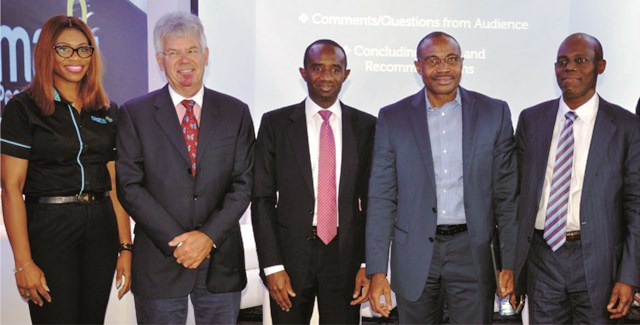
The Minister of State, for Mines and Steel Development, Alhaji Abubakar Bwari says poor budgetary allocation hindered the growth of the sector during the past administrations.
Bwari made this known in an interview with newsmen yesterday in Abuja.
He said the capital appropriated into law for the sector in 2015 was N704 million, while the amount released to the ministry was N300 million.
The minister of state said that the 2015 budgetary allocation was grossly inadequate to address the activities in the ministry and its agencies.
“When Dr Kayode Fayemi and I assumed duty in Nov. 2015, we discovered that the budget of the ministry was almost a billion naira and only N300 million was accessed by the ministry,’’ he said.
He said that the royalty generated by the ministry in 2015 was less than N700 million, compared to two billion naira we generated alone in 2016.
The minister said that tremendous improvement had been made in the sector through its budgetary allocations in the past two years.
Recall that in 2015, the capital appropriated for the ministry was N704 million and the amount released was N302 million.
In 2016, N2.6 billion was appropriated and what was released to the sector was N917 million.
In 2017, N6,485 billion was appropriated for the ministry but N3.242 billion was released to the sector.
He said that the ministry’s budget for 2017 was able to solve some of its needs.
Enumerating the progress made so far by the present administration in the past he said that the ministry had been able to provide logistics to its officers across the country.
“We can now give our officers money to monitor activities at all mine sites across the country from our budget, unlike in the past when the ministry’s budget was grossly inadequate.
“The ministry also purchased vehicles for its officers across the country as well as surveillance
taskforce to monitor illegal miners and mineral’s smugglers.
“The ministry was able to do many publications of its activities and adverts on revocation of
licences, we can now fund activities of various departments of the ministry and our agencies.’’
According to him, the ministry has been able to revive and finance Mineral Resources andEnvironmental Management Committee (MIREMCO) set up few years ago in every state to ensure peace between miners and mining host communities.
However, he said from the 2017 budget, the ministry recently shared N84 million to 11 universities to conduct research in various areas with regards to mapping and evaluation of particular mineral deposits in Nigeria.



Business
Jonathan, Diri, Others Laud Firm’s Milestone in Bayelsa …Says Project Will Drive Industrialisation, Create Jobs



-

 News3 days ago
RSG Targets Nine Million Residents in Mosquito Net Distribution Campaign
-

 Oil & Energy3 days ago
Aiyedatiwa Signs New Electricity Bill
-

 Oil & Energy3 days ago
NLNG Commissions Research And Innovation Centre In RSU
-

 Maritime3 days ago
Marine Minister Commends President Tinubu On NPERA Bill Assent
-

 News3 days ago
KenPoly Holds Eight Convocations, August 29
-

 News3 days ago
RMAFC Completes Revenue Sharing Review, Proposes New Pay
-

 News3 days ago
RSG Begins Another Phase of Projects Commissioning Today
-

 Maritime3 days ago
NAGAFF Petitions IGP Over Alleged Maritime Police Harassment