
Business
Nigeria Loses N126.2bn On Abandoned FG Properties

The Federal Government has again been charged to either concession or sell all its buildings that are not being utilised across the country to private investors in order to forestall further deterioration as a result of continued abandonment.
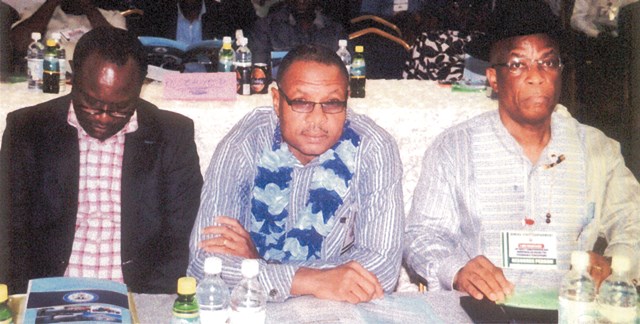
A Professor of Building, Prof. Olumide Afolarin Adenuga, who gave the charge in his inaugural lecture at the J.F Ade Ajayi Memorial Hall, University of Lagos, Akoka, yesterday, said, N126.2 billion revenue has been lost since 2006 on the Federal Government properties in Lagos State alone, because the government have refused to either sell or concession the assets.
Adenuga, a professor of building management lamented that the nation have been hemorrhaging as a result of the neglect of the buildings, warning that the huge economic benefits of these iconic structures would continue to elude the nation if the government continue to ignore the need to restore them to beneficial use for Nigerians.
The university teacher, who said maintenance is as old as creation, said man have had to contend with managing his space and the ecosystem since he abandoned a wandering lifestyle to adopt a settled life, pointing out that maintenance was responsible for increased lifespan of structures such as the Egyptian pyramids, the Papal States in the Vatican City, The White House in the United States and the Golden Temples, and other monuments, most of which have been kept in same serviceable condition as they were at the time of their construction.
For him, it was regrettable that many of the nation’s iconic assets, which were pleasant to look at, at the time of their construction, had been allowed to degenerate due to lack of maintenance and planned repairs that could have reversed the trend and turned them into positive economic assets.
“It is a glaring fact that our buildings are in very poor and deplorable conditions of structures and decorative disrepair, abandoned and reduced more or less to refuse dumps and natural homes for rodents and vermins in spite of billions of Naira spent to build and commission them.”
Adenuga listed among such assets wasting away in Lagos State to include; the National Stadium, Surulere, the Federal Secretariat Complex, Ikoyi, The Nigerian Eternal Telecommunications (NET) Building, Marina, the Defence House (formerly Independence Building), and the former NAVY Headquarters building in Marina. Other buildings according to him are: the National Arts Theatre, Iganmu, former National Assembly complex, Tafawa Balewa Square, and the Supreme Court building among others.
He said: “All these buildings are in deplorable states of structural and decorative repairs because we do not have any maintenance culture, a fact which manifests in the general apathy for maintenance coupled with ignorance on the part of occupiers of the benefits of planed preventive maintenance and care of buildings.”
According to him, the cumulative potential economic loss at the National Stadium alone, between 2004 to date, is about N52.6billion, while the Federal Secretariat, which has been overgrown with weeds and is now home to reptiles and rodents, could have been yielded over N72billion, if it had been converted to luxury residential apartments as proposed by Resort international Limited since 2006, while the 32-storey NET building with about 720 sq. metres of lettable space could have attracted over N1.6billion in rent annually if well maintained and optimally utilised.
He said apart from the loss of the huge revenue which could have been ploughed back into provision of social amenities for Nigerians, the 480 units of luxury residential apartments being proposed by RIL could have contributed to reducing the shortfall in the nation’s housing stock.



-

 Business1 day ago
NERC Amends Order on Meter Tampering, Power Bypass For Discos
-

 News2 days ago
Police Arrest Nigerian, Two Others For Kidnapping In Edo
-

 Business1 day ago
Nigeria, AFC sign $1.3 billion deal to build alumina refinery
-

 Rivers1 day ago
KENPOLY Rector Promises To Prioritise Students’ Welfare
-

 Rivers1 day ago
Don, Stakeholders Urge Environmental Laws In N’Delta
-
 Business1 day ago
NCDMB Signs Mgt Deal With Radisson, Edison…As Board’s 204 Rooms Hotel Open December 2026
-

 Rivers1 day ago
ADIAFRICA Flags-off Free Eye Screening Outreach In PH
-

 News2 days ago
NDLEA Arrests Ex-Councillor With 40kg Skunk, Recovers Drugs In Diapers