Business
ERGP: Focus Labs Identify $22.5bn Projects
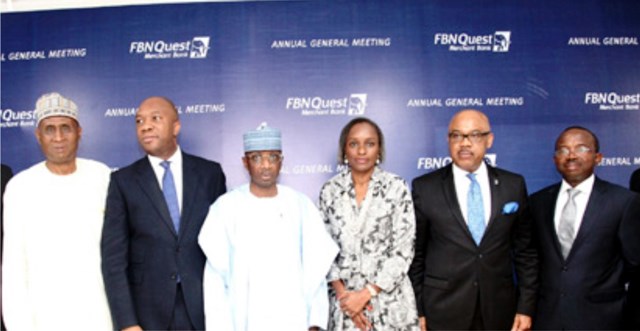
Minister of Budget and National Planning, Senator Udoma Udo Udoma, yesterday said the Focus Labs of the Nigeria Economic Recovery and Growth Plan (ERGP) identified 164 projects for investment across the country.
Udoma disclosed this at the Open Day of Focus Labs of ERGP in Abuja organised by the Vice President, Yemi Osinbajo, to mark the end of the first phase of the Labs.
The minister said the labs were able to identify the 164 projects spread over the six geopolitical zones with a total investment worth $22.5 billion and the potential to create 513,981 jobs by 2020.
He said of the amount, private investments worth $10.9 billion were categorised as ‘most ready’ to go.
The Focus Labs was designed as a workshop-style closed-door investment forum between private sector and senior government officials.
It served as a forum for detailed discussions and interactions to address some of the bottlenecks and inhibitors of additional business investments in the economy.
The first phase of Labs took place over a six week period in Abuja from March 12th to April 22nd.
It focused on six core sectors: Agriculture and Transportation, Power and Gas, as well as Manufacturing and Processing (including solid minerals).
The target was to mobilise at least $25 billion, or its equivalent in Naira in private investment.
Udoma said specifically with respect to each of the work-stream, investment worth $4.73 billion had been identified in Agriculture and Transport labs, with the potential to create about 129,000 jobs.
He also said investment valued at $9.25 billion with the potential of creating 378,000 new jobs was identified in the Manufacturing and Processing labs.
“Also, $8.57 billion worth of investments will come from the Power and Gas sector with the potential of creating up to 7,000 jobs.
“It is important to note that these investment projects identified in the labs will span beyond 2020.
“By projection, the cumulative investment value of the identified projects could rise to up to $39.12 billion by 2025 and about 716,079 jobs could be created,” the minister said.
Udoma, however, said the ministry had assisted the promoters of the projects already identified to develop detailed implementation plans for each of the projects.
He said the document showed the key performance indicators, detailed activities, responsible entities and expected delivery dates.
“This is required for tracking the monitoring of the implementation to achieve the targets.
“We have also set out the commitments government has undertaken to support the realisation of the projects”.

Business
CBN Revises Cash Withdrawal Rules January 2026, Ends Special Authorisation
The Central Bank of Nigeria (CBN) has revised its cash withdrawal rules, discontinuing the special authorisation previously permitting individuals to withdraw N5 million and corporates N10 million once monthly, with effect from January 2026.
In a circular released Tuesday, December 2, 2025, and signed by the Director, Financial Policy & Regulation Department, FIRS, Dr. Rita I. Sike, the apex bank explained that previous cash policies had been introduced over the years in response to evolving circumstances.
However, with time, the need has arisen to streamline these provisions to reflect present-day realities.
“These policies, issued over the years in response to evolving circumstances in cash management, sought to reduce cash usage and encourage accelerated adoption of other payment options, particularly electronic payment channels.
“Effective January 1, 2026, individuals will be allowed to withdraw up to N500,000 weekly across all channels, while corporate entities will be limited to N5 million”, it said.
According to the statement, withdrawals above these thresholds would attract excess withdrawal fees of three percent for individuals and five percent for corporates, with the charges shared between the CBN and the financial institutions.
Deposit Money Banks are required to submit monthly reports on cash withdrawals above the specified limits, as well as on cash deposits, to the relevant supervisory departments.
They must also create separate accounts to warehouse processing charges collected on excess withdrawals.
Exemptions and superseding provisions
Revenue-generating accounts of federal, state, and local governments, along with accounts of microfinance banks and primary mortgage banks with commercial and non-interest banks, are exempted from the new withdrawal limits and excess withdrawal fees.
However, exemptions previously granted to embassies, diplomatic missions, and aid-donor agencies have been withdrawn.
The CBN clarified that the circular is without prejudice to the provisions of certain earlier directives but supersedes others, as detailed in its appendices.
Business
Shippers Council Vows Commitment To Security At Nigerian Ports
Business
Nigeria Risks Talents Exodus In Oil And Gas Sector – PENGASSAN
The Petroleum and Natural Gas Senior Staff Association of Nigeria (PENGASSAN) says Nigeria risks massive brain drain in the oil and gas sector due to poor remuneration.
Mr Festus Osifo, President of PENGASSAN, said this while briefing newsmen at the end of the National Executive Council (NEC) meeting of the union on Thursday in Abuja.
He said the sector was facing challenges arising from Naira devaluation and inflation, noting that, oil and gas skills remained globally competitive.
“A drilling engineer in Nigeria does the same job as one in the U.S. or Abu Dhabi,” he said.
Osifo said the union must take steps to bridge the wage gap to prevent members from leaving the country for better opportunities abroad.
“If we don’t act, the brain drain seen in other sectors will be child’s play,” he said.
He said PENGASSAN had recorded significant gains through collective bargaining across oil and gas branches.
“We signed numerous agreements across government agencies, IOCs, service and marketing sectors,” he said.
He said the agreements brought relief to members facing rising costs of living, adding that, the association’s duty is to protect members’ jobs and enhance their pay.
Osifo urged companies delaying salary reviews and those foot-dragging as a result of the prevailing economic realities, to do the needful.
He said the industry employed some of the nation’s best talents, making competitive pay critical to retaining skilled workers.
“This industry recruits the best. Companies must provide the best conditions,” he said.
On insecurity, Osifo urged government to take decisive action against terrorism and kidnappings across the country.
“We are tired of condemnations. government must expose sponsors and protect citizens,” he said.
He urged government at all levels to prioritise tackling insecurity through better funding and equipment for security agencies.
Osifo said PENGASSAN supported calls for state police to improve local security response, adding that decentralising policing will protect citizens better than rhetoric.
He also said economic indicators meant little, if food prices remained high and farmers could not return to farms due to insecurity.
“Nigerians want to see food on the table, not macroeconomic figures,” he said.
He urged government to coordinate fiscal and monetary policies to ensure economic gains reach households.
“Translate macro results to food on the table,” he said.
-
Featured4 days agoOil & Gas: Rivers Remains The Best Investment Destination – Fubara
-
Nation4 days ago
Hausa Community Lauds Council Boss Over Free Medical Outreach
-
Nation4 days agoOgoni Power Project: HYPREP Moves To Boost Capacity Of Personnel
-
Nation4 days ago
MOSIEND Calls For RSG, NDDC, Stakeholders’ Intervention In Obolo Nation
-
Nation4 days ago
Association Hails Rivers LG Chairmen, Urges Expansion Of Dev Projects
-
Nation4 days ago
Film Festival: Don, Others Urge Govt To Partner RIFF
-
News4 days agoNDLEA Arrests Two, Intercepts Illicit Drugs Packaged As Christmas Cookies
-
News4 days agoTroops Rescue 12 Abducted Teenage Girls In Borno