
Business
Oshiomhole Urges Oil, Gas Sector Diversification

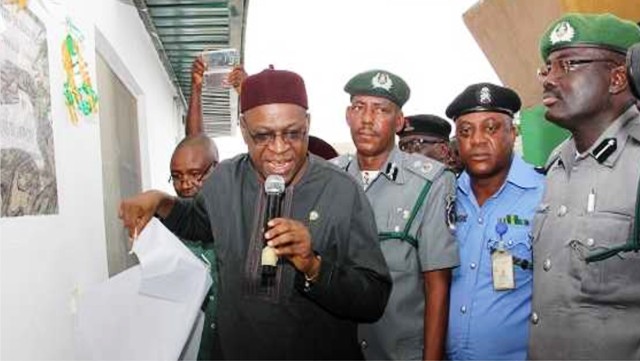
Former Edo State Governor, Adams Oshiomole, has called for the diversification of the oil and gas sector of the nation’s economy.
Oshiomhole made the call at the ongoing 5th Triennial National Delegates Conference of the Petroleum and Natural Gas Senior Staff Association of Nigeria (PENGASSAN) in Abuja, yesterday.
The theme of the conference is: “Emerging Trends in the Oil and Gas Industry and its Impacts on Labour Movement in Nigeria.’’
Represented by vice president, Industrial Global-All, Mr Isa Aremu, Oshiomhole said that with the crash in the global oil prices, there was need for government to look elsewhere in generating revenue for its economy.
According to him, the Federal Government has been talking about diversification of the economy in the areas of agriculture, solid mineral, among others but not in the oil and gas industry.
“In spite of the challenges taking place in this sector, the oil and gas industry matters more than ever before and there is no way you can talk of diversification without the oil and gas sector.
“As a matter of fact, no diversification can take place in agriculture, in solid minerals without the necessary available resources that is still accruable from the oil and gas sector.
“It is obvious, 40 per cent of the national employment comes from the sector not only that, 95 per cent of the foreign exchange earning of Nigeria comes from oil and gas.
“Sixteen per cent of our GDP also comes from this sector, with 37 billion reserved crude oil as well as 183 cubic feet of gas,’’ he said.
Oshiomhole added that the country’s gas reserve was close to 30 per cent of the entire world gas reserve.
“It is clear that the future shows that Nigeria is not just oil producing country but increasingly we are also gas producing country. “
He said that the real diversification must start from the petroleum industry before any other sector.
On crude oil, he said that Nigeria was only exporting crude without adding value to it.
“We are not adding value the way we should but there are close to 112 derivates from the crude oil.
“There are a lot of downstream and upstream that we can generate in a way to revive the industry,” he added.
He, however, decried the way the major operators in the oil and gas industries were shifting the burden on the working people due to the collapse of prices of the crude oil by downsizing, among others.
He said that it was time for the company operators to respect the collative bargaining they entered in order to put an end to the arbitrary sacking of workers.
He also called for a joint revival of the industry, urging them not to compromise on the need for minimum labour standard, especially with respect for decent work.
The former governor urged the union to use the opportunity provided by the conference to deliberate on issues that would move the industry forward.
PENGASSAN’s president Mr Francis Johnson, said the union supported government’s initiative to bring in investors to revamp the refineries in the area of funding and expertise.
Johnson, however, said that the union demanded an access to the Federal Government, investors memorandum of understanding for the three refineries – Port Harcourt, Warri and Kaduna.



Business
Jonathan, Diri, Others Laud Firm’s Milestone in Bayelsa …Says Project Will Drive Industrialisation, Create Jobs



-

 News2 days ago
RSG Targets Nine Million Residents in Mosquito Net Distribution Campaign
-

 Oil & Energy2 days ago
Aiyedatiwa Signs New Electricity Bill
-

 Oil & Energy2 days ago
NLNG Commissions Research And Innovation Centre In RSU
-

 Maritime2 days ago
Marine Minister Commends President Tinubu On NPERA Bill Assent
-

 News2 days ago
KenPoly Holds Eight Convocations, August 29
-

 News2 days ago
RSG Begins Another Phase of Projects Commissioning Today
-

 News2 days ago
RMAFC Completes Revenue Sharing Review, Proposes New Pay
-

 Maritime2 days ago
NAGAFF Petitions IGP Over Alleged Maritime Police Harassment