Opinion
Ali And Senate’s Pursuit Of Shadows
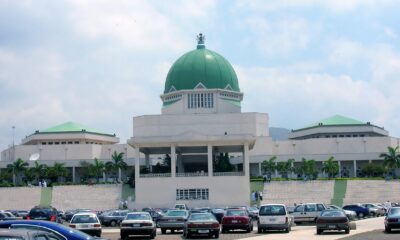
The upper legislative chamber of the National Assembly, the Senate, has continuously been treating Nigerians to drama in the midst of economic challenges. Today, the economy is adversely affecting the exploited class in the society to the extent that many that never begged in life have been forced to do so.
The Senate, by the 1999 Constitution of the Federal Republic of Nigeria as amended, is replicated after the American arrangement to exist side by side with the Federal House of Representatives in a bicameral legislature.
The overall idea is to facilitate quality legislation for the welfare of the citizenry, particularly the common man. Incidentally, the main objective of this institution has been defeated. Sadly, the huge allocations in yearly national budgets to the legislative arm of government have continued to mercilessly drain the economy. The senators are kept at ease just for marking attendances and for saying ‘yeah’ and ‘nay’.
Following the huge allowances allocated to these lawmakers, the quest to become a federal legislator has become a do-or-die affair. The legislative chambers should be for serious businesses and this can only be actualised when proficient and skilled persons occupy the seats against phalanges with egoistic and clandestine tendencies.
The unnecessary attention given to the attire of the Comptroller-General of the Nigerian Customs Service (NCS), Colonel Hameed Ali (rtd) by the Senate in the last two weeks, despite the over-bloated allowances allocated to themselves for law making business leaves much to be desired. Nigerians expect to see profound bills passed by the National Assembly to aid the service delivery of the present administration of President Muhammadu Buhari for speedy meaningful impacts on the common man on the streets.
Even when crude oil prices which Nigeria solely depends on for revenue crashed beyond the benchmark, the lawmakers were still padding and maneuvering the budget to the detriment of the common man they are supposed to represent.
Now, the questions begging for answers from these distinguished senators are; of what value is the wearing of a uniform by a retired Colonel that is on a mere political appointment to head the Nigerian Customs Service to the nation at these trying times? Who will pay for the sitting allowances of the senators for these wasted hours on Customs CG not appearing in Custom’s uniform, which is obviously to make a mockery of a Comptroller-General in a uniform with no rank? How many people-oriented bills have been enacted since the convocation of this 8th Republic? There are so many other questions.
It is widely believed in many quarters that the uniform drama is a script designed and sponsored by some aggrieved senior officials in the Nigerian Customs Service who felt shortchanged over the appointment of an outsider to head the agency against their turn, in collaboration some principal officers of the Senate whose illegally imported cars were seized by Ali. Such cannot outrightly be ruled out on account of enormous energies devoted to this aimless supremacy fight by the Senate.
Without a doubt, the corruption which has been triumphing in the Nigerian Customs Service for many years makes it expedient for some drastic actions of such nature to be taken. It is no politics to state that a state of emergency is long overdue in the agency.
On the other hand, the current state of the nation ought to be of more serious concerns to the lawmakers, instead of pursuing self-indulgent and politically-motivated goals. By now, one expects that luxurious cars imported and used in the country by the affluent class ought to attract special tax regimes as done in America and other developed and developing nations. One also expects that by now, a bill would be in progress towards scrapping any of the two legislative arms to make it more efficient. One equally expects that by now, a bill that would prohibit government officials from enrolling their children and wards in schools abroad would have been passed, so that schools in the country will be subjected to genuine state of emergencies.
Ditto in the health sector, which would proscribe all government officials; elected and appointed, from embarking on medical treatments abroad except on exceptional cases. Above all, one expects that out of necessity, vis-à-vis the economic situation in the country, the remuneration of political office holders, particularly the jumbo allowances earned by senators and members of the House of Representatives ought to have been reviewed to revive the present wobbly economy.
Admittedly, by the ambiguous oversight functions vested in the National Assembly by the Nigerian Constitution, the lawmakers could drift into such a fight as cheap as compelling a Customs boss to wear the agency’s uniform, under the cloak of patriotism.
However, by the provisions of the Customs & Excise Management Act (CEMA) 2011 as amended, such issue bothering on the compulsory appearance of its administrative head on official uniform is alien, hence baseless and no-go area for the Senate to endlessly pursue except its rule of law is dependent on wishful thinking.
Democracy is characteristically a government based on laid down rules. In other words, while the oversight functions could allow the red chamber to issue directives extravagantly to all MDAs (ministries, departments and agencies), the respective enabling Acts like CEMA which specifically guides and determines the management and operations of the agency, will render such directives and threats ultra vires, thus, null and void.
Overall, the legislative arm must qualitatively be up and doing with know-how on its core responsibilities, instead of prioritising politics and its gimmicks at the expense of the people.
Umegboro, a public affairs analyst, writes from Abuja.
Carl Umegboro

Opinion
Empowering Youth Through Agriculture
Quote:”While job seeking youths should continuously acquire skills and explore opportunities within their immediate environment as well as in the global space through the use of digital platforms, government, corporate/ multinational organizations or the organised private sector should generate skills and provide the enabling environment for skills acquisition, through adequate funding and resettlement packages that will provide sustainable economic life for beneficiaries”.
The Governor of Rivers State, Sir Siminalayi Fubara, recently urged youths in the Rivers State to take advantage of the vast opportunities available to become employers of labour and contribute meaningfully to the growth and development of the State. Governor Fubara noted that global trends increasingly favour entrepreneurship and innovation, and said that youths in Rivers State must not be left behind in harnessing these opportunities. The Governor, represented by the Secretary to the State Government, Dr Benibo Anabraba, made this known while declaring open the 2026 Job Fair organised by the Rivers State Government in partnership with the Nigeria Employers’ Consultative Association (NECA) in Port Harcourt. The Governor acknowledged the responsibility of government to create jobs for its teeming youth population but noted that it is unrealistic to absorb all job seekers into the civil service.
“As a government, we recognise our duty to provide employment opportunities for our teeming youths. However, we also understand that not all youths can be accommodated within the civil service. This underscores the need to encourage entrepreneurship across diverse sectors and to partner with other stakeholders, including the youths themselves, so they can transition from being job seekers to employers of labour,” he said. It is necessary to State that Governor Fubara has not only stated the obvious but was committed to drive youth entrepreneurship towards their self-reliance and the economic development of the State It is not news that developed economies of the world are skilled driven economies. The private sector also remains the highest employer of labour in private sector driven or capitalist economy though it is also the responsibility of government to create job opportunities for the teeming unemployed youth population in Nigeria which has the highest youth unemployed population in the subSahara Africa.
The lack of job opportunities, caused partly by the Federal Government’s apathy to job creation, the lack of adequate supervision of job opportunities economic programmes, lack of employable skills by many youths in the country have conspired to heighten the attendant challenges of unemployment. The challenges which include, “Japa” syndrome (travelling abroad for greener pastures), that characterises the labour market and poses threat to the nation’s critical sector, especially the health and medical sector; astronomical increase in the crime rate and a loss of interest in education. While job seeking youths should continuously acquire skills and explore opportunities within their immediate environment as well as in the global space through the use of digital platforms, government, corporate/ multinational organizations or the organised private sector should generate skills and provide the enabling environment for skills acquisition, through adequate funding and resettlement packages that will provide sustainable economic life for beneficiaries.
While commending the Rivers State Government led by the People First Governor, Sir Siminilayi Fubara for initiating “various training and capacity-building programmes in areas such as ICT and artificial intelligence, oil and gas, maritime, and the blue economy, among others”, it is note-worthy that the labour market is dynamic and shaped by industry-specific demands, technological advancements, management practices and other emerging factors. So another sector the Federal, State and Local Governments should encourage youths to explore and harness the abounding potentials, in my considered view, is Agriculture. Agriculture remains a veritable solution to hunger, inflation, and food Insecurity that ravages the country. No doubt, the Nigeria’s arable landmass is grossly under-utilised and under-exploited.
In recent times, Nigerians have voiced their concerns about the persistent challenges of hunger, inflation, and the general increase in prices of goods and commodities. These issues not only affect the livelihoods of individuals and families but also pose significant threats to food security and economic stability in the country. The United Nations estimated that more than 25 million people in Nigeria could face food insecurity this year—a 47% increase from the 17 million people already at risk of going hungry, mainly due to ongoing insecurity, protracted conflicts, and rising food prices. An estimated two million children under five are likely to be pushed into acute malnutrition. (Reliefweb ,2023). In response, Nigeria declared a state of emergency on food insecurity, recognizing the urgent need to tackle food shortages, stabilize rising prices, and protect farmers facing violence from armed groups. However, without addressing the insecurity challenges, farmers will continue to struggle to feed their families and boost food production.
In addition, parts of northwest and northeast Nigeria have experienced changes in rainfall patterns making less water available for crop production. These climate change events have resulted in droughts and land degradations; presenting challenges for local communities and leading to significant impact on food security. In light of these daunting challenges, it is imperative to address the intricate interplay between insecurity and agricultural productivity. Nigeria can work toward ensuring food security, reducing poverty, and fostering sustainable economic growth in its vital agricultural sector. In this article, I suggest solutions that could enhance agricultural production and ensure that every state scales its agricultural production to a level where it can cater to 60% of the population.
This is feasible and achievable if government at all levels are intentional driving the development of the agricultural sector which was the major economic mainstay of the Country before the crude oil was struck in commercial quantity and consequently became the nation’s monolithic revenue source. Government should revive the moribund Graduate Farmers Scheme and the Rivers State School-to-Land agricultural programmes to operate concurrently with other skills acquisition and development programmes. There should be a consideration for investment in mechanized farming and arable land allocation. State and local governments should play a pivotal role in promoting mechanized farming and providing arable land for farming in communities. Additionally, allocating arable land enables small holder farmers to expand their operations and contribute to food security at the grassroots level.
Nigeria can unlock the potential of its agricultural sector to address the pressing needs of its population and achieve sustainable development. Policymakers and stakeholders must heed Akande’s recommendations and take decisive action to ensure a food-secure future for all Nigerians.
By: Igbiki Benibo
Opinion
Of Protests And Need For Dialogue
Quote:“.Across Abuja, Anambra, and Lagos, a common thread emerges: a disconnect between authority and empathy. Government actions may follow policy logic, but citizens respond from lived experience, fear, and frustration. When these realities collide without dialogue, the streets become the arena of engagement”
It was a turbulent week in the country, highlighting the widening gap between government intentions and public perception. From Abuja to Anambra and Lagos, citizens poured into the streets not just over specific grievances but in frustration with governance that often appears heavy-handed, confrontational, or insufficiently humane. While authorities may genuinely act in the public interest, their methods sometimes aggravate tensions rather than resolve them.
In Abuja, the strike by workers of the Federal Capital Territory Administration (FCTA) and the Federal Capital Development Authority (FCDA) under the Joint Union Action Committee (JUAC) brought the capital to a near standstill. Their demands included five months’ unpaid wages, hazard and rural allowances, promotion arrears, welfare packages, pension and National Housing Fund remittances, and training and career progression concerns. These are core labour issues that directly affect workers’ dignity and livelihoods. Efforts to dialogue with the FCT Minister reportedly failed. Even after a court ordered the strike to end, workers persisted, underscoring the depth of discontent. Threats and sanctions only hardened positions.
The FCT crisis shows that industrial peace cannot be enforced through coercion. Dialogue is not weakness; it is recognition that governance is about people. Meeting labour leaders, listening attentively, clarifying grey areas, and agreeing on timelines could restore trust. Honesty and negotiation are far more effective than threats.
In Anambra, protests by Onitsha Main Market traders followed the government’s closure of the market over continued observance of a Monday sit-at-home, linked to separatist agitation. Governor Chukwuma Soludo described compliance as economic sabotage, insisting Anambra cannot operate as a “four-day-a-week economy.” While the governor’s concern is understandable, threats to revoke ownership, seize, or demolish the market risk escalating tensions. Many traders comply out of fear, not ideology. Markets are social ecosystems of families, apprentices, and informal networks; heavy-handed enforcement may worsen resistance. A better approach combines persuasion, dialogue with market leaders, credible security assurances, and gradual confidence-building. Coordinated political engagement with federal authorities could also reduce regional tensions.
In Lagos, protests erupted over demolition of homes in low-income waterfront communities such as Makoko, Owode Onirin, and Oworonshoki. The state defended these actions as necessary for safety, environmental protection, and urban renewal. While objectives are legitimate, demolitions drew criticism for lack of notice, compensation, and humane resettlement. Urban development without regard for human consequences risks appearing elitist and anti-poor. Where demolitions are unavoidable, transparent engagement, fair compensation, and realistic relocation must precede action to maintain public trust and social stability.
Across Abuja, Anambra, and Lagos, a common thread emerges: a disconnect between authority and empathy. Government actions may follow policy logic, but citizens respond from lived experience, fear, and frustration. When these realities collide without dialogue, the streets become the arena of engagement.
Democracy cannot thrive on decrees, threats, or bulldozers alone. Leaders must listen as much as they command, persuade as much as they enforce. Minister Wike should see labour leaders as partners, Governor Soludo must balance firmness with sensitivity, and Lagos authorities should align urban renewal with compassion and justice. Protests are signals of communication failure. Dialogue, caution, and a human face in governance are not optional—they are necessities. Police and security agencies must respect peaceful protest as a constitutional right.
By: Calista Ezeaku
Opinion
Empowering Youth Through Agriculture
-
Politics2 days agoAPC Releases Adjusted Timetable For Nationwide Congresses, Convention
-
Sports5 days agoHammers Beat Burnley To Boost Survival Chances
-
Business1 day agoCustoms Seek Support To Curb Smuggling In Ogun
-
News1 day ago
Police Bust Kidnapping Syndicate In PH
-
Sports1 day ago
DG NIS Wants NSC Board Constituted, Seeks Increased In Funding
-
Sports2 days ago
Falcon Players Prepare For Title Defense
-
Sports1 day ago
NSC Disburses N200m Training Grants To 26 Athletes
-
Sports1 day ago
‘NTF Will Build On Davis Cup Success For Brighter Future’