
Politics
ASALGA Attests Wike Is Working – Warmate

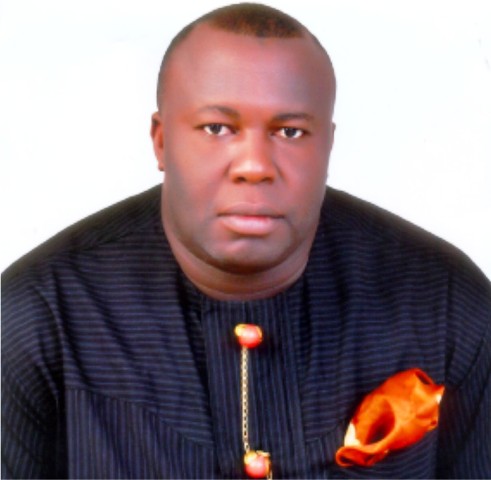
With Rivers State Governor, Chief Nyesom Wike’s NEW VISION in progress, not a few local government in the state, particularly Asari Toru Local Government Area (ASALGA), are keying into it to ensure that the much-needed democracy dividends get to the rural folks.
ASALGA Caretaker Chairman, Hon. Wright Promise Warmate, in this encounter with The Tide Political Editor, Victor Tew and Chief Correspondent, Ike Wigodo, dwells extensively on the NEW VISION and sundry issues.
Excerpts:
What is your vision of developing Asari-Toru Lga?
Development of Asari-Toru Local Government Area is essentially long term due to the geographical structure, having eight of its 15 communities cut off from road connectivity thereby hindering commerce, a major catalyst for economic development of any area. Provision of the necessary infrastructure required to stimulate sustainable development is way out of my mandate as Caretaker Chairman. However, given the dearth of economic activities owing to lack of industries and security challenges in the area that have placed economic dependence of the people almost entirely on the Council directly and indirectly, I intend to focus on improving security as an incentive to reviving activities in our traditional occupations that had been in limbo over the years. For over a century, our aquatic traditional occupations sustained families, education and even real estate development in the area; the disruption of it by insecurity is the immediate cause of the rising unemployment and idleness of the youths with its attendant increase in social vices. With the fairly constant power supply I restored on assumption of office, I also intend to organize an empowerment program to train youths and women across the 13 political wards in relevant skills to promote enterprise for self-reliance. This is beside the plan to organize traders into a cooperative and to assist them to take full advantage of the Kalabari Central Market established by the Rivers State Government to alleviate poverty and improve family economy.
It does appear that your administration’s development programmes are sited only in Buguma. Why?
I don’t think that is the case. As much as erstwhile Caretaker administrations might not have done much to impact on communities generally due to limited tenure and mandate that does not extend to capital projects, am aware that power supply is enjoyed by almost all the communities except for terrain restricted few. And your observation is particularly untrue about my administration for the obvious reason of my planned programmes being inherently beneficial to all especially the empowerment programme which earmarks 10 persons from all the 13 political Wards for the proposed skills training.
Against the backdrop of paucity of funds and your limited tenure. How feasible is your empowerment?
I would admit that my tenure is limited and that there is no financial resources in the Council to execute the planned programme of training together with start-ups for at least 10 persons from each of the 13 Wards of the LGA on such skills as ICT, recharge cards printing and distribution, yoghurt / ice-cream production, detergent/soap production, etc that can immediately make youths income earners. But we are pursuing a Public Private Partnership means of achieving it by involving individuals and corporate bodies who feel obliged towards improving the economic life of the area as a way to curtail crime and insecurity. We also intend to engage the Rivers State Microfinance Agency (RIMA) in the area of providing start-ups for graduates after the training. Already, we have commenced with empowering 65 women five from each of the 13 Wards – that were paid to clean the Council Secretariat to give it a new look. Next to come will be to engage 65 youths in same manner for clearing/desilting jobs in the LGA.
We are doing this to compliment the laudable efforts of the Governor of Rivers State, Chief Nyesom Ezenwo Wike to positively re-engage youth energy in productive ventures which was the vision behind the establishment of the German-run Port Harcourt Technical & Vocational Centre. Hence, we dubbed the programme Nyesom Ezenwo Wike Empowerment Scheme (NEWES) in solidarity with the Governor and in appreciation of his honest and untiring efforts to make Rivers State great again.
Your blueprint seem to be woven only around Governor Wike’s New Vision. Why?
The new vision of my leader and mentor, Governor Nyesom Ezenwo Wike is all about building a truly united, secure and prosperous Rivers State with boundless opportunities for everyone who resides in the state to peacefully pursue goals and realize potentials in self-dignity and happiness. The Governor is a role model for emerging leaders nationally and we, his followers, who know that his heart is cut for service to humanity naturally, take cue from his dutiful service to Rivers people. Asari-Toru has a new slogan under my administration- asalga attests that wike is working. We have seen his good works in his ongoing revamping of the moribund Buguma General Hospital, the only secondary health facility in the entire local government area abandoned for decades by past administrations- despite repeated promises. Of course, my programmes are cut to replicate the vision of the Governor for the state.
We have progressed with the goal to unite the party by bringing all the stakeholders on board. The PDP secretariat which had been closed down for more than a year now, has been reopened and given face lift; we are on course with our peace-building effort and have mediated into and resolved some conflicts that could have led to breach of public peace; we restored power and water supply to the great pleasure of the people; this we did within two days of my assumption of office as the CTC Chairman. It is a feat that drew the admiration of all and sundry.
What is more, we have commissioned ICT Library at Kalabari National College with commitment to renovate it and provide facility to support the computers donated by some well-meaning old students and our payment of salaries has been prompt. Aside preparations for a Town Hall meeting to address community security and the arrangements for our proposed empowerment programme, we are also working on our contingent to put up a good showing at the inter-LGA competitions for the Golden Jubilee celebrations of Rivers State.
These strides must have ostensibly posed some security challenges to your administration. How are you tackling them?
Security of lives and property is a basic constitutional responsibility of government at all levels and it is essentially a function of law enforcement involving the security agencies prominently. The success of it however depends on sincerity of purpose as no tangible results could be achieved where it is politicized. This is what has ensured the well acclaimed success with accolades for the Governor of Rivers State from whom we are taking a cue to relentlessly pursue security as a top priority. Indeed, the good efforts of the Governor on security transcends the entire state. Therefore, we met a relatively tranquil and peaceful Asari-Toru local government area when we came on board, with pockets of occasional breach of public peace due to the criminal tendencies of some youths in the area. The Governor would have ensured total peace in the state including Ogoniland where he has reopened the closed Amnesty Programme to accommodate youths who earlier declined. But this move is being sabotaged by opposition leaders with official complicity. The major issues we are saddled with at the moment in Asari-Toru are the complained cases of theft and burglary at night in Buguma and environs that has been put on security alert with no new incident yet; drug abuse, illegal possession of arms and occasional gun threat amongst youths as well as the chieftaincy-induced tension at Minama community. We are engaging dialogue on the Minama issue. We are deploying security profiling and intelligence gathering in dealing with youth criminality in the area which has led to the identification of 28 groups operating like cults in the area with their leaders and members placed under security watch. We intend to collaborate with the State Amnesty organ to retrieve arms from willing youths. We may opt for preemptive arrests if need be to prevent crime commission and to promote peaceful coexistence in the area.
Considering the inadequate funding of local government areas in Nigeria, what is your take on the issue of local government autonomy?
As tenable as they make the idea to sound, the advocates have not put up convincing argument as to how the autonomy would change the trend of corruption and inefficiency at the local councils. They only criticize the Joint Account allegedly used by some state Governors to shortchange local councils of their monthly allocation without reference to the entrenched tendency to divert received funds for personal use by council officers. If the autonomy being canvassed is all about giving allocations directly to local councils, then it would be worse for the system because of the present corrupt orientation in the system and weak or even lack of supervision in some states. The case of Rivers State is different. The Governor, Chief Nyesom Ezenwo Wike, is an experienced administrator at all the three tiers of government who does not need to keep back council funds but is rather desirous of channeling state funds through local councils for rural development. His close supervision of councils has ensured probity in the system where hitherto, caretaker administrations fail to pay workers salary as they were specifically mandated to do.
How does the issue of illegal crude refining affect your area and what is your idea of a permanent solution?
It is now a phenomenon in the Niger Delta area such that products from this illicit activity have found their way into the tanks of filling stations for retail to users. And what more, it is gradually becoming the order of the day not only because it is receiving the backing of capitalists and security operatives but also because the federal government is now considering replacing the operation with modular refineries. How well this will serve the need of environmental safety and security should be a matter of concern. Already the environmental effect is manifest. The black soot pervading the atmosphere in Rivers State lately would have worsened by now but for the proactive steps of the Governor of Rivers State to reduce the emission of hydrocarbons into the atmosphere. Communities in Asari-Toru are not left out on it. I think that it is unfortunate for us to come to this as a country when we had all the opportunity and the resources to develop our crude refining capacity to become a major exporter of petroleum products and to channel the foreign exchange earned into national development and prosperity instead of this dependence on importation and the wastage of nearly $40B in subsidy payment since 1999. The consequence of that choice is the illicit crude refining and environmental hazard we live with today. I believe that a PDP national government still holds the solution to Nigeria’s economic development to which production on the basis of comparative advantage is the key because, but for the 2015 loss of the presidency, we were looking forward to the construction of the proposed mega refineries to end fuel importation in the country. This is the way out for Nigeria’s prosperity and poverty reduction.
What measure of support do you enjoy from your council staff?
I can say that I met a Council staff that was not emotionally buoyant toward work due to backlog of unpaid salaries owed them by past administrations. But I have been able to stir their confidence that I will live up to the Governor’s instruction to prioritize salary payment and I have done that promptly in the last two months. This has been a great boost to staff morale.



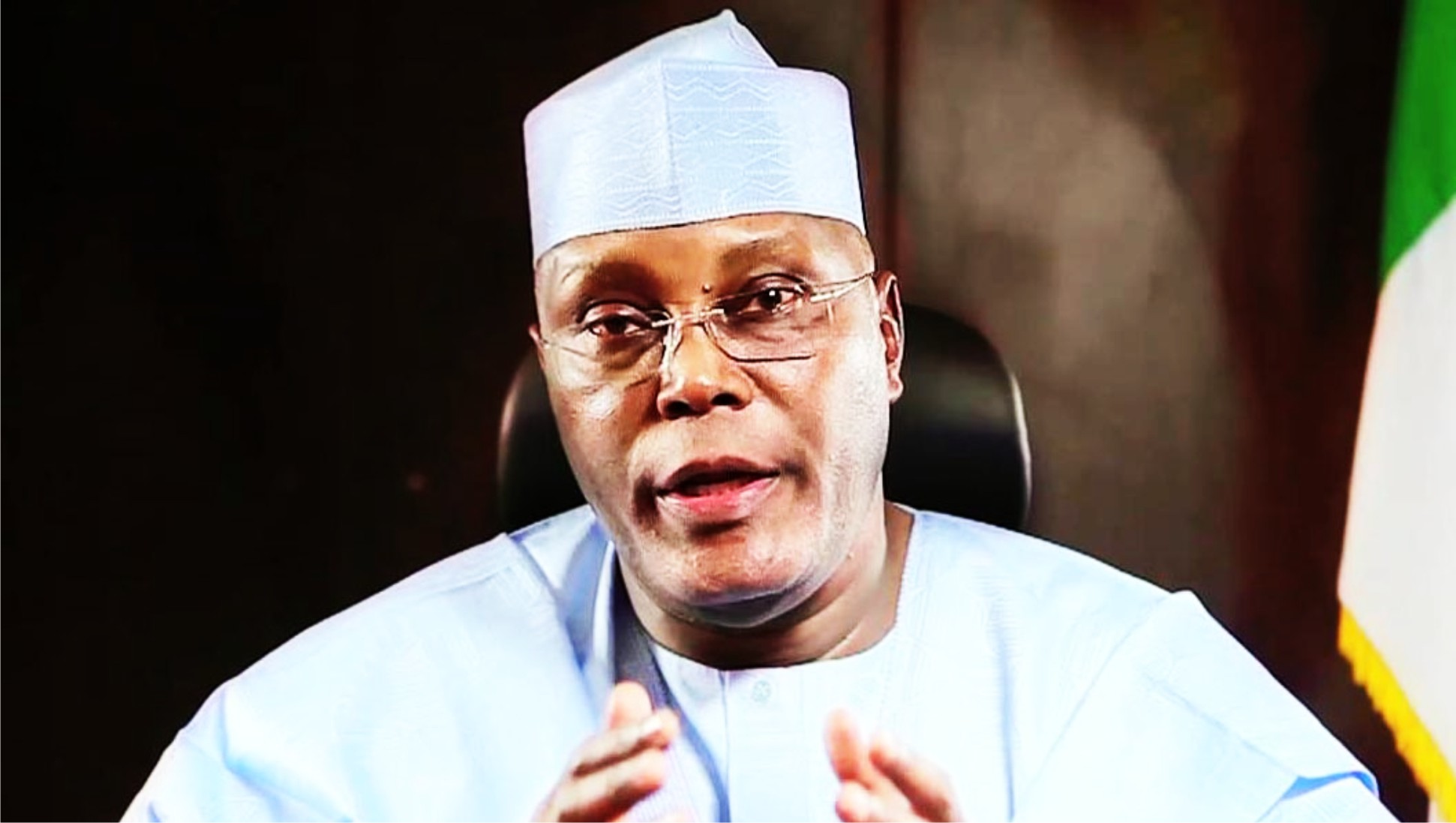
Mr Okonkwo made the announcement on his X (formerly Twitter) account on yesterday, expressing gratitude for what he called Alhaji Abubakar’s show of faith in him.
“I give God all the glory for being appointed by His Excellency Atiku Abubakar as his spokesperson. I thank His Excellency for the immense confidence reposed in me,” Mr Okonkwo said.
The politician credited Alhaji Abubakar with championing dialogue over conflict within party ranks.
He noted that the former vice president favours conversation and compromise when party associates raise genuine worries, rather than dismissing their concerns.
“Rather than take offence at associates for expressing genuine reservations about any action taken, His Excellency always opts for dialogue and compromise that engender solutions to problems,” Mr Okonkwo stated.
According to him, recent talks with Alhaji Abubakar and other ADC leaders tackled worries about South-East political representation within the limits of the Electoral Act, 2026, and the current political climate. He said the discussions produced guarantees for the region’s interests despite existing constraints.
Mr Okonkwo also acknowledged the work of Dr. Kashim Imam; former ADC National Chairman, Ralphs Nwosu; Ekene Onwuka, Alhaji Abubakar’s Senior Special Assistant on Special Duties, in preparing the party for next year’s elections. He thanked his loved ones and supporters for their support and prayers.
“I still covet your prayers for wisdom, courage, provision and protection needed to carry out this challenging responsibility, which will usher in a glorious and great Nigeria,” he added.
The appointment arrives weeks after Mr Okonkwo publicly attacked the ADC’s pick for running mate in 2027. He’d warned that choosing a vice-presidential candidate from the South-South would worsen what he sees as political neglect of the South-East, a region without a president or vice president since 1999.
Despite Mr Okonkwo’s objections, the ADC later announced former Rivers State Governor and ex-Minister of Transportation, Mr Rotimi Amaechi, as Alhaji Abubakar’s running mate following the ex-vice president’s clinching of the party’s presidential nomination.

The Senate has defended the passage of the Constitution of the Federal Republic of Nigeria (Alteration) (State Police) Bill, 2026, saying the proposed creation of state police is driven by national consensus and the country’s security needs rather than political considerations.
The Red Chamber passed the bill last Wednesday after more than two-thirds of senators voted in support.
In a statement issued yesterday by the Directorate of Media and Public Affairs, Office of the Senate Leader, Senator Opeyemi Bamidele described the bill as “a child of necessity and not of political expediency as well as a product of national consensus and not of cynicism.”
The senate leader said the proposal to establish state police was a matter of urgent public importance that could not be delayed because of political interests, given the country’s security challenges.
He explained that the proposal did not originate recently but emerged from memoranda submitted to the Senate Ad-hoc Committee on the Review of the 1999 Constitution.
According to him, the proposal underwent extensive consultations and rigorous scrutiny because of its sensitive nature.
Bamidele said the National Assembly consulted widely with the Executive, the Nigeria Governors’ Forum, the Conference of Speakers of State Legislatures of Nigeria, the leadership of the Nigeria Police and other stakeholders before passing the bill.
He added that during the public hearings conducted across the six geopolitical zones in July 2025, participants overwhelmingly supported the creation of state police.
“At each level of our consultation, nearly all stakeholders embraced the State Police Bill in the light of stark realities we are facing today,” he said.
The Senate leader noted that recommendations from the Nigeria Police contributed to the bill, particularly on accountability and oversight mechanisms aimed at preventing abuse of state police by political actors.
According to him, the police’s support for the proposal underscores its national significance in tackling insecurity at the state and local levels.
Bamidele also said the bill received broad bipartisan backing in both chambers of the National Assembly.
“Even though the APC is the majority, there are members of opposition parties — PDP, ADC, NDC and Labour Party — that exercised their discretion in favour of the Bill, mainly in the national interest and not on parochial basis.
“In the Senate, for instance, 84 out of 109 members voted clause by clause in support of the Bill. This accounted for 77.06 per cent approval at the Senate alone,” he said.
He argued that national security should transcend political affiliations, saying political actors in other countries often set aside partisan interests to support initiatives that strengthen security.
Bamidele called on opposition parties to contribute constructive ideas that would promote peace and stability, adding that they have a responsibility to offer alternatives that would strengthen the country.
“Even when they disagree on some grounds, they are under obligations to provide credible and useful ideas that can make our nation better and greater. Unfortunately, they have not passed this critical test of opposition democracy,” he said.
The Socio-Economic Rights and Accountability Project (SERAP) has called on Senate President, Godswill Akpabio, and Speaker of the House of Representatives, Tajudeen Abbas, to refer allegations of the diversion or non-accounting of over ?6.3 billion in constituency project funds to anti-corruption agencies for investigation and possible prosecution.
The group also urged the National Assembly leadership to ensure that anyone found culpable is prosecuted where sufficient admissible evidence exists, while all diverted or unaccounted public funds are recovered and paid into the treasury.
In a letter dated June 27, 2026, and signed by its Deputy Director, Kolawole Oluwadare, SERAP said the allegations were contained in the Auditor-General of the Federation’s 2022 Annual Report, published on September 9, 2025.
The organisation disclosed this in a statement signed and released by Oluwadare, yesterday.
SERAP also asked Akpabio and Abbas to disclose the identities of contractors and companies, including their shareholders and beneficial owners, that allegedly received constituency project funds but failed to execute the projects.
It gave the National Assembly seven days to act on its recommendations, warning that it would institute legal proceedings should the legislature fail to respond.
“We would be grateful if the recommended measures are taken within seven days of the receipt and/or publication of this letter. If we have not heard from you by then, SERAP shall take all appropriate legal actions to compel you and the National Assembly to comply with our request in the public interest,” the letter stated.
It said, “The allegations involve several federal ministries, departments and agencies, including the Environmental Health Registration Council of Nigeria (EHORECON); the Federal College of Animal Health and Production Technology, Volm; the Federal Polytechnic, Udana; the National Agency for the Prohibition of Trafficking in Persons (NAPTIP); and the National Institute of Legislative and Democratic Studies (NILDS).
“The Auditor-General identified numerous cases of payments into private bank accounts, contracts awarded without due process, payments for contracts not executed or services not rendered, undocumented expenditures, inflated contracts, procurement irregularities and failures to account for public funds, recommending in each case that the funds be recovered and remitted to the treasury.
“According to the 2022 audited report, contained in pages 367 to 396, the Environmental Health Registration Council of Nigeria (EHORECON or Council) Abuja paid over ‘N22 million [N22,944,565.16] into the private account of some members of staff of the Council from the Constituency Projects Fund Account.
“There ‘was no evidence of the utilization of the funds and no explanations on the purpose for the payment of such amount into the individual accounts.”
SERAP added, “The Council (EHORECON) also in 2021 ‘awarded suspicious consultancy contracts of over N12 million [N12,030,818.29] for the development of Modern Abattoirs in Kebbi State and the supervision of 7 projects in Kebbi, Jigawa, and Headquarters Abuja.
“The money was to ‘produce bills of quantity, architectural design, structural design, mechanical design, and electrical designs for the contracts and supervision.’ But ‘the ‘items could not be found.’”
Altogether, SERAP said the Auditor-General’s 2022 report alleged EHORECON paid more than ?1.8 billion in constituency project funds through questionable transactions.
For the Federal College of Animal Health and Production Technology, Vom, SERAP said the institution “in 2022 reportedly ‘paid over N279 million [N279,700,500.00] to 3 contractors to empower and train youths in selected vocational areas in Borgu and Kontagora, Niger State, train women and youths in entrepreneurship in Niger East Senatorial District and to train youths and women in agro production and self-reliance in Barki Ladi/Riyom Federal Constituency, Plateau State.
“But the money was paid to the contractors without any document.’”
Other irregularities involving the college include another ?279.7 million in mobilisation fees allegedly paid without documentation, and more than ?629.4 million paid to unqualified contractors for various constituency projects without evidence of due process, contract advertisements or details of the contractors.
SERAP further alleged that the Auditor-General’s report identified multiple financial irregularities involving the Federal Polytechnic, Ukana, Akwa Ibom State, including over ?407 million allegedly paid as mobilisation fees without supporting documents, more than ?399 million paid to unqualified contractors, contracts allegedly inflated by over ?192 million, over ?279 million paid for projects not fully executed, ?50 million allegedly paid for an unexecuted borehole project, and more than ?83 million disbursed without the required documentation or approvals.
It also alleged that NAPTIP reportedly irregularly awarded contracts worth over ?21.8 million, paid more than ?176.8 million for logistics and consultancy services without supporting documents, and disbursed over ?89.6 million and ?4.4 million for projects that were allegedly not executed.
The report also alleged that NILDS failed to submit audited financial statements for 2012 to 2022, did not remit over ?15 million in stamp duties, and spent ?1.6 million without authorisation from the Office of the Accountant-General of the Federation.
SERAP said the report recommended the recovery of the affected funds and their remittance to the treasury.
It argued that corruption in constituency projects disproportionately affects poor and vulnerable Nigerians by diverting resources meant for public services and development.
It added that the National Assembly, in exercising its oversight responsibilities, should demonstrate leadership by ensuring accountability in the management of constituency project funds.
The organisation further argued that the allegations, if established, would amount to breaches of the Constitution, the Fiscal Responsibility Act 2007 and the Public Procurement Act 2007, which require transparency, accountability and due process in the management of public resources.
-
News3 days ago
Rivers Court Jails Man Seven Years For Defiling Minor …Directs N5 Million Upkeep For Victim
-
News3 days ago
Alleged Coup Plot: DSS Docks Five For Hiding Sylva’s Whereabouts
-

 News3 days ago
FG To Replace NYSC Khaki With Adire
-
Niger Delta3 days ago
24 Nigerian Universities Make 2026 THE Rankings … 4 S’South Versitieis Pull Through
-
News3 days ago
BOI Unveils Maiden Impact Report, Disburses N644.9bn In 2025
-
Women3 days ago
NAWOJ Seeks Partnership With Hotel Presidential On Summit
-

 News3 days ago
Fubara Seeks Full Resolution Of Bille Gas Leakage …Pledges Upgrade Of Community Health Centre
-
Niger Delta3 days ago
‘Ogbolo ’26’: Bayelsa Community Revives Heritage, Strengthens Unity