Opinion
The Fall O The Gambian Dictator
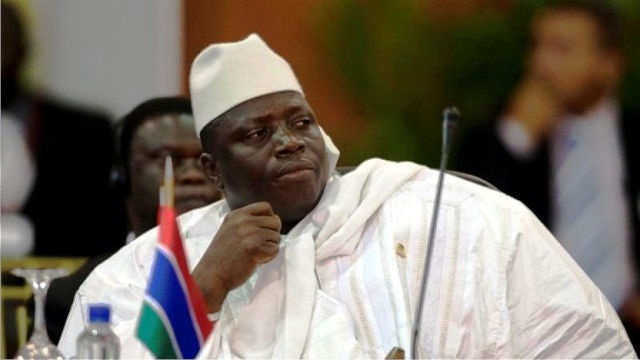
The fall of The Gambian ex-President, Dr.Yahya Jammeh is a lesson for the remaining sit-tight dictators in Africa and elsewhere around the world.
In 1994, Jammeh who is the former head of The Gambian National Army Military Police carried out the first successful military coup in Banjul, The Gambia’s capital, ousting the post independence and democratic elected leader, Dr. Dauda Jawara.
Jammeh is no stranger to crisis. He played a role in the Economic Community of West African State Monitoring Group, ECOMOG as a leader of The Gambian contingent to Liberia during the brutal civil war orchestrated by the rebellious Charles Taylor of Liberia in the early 90’s. Few weeks after the Gambian contingent left Liberia, Jammeh, then a captain seized power from Jawara and The Gambia joined the league of nations that had military coup in the world’s politics.
Jammeh however, returned the tiny West African nation to democratic governance, but ensured that all the presidential elections were manipulated to favour him. Jammeh ran a personality of cult under his leadership with his kinsmen in every spheres of The Gambia’s national affairs. During his reign, many innocent citizens were killed and political opponents summarily executed in a frame-up putsch charges.
It was not surprising, therefore, that there was a huge celebration in Banjul and around the country when December 2016 presidential election results were announced and the candidate of the opposition party, Adama Barrow was declared the winner by The Gambia Electoral Commission. Initially, Jammeh accepted defeat and subsequently congratulated the winner, President Barrow who won a landslide victory. Two weeks after, Jammeh made a u-turn rejecting the results of the free and fair polls ever held in The Gambia. Rather than handing over to Barrow peacefully, Jammeh fortified his authoritarian rule on the Gambia by extending his tenure by 90 days and declaring a state of emergency in his country.
But for the quick intervention of the regional group, ECOWAS; continental body, African Union and the United Nations AU that strongly condemned the action of the long time ruler of The Gambia, and threatened not to recognize him after January 19,2017, Jammeh would perhaps have been in power till now.
The problem is that Jammeh failed to take a cue from many other world dictators such as the late Liberian dictator, Samuel Kanyon Doe; Laurent Gbagbo and General Robert Gue of Ivory Coast, the strongman in the maghreb region, Colonel Muammar Gaddafi of Libya; Idi Amin Dada of Uganda, Emperor Jean Bedel Bokassa of the defunct Central African Empire, now Central African Republic (CAR); Pol Pot of South Eastern nation of Cambodia, Jean- Claude Duvalier , popularly known as Baby Doc of Haiti; Mobutu Sese Seko of Zaire, now Democratic Republic of Congo (DRC) etc.
Apart from former Ivorian President, Gbagbo who is standing trial at The Hague for crimes against humanity during his misrule, other despots mentioned above are all dead.
Meanwhile, there were some other dictators around the world who after misrule sought asylum in other countries. For instance, Hissen Habre, former Chadian leader took sanctuary in Senegal in 1990. In 1991, former Marxist leninist leader of Ethiopia, Colonel Mengistus Haile Mariam also took safe refuge in Zimbabwe. In 2011, President Zine El-Abidine Ben Ali who ruled Tunisia with tight grip since 1989 escaped to Saudi Arabia during the Arab springs while Blaise Campaore, the long time maximum ruler of Burkina Faso now lives in Ivory Coast, all in self exile.
Ironically, in 2011 during the Libyan uprising to oust the then strong man of Libya, Muammar Gaddafi, Jammeh was the first President in the world to ask Gaddafi to step down for the interest of Libya and Libyans.
“Given the unacceptable scale of violence in Libya, we hereby called on Colonel Muammar Gaddafi to spare the lives of Libyans by stepping down immediately. The most honorable act that Gaddafi owes to the Libyan people is the sacred duty to step down immediately and let valiant Libyan people take charge of their affairs and their country’s destiny”, the former dictation had said.
There is no gainsaying that peaceful exit from office on expiration of one’s tenure is the best option for a leader, but in Africa it is a different episode.
Jammeh failed as people’s servant for not obeying the wish of The Gambian people and the good people of Africa. He failed to remember the consequences that there is life after State House.
Jammeh should have learnt from some past leaders who peacefully handed over to the winners of their countries’ presidential elections such as former Nigerian President Goodluck Ebele Jonathan, Dr. John Mahatma of the Republic of Ghana, Soglo of Benin Republic, Dr. Mrs. Joyce Banda of South African State of Malawi etc, who are now enjoying life after presidential palace.
I must say that the support enjoyed by Barrow from Ecowas, AU, UN and other world leaders is a plus for democracy all over the world. It particularly signals the end of dictatorship in Africa and the world at large.
Now that President Adama Barrow has taken over power, he should improve the quality of life of the electorate, the ordinary Gambians.
The fall of Jammeh, as an oppressive leader will surely go down in the history of the world’s politics. It is a big lesson for despotic leaders who are still holding on to power in Africa against the wish of the citizens.
For most of these despots, the alternative to being in power is either death or exile. Otherwise, why would Jammeh refuse to vacate office peacefully after ruling The Gambia for 22 year? Perhaps he wanted to join the club of late Ivorian post independence president, Dr.Felix Houphouet- Boigny, Siaka Stevens of Sierra Leone and Eyadema of Togo.
How woefully he failed. Pity!
Karibo-Nelson, a social commentator, writes from Ogu in Rivers State.
Jinbobarye Karibo-Nelson

Opinion
Time and Season Can Tell
Opinion
Why Adaeze Deserves A Second Chance
Opinion
Empowering Youth Through Agriculture
Quote:”While job seeking youths should continuously acquire skills and explore opportunities within their immediate environment as well as in the global space through the use of digital platforms, government, corporate/ multinational organizations or the organised private sector should generate skills and provide the enabling environment for skills acquisition, through adequate funding and resettlement packages that will provide sustainable economic life for beneficiaries”.
The Governor of Rivers State, Sir Siminalayi Fubara, recently urged youths in the Rivers State to take advantage of the vast opportunities available to become employers of labour and contribute meaningfully to the growth and development of the State. Governor Fubara noted that global trends increasingly favour entrepreneurship and innovation, and said that youths in Rivers State must not be left behind in harnessing these opportunities. The Governor, represented by the Secretary to the State Government, Dr Benibo Anabraba, made this known while declaring open the 2026 Job Fair organised by the Rivers State Government in partnership with the Nigeria Employers’ Consultative Association (NECA) in Port Harcourt. The Governor acknowledged the responsibility of government to create jobs for its teeming youth population but noted that it is unrealistic to absorb all job seekers into the civil service.
“As a government, we recognise our duty to provide employment opportunities for our teeming youths. However, we also understand that not all youths can be accommodated within the civil service. This underscores the need to encourage entrepreneurship across diverse sectors and to partner with other stakeholders, including the youths themselves, so they can transition from being job seekers to employers of labour,” he said. It is necessary to State that Governor Fubara has not only stated the obvious but was committed to drive youth entrepreneurship towards their self-reliance and the economic development of the State It is not news that developed economies of the world are skilled driven economies. The private sector also remains the highest employer of labour in private sector driven or capitalist economy though it is also the responsibility of government to create job opportunities for the teeming unemployed youth population in Nigeria which has the highest youth unemployed population in the subSahara Africa.
The lack of job opportunities, caused partly by the Federal Government’s apathy to job creation, the lack of adequate supervision of job opportunities economic programmes, lack of employable skills by many youths in the country have conspired to heighten the attendant challenges of unemployment. The challenges which include, “Japa” syndrome (travelling abroad for greener pastures), that characterises the labour market and poses threat to the nation’s critical sector, especially the health and medical sector; astronomical increase in the crime rate and a loss of interest in education. While job seeking youths should continuously acquire skills and explore opportunities within their immediate environment as well as in the global space through the use of digital platforms, government, corporate/ multinational organizations or the organised private sector should generate skills and provide the enabling environment for skills acquisition, through adequate funding and resettlement packages that will provide sustainable economic life for beneficiaries.
While commending the Rivers State Government led by the People First Governor, Sir Siminilayi Fubara for initiating “various training and capacity-building programmes in areas such as ICT and artificial intelligence, oil and gas, maritime, and the blue economy, among others”, it is note-worthy that the labour market is dynamic and shaped by industry-specific demands, technological advancements, management practices and other emerging factors. So another sector the Federal, State and Local Governments should encourage youths to explore and harness the abounding potentials, in my considered view, is Agriculture. Agriculture remains a veritable solution to hunger, inflation, and food Insecurity that ravages the country. No doubt, the Nigeria’s arable landmass is grossly under-utilised and under-exploited.
In recent times, Nigerians have voiced their concerns about the persistent challenges of hunger, inflation, and the general increase in prices of goods and commodities. These issues not only affect the livelihoods of individuals and families but also pose significant threats to food security and economic stability in the country. The United Nations estimated that more than 25 million people in Nigeria could face food insecurity this year—a 47% increase from the 17 million people already at risk of going hungry, mainly due to ongoing insecurity, protracted conflicts, and rising food prices. An estimated two million children under five are likely to be pushed into acute malnutrition. (Reliefweb ,2023). In response, Nigeria declared a state of emergency on food insecurity, recognizing the urgent need to tackle food shortages, stabilize rising prices, and protect farmers facing violence from armed groups. However, without addressing the insecurity challenges, farmers will continue to struggle to feed their families and boost food production.
In addition, parts of northwest and northeast Nigeria have experienced changes in rainfall patterns making less water available for crop production. These climate change events have resulted in droughts and land degradations; presenting challenges for local communities and leading to significant impact on food security. In light of these daunting challenges, it is imperative to address the intricate interplay between insecurity and agricultural productivity. Nigeria can work toward ensuring food security, reducing poverty, and fostering sustainable economic growth in its vital agricultural sector. In this article, I suggest solutions that could enhance agricultural production and ensure that every state scales its agricultural production to a level where it can cater to 60% of the population.
This is feasible and achievable if government at all levels are intentional driving the development of the agricultural sector which was the major economic mainstay of the Country before the crude oil was struck in commercial quantity and consequently became the nation’s monolithic revenue source. Government should revive the moribund Graduate Farmers Scheme and the Rivers State School-to-Land agricultural programmes to operate concurrently with other skills acquisition and development programmes. There should be a consideration for investment in mechanized farming and arable land allocation. State and local governments should play a pivotal role in promoting mechanized farming and providing arable land for farming in communities. Additionally, allocating arable land enables small holder farmers to expand their operations and contribute to food security at the grassroots level.
Nigeria can unlock the potential of its agricultural sector to address the pressing needs of its population and achieve sustainable development. Policymakers and stakeholders must heed Akande’s recommendations and take decisive action to ensure a food-secure future for all Nigerians.
By: Igbiki Benibo
-
Politics4 days agoAPC Releases Adjusted Timetable For Nationwide Congresses, Convention
-
Sports20 hours ago2026 WC: Nigeria, DR Congo Awaits FIFA Verdict Today
-
Sports4 days ago
DG NIS Wants NSC Board Constituted, Seeks Increased In Funding
-
Business4 days agoCustoms Seek Support To Curb Smuggling In Ogun
-
Featured4 days agoINEC Proposes N873.78bn For 2027 Elections, N171bn For 2026 Operations
-
Sports4 days agoSWAN Rivers Set-up Five Functional Committees
-
News4 days ago
Police Bust Kidnapping Syndicate In PH
-
Sports4 days ago
NSC Disburses N200m Training Grants To 26 Athletes