
Business
Senate to Propose Bill On Power Installations’ Vandalism

The Senate Committee on Privatisation, has pledged to liaise with its House of Representatives counterpart to propose a bill to address power losses through vandalism, theft and other criminal acts by unscrupulous elements.
According to a statement by Mr Alex Okoh, Head, Public Communications, Bureau of Public Enterprises (BPE) in Abuja yesterday, the committee Chairman, Sen. Ben Bruce, gave the assurance.
Bruce spoke during a visit to the Ikeja and Eko Distribution Companies and the Egbin Generation Company in Lagos.
The visit was part of the committee’s on-going oversight visits to privatised companies in the country.
The committee chairman said that the vices should be treated as a matter of urgent national importance.
Bruce cautioned against calls for the reversal of the power privatisation in the country.
According to him, such reversal will paint Nigeria as an unserious nation which does not respect the sanctity of contractual agreements, thus scaring away potential investors.
He noted that the privatisation process ought to be beneficial to the government, the investors and the Nigerian tax payers who look forward to reliable and stable power supply.
The committee chairman said the on-going oversight visits had proved him wrong on his initial assumption that the privatisation process was wrong.
“With the benefit of hindsight, I have seen that the crisis in the sector is the necessary outcome of the privatisation.”
He, however, called on stakeholders to address the crisis in the sector, saying that it was very crucial to the economic well-being of the nation.
“The various stakeholders need to meet, brainstorm and think out of the box for a solution to the power crisis.
“There is no problem that is insurmountable; all that is required is the will.”
According to the statement, Bruce expressed the committee’s readiness to assist the executive in resolving the contending issues.
Other committee members expressed concern at the liquidity crisis in the sector, asking why the Generation Companies (Gencos) were not being paid for the power they generated amounting to billions of naira.
They noted that Egbin was being owed about N91.5 billion, yet was expected to operate optimally.
Briefing the committee members, the Acting Director-General of BPE, Dr Vincent Akpotaire, said the privatisation process was widely acclaimed globally as the best, largest and most transparent transaction ever in the power sector.


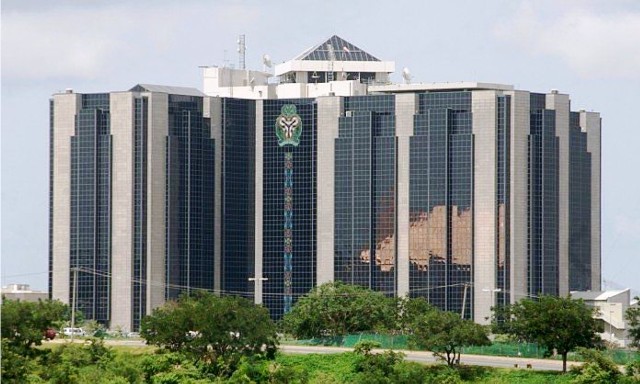
The Central Bank of Nigeria (CBN) has revised its cash withdrawal rules, discontinuing the special authorisation previously permitting individuals to withdraw N5 million and corporates N10 million once monthly, with effect from January 2026.
In a circular released Tuesday, December 2, 2025, and signed by the Director, Financial Policy & Regulation Department, FIRS, Dr. Rita I. Sike, the apex bank explained that previous cash policies had been introduced over the years in response to evolving circumstances.
However, with time, the need has arisen to streamline these provisions to reflect present-day realities.
“These policies, issued over the years in response to evolving circumstances in cash management, sought to reduce cash usage and encourage accelerated adoption of other payment options, particularly electronic payment channels.
“Effective January 1, 2026, individuals will be allowed to withdraw up to N500,000 weekly across all channels, while corporate entities will be limited to N5 million”, it said.
According to the statement, withdrawals above these thresholds would attract excess withdrawal fees of three percent for individuals and five percent for corporates, with the charges shared between the CBN and the financial institutions.
Deposit Money Banks are required to submit monthly reports on cash withdrawals above the specified limits, as well as on cash deposits, to the relevant supervisory departments.
They must also create separate accounts to warehouse processing charges collected on excess withdrawals.
Exemptions and superseding provisions
Revenue-generating accounts of federal, state, and local governments, along with accounts of microfinance banks and primary mortgage banks with commercial and non-interest banks, are exempted from the new withdrawal limits and excess withdrawal fees.
However, exemptions previously granted to embassies, diplomatic missions, and aid-donor agencies have been withdrawn.
The CBN clarified that the circular is without prejudice to the provisions of certain earlier directives but supersedes others, as detailed in its appendices.
-
Business2 days ago
Shippers Council Vows Commitment To Security At Nigerian Ports
-
Business2 days ago
CBN Revises Cash Withdrawal Rules January 2026, Ends Special Authorisation
-

 Business2 days ago
Nigeria Risks Talents Exodus In Oil And Gas Sector – PENGASSAN
-
Business2 days ago
NCDMB, Others Task Youths On Skills Acquisition, Peace
-

 Business2 days ago
FIRS Clarifies New Tax Laws, Debunks Levy Misconceptions
-

 Politics2 days ago
Tinubu Increases Ambassador-nominees to 65, Seeks Senate’s Confirmation
-
Sports2 days ago
Obagi Emerges OML 58 Football Cup Champions
-

 News2 days ago
Tinubu Swears In Christopher Musa As Defence Minister