
Business
‘We Need Fundamental Economic Restructuring’

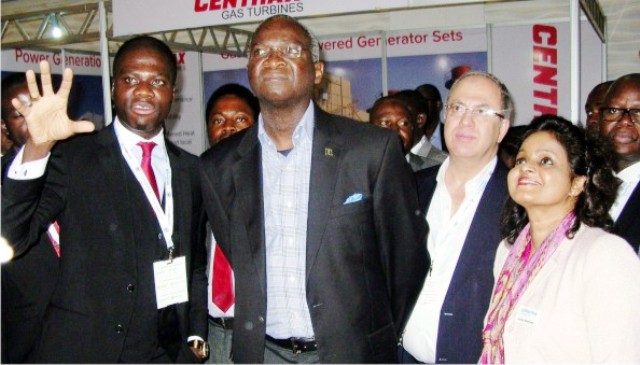
The Minister of Budget
and National Planning, Senator Udo Udoma, has stressed the need for a fundamental restructuring of the nation’s economy.
He made the call at the world press conference which essentially launched the 22nd edition of the Nigerian Economic Summit, (NES) organised annually by the Nigerian Economic Summit Group (NESG).
In a statement that was obtained by The Tide through AagroNigeria, recently, Senator Udoma stated that the goal of NES is to unlock the economic potentials of the non-oil and high-employment sectors.
He said this would lead the nation to achieve a sustainable inclusive growth that will ensure that the majority of Nigerians become agribusiness people and more productive, thereby reducing poverty.
Addressing journalists at the NESG summit House in Abuja, he said, the current economic challenges are rooted on the nation’s reliance on a single commodity (oil) whose price has fallen.
“The Nigerian economy is currently in recession and faced with contracting GDP growth, rising inflation and unemployment rates as well as decaling level of external reserves”, he said.
The summit which is themed “Made in Nigeria” is scheduled to hold from October 10 to 12, 2016 at the Transcorp Hilton, Abuja.
It is designed to encourage the production of agricultural and other products and the consumption of made in Nigeria goods and services to enable Nigerian producers gain more patronage and be encouraged to implore the quality of their products.
The sub-themes of the summit shall deliberate on the macroeconomic environment; ease of doing business, stakeholders behavior and attitudes, access to finance, job creation and youth employment amongst others.
The key outcomes of the summit are expected to include the development of practical roadmap that will contextualize “Made in Nigeria” as an economic growth and development for short, medium and long term development partnerships.
According to the statement, the summit will also seek to develop policies to deliver desired results and potentials for export of non-oil products and also increase foreign exchange earnings and shore up reserves at home.
In his opening remark, Chief Executive Officer (CEO), NESG, Mr. Laoye Jaiyeola, thanked journalists for their support regarding the summit, stating that the contribution of the media is key to its success.
The chairman of NESG, Mr. Kyari Bukar, represented by Mrs. Wonuola Adetayo, urged everyone to be held accountable for the growth of the economy, “as we all at a point in national development will need hands all to come together”.
She also advised journalists to be active in their follow up, even after the summit to ensure that issues discussed are effectively acted upon.



Cornerstone of Financial Services
A survey of more than 1 000 global finance leaders undertaken by digital payment network Ripple shows that 72% of respondents believe they need to offer a digital asset solution to remain competitive.
According to Ripple, leaders from the banking, fintech, corporate and asset management sector have made it clear that the “digital asset revolution is happening now”.
“Digital assets are quickly becoming a cornerstone of financial services, underpinned by progressive regulation, growing interest from Tier-1 banks, a steady consumer shift from banks to fintech providers, and booming stablecoin adoption,” Ripple says.
The survey was conducted in early 2026 and the findings released in March.
Stablecoin Boon or Bane?
Ripple has experienced significant success in the stablecoin sector since launching its Ripple USD (RLUSD) stablecoin in 2024.
With a market cap of $1.56 billion, it is considered a major regulated player in the market.
No doubt the platform was pleased to learn through its own survey that financial leaders were most bullish about stablecoins.
Roughly three-quarters of respondents believed they could boost cash-flow efficiency and unlock trapped working capital.
Ripple noted that finance leaders were thinking about stablecoins as more than “just a new way to execute payments”; instead, they viewed them as effective tools for treasury management.
In March 2026, Ripple began testing a new trade finance model built around RLUSD in a bid to increase the speed of cross-border payments.
The pilot initiative, developed alongside supply chain finance company Unloq [https://unloq.com], is running on the XRP Ledger inside a testing framework developed by the Monetary Authority of Singapore.
The Asian city-state is one of the platform’s biggest growth markets.
The idea behind the project is to see whether stablecoin-based settlement can streamline trade finance, too often hampered by reliance on intermediaries and slow reconciliation.
The only potential drawback is that if the initiative takes off, the Ripple to USD price could be negatively affected.
Ripple has always championed its native XRP token as a bridge asset, the “middleman” in the process of a financial institution turning dollars in the US into pounds in the UK, for example.
Ripple converts dollars into XRP and then back into pounds.
If RLUSD can do exactly the same thing, questions will be asked about XRP’s relevance.
That is a bridge Ripple will have to cross if it gets to that point.
Tokenisation Partners
Another interesting finding from Ripple’s survey is that most banks and asset managers are seeking tokenisation partners to help execute their strategies.
Some 89% of respondents said digital asset storage and custody were top priority. “Token servicing/lifecycle management also ranks highly for banks at 82%, while asset managers place greater emphasis on primary distribution at 80%,” Ripple found.
The survey also revealed that just more than half of fintechs and financial institutions want an infrastructure provider that can offer a “one-stop-shop solution”. This rose to 71% among corporate financial leaders.
Ripple attributes this to institutions and firms wanting uncomplicated, cohesive systems.
Infrastructure Rules
In its final analysis, Ripple says companies across the board are looking for partners and solutions that are “secure, compliant, battle-tested and that enable growth and execution”.
“The message is clear: infrastructure decisions made today will shape competitive positioning tomorrow.”
No surprise that this is precisely where Ripple is placing much of its focus.
-

 Sports1 day ago
Financial Issues Stall Chelle’s Eagles Contract Talks
-

 Sports1 day ago
NFF mourns ex-Eagles striker Eneramo
-

 Maritime1 day ago
CILT Nigeria Seeks Anti- graft Agency Collaboration
-
Sports1 day ago
Four Private Clubs Gain Promotion To NPFL
-

 Sports1 day ago
Tennis Event Boosts Grassroots Development Push
-

 Sports1 day ago
W/Cup Qualifier: Flamingos In Impressive Opener
-

 Sports1 day ago
European Giants Circle For Osimhen
-

 Sports1 day ago
Chelle Confirms Financial Issues in Eagles Contract Discussion