
Business
NAMB To Focus On Capacity Building For Members

The President, National As
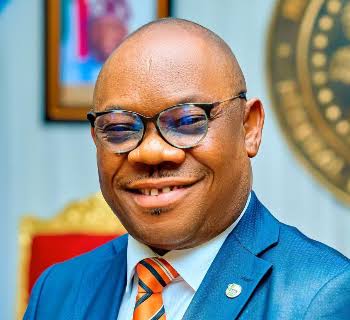
sociation of Microfinance Banks (NAMB), Mr Valentine Whensu, says the association will focus more on capacity building for its members and workers in enhancing their horizon.
Whensu, who was recently re-elected as president of NAMB, disclosed this in an interview with newsmen in Abuja.
“My plan is to work on capacity building, manpower development of members of our institutions so that they can be ready to either take fund locally or internationally to do business.
“We are going to do more capacity building through the instrumentality of the institute that we set up basically for capacity which is the NAMB’s Institute of Microfinance Administration (NIMA).
“The board and the governance we are looking for in NIMA are institutional partners like CBN, NDIC, and other microfinance training service providers.
“These institutions are to work with us and carry out the necessary training that is needed.’’
According to Whensu, the new regime will renew advocacy with all major stakeholders in the sector to ensure the success of the administration.
“Advocacy is one of the major strength of NAMB; we will carry out advocacy to development partners, to donor agencies and the government both at national, state and local levels.
“ We will carry out advocacy to those who are interested, individuals who are interested in microfinance activities, so that we will have a renewed advocacy,’’ Whensu said.
He said the new administration would also focus on membership services as majority of members relied on the gains from their participation.
He said that separate departments had been set up at the NAMB to take care of membership services which involved fighting for members’ right.
Whensu said the department would also ensure that it worked with the government to ensure reduction of levies and charges on members.
“As we speak now, we have engaged the Federal Government on the issue of N50 stamp duty that is anti financial inclusion at the microfinance level.
“We have also engaged FIRS to agree to what is gazetted in terms of VAT payment, all these things are anti savings mobilisation at the grassroots level.
“These are all the things that will be under our membership services so that our members can agree with us that we are fighting for their right.
Whensu explained that his administration would also focus on networking and partnership as this was an important key that would help drive the sub-sector.
According to him, the current regime will follow rigorously on identifying the necessary networking partners who can help drive our business to increase the GDP of this economy.
“There are developing partners both here and abroad; there are institutions who want to partner with us and even reduce our cost; we have some partners already including the press.
“We have signed an MoU with NAN which will be executed as we speak so that people can see what we are doing and this is under the initiative of networking and partnership.
“ NDIC is covering the insurance of our depositors in case of institutional failure but we also need to ensure and give confidence depositors.





-

 Education1 day ago
FCE Yola Graduates 3,555 Teachers , Seeks Upgrade to University
-

 Sports1 day ago
Nigerian Trio Target Titles At PFL Africa Finals
-

 Niger Delta1 day ago
Diri Restates Stance On Lagos-Calabar Coastal Highway
-

 Niger Delta1 day ago
C’River, NUJ Pay Tribute To Late Guardian Editor
-

 News1 day ago
NDLEA Recovers Tons Of Illicit Drug Consignments In Nine States
-

 Opinion1 day ago
Checking Voter Apathy In Nigeria’s Electoral Process
-

 Politics1 day ago
2027: DICKSON’S EX-ALLY VOWS TO WORK AGAINST NDC INTEREST IN BAYELSA
-

 Politics1 day ago
2027: GROUP PLEDGES 40,000 SUPPORTERS FOR COALITION CANDIDATES IN RIVERS