Connect with us

Business

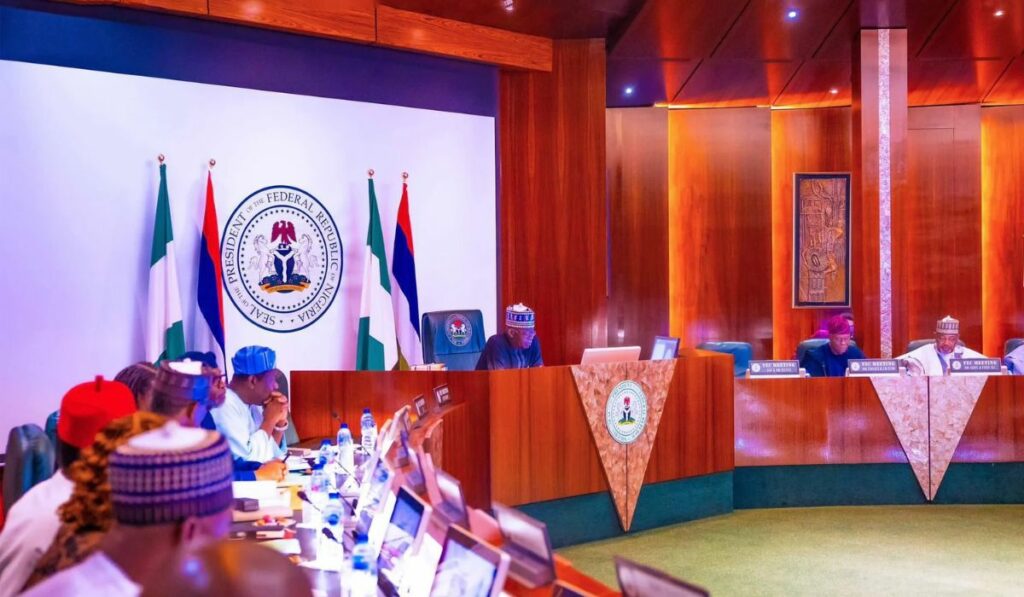
FG Contracts:  Senate Harps On Nigerian Made Goods

Published

on

In line with the expectations
of patriotic Nigerians, the Senate has taken a step towards enforcing the patronage of made in Nigeria goods in the award and implementation of government contracts, as the upper chamber last Thursday passed for third reading the Bill seeking to Amend the Public Procurement Act (2007).
Going by the  general principle of the bill, if finally  signed into law by Mr. President, the bill will provide for and adopt a local content policy and timely completion of procurement process, to enable local manufacturers have the chance to be considered in government contractual procurements.
Presenting the report of the committee to the Senate at plenary , the chairman of the Senate Committee on Procurement, Joshua Dariye, noted that the provisions of the Bill will boost the confidence of the local manufacturers as the committee upheld the section that stipulated local content priority.
The   committee also recommended the immediate constitution of the National Council on Public Procurement (NCPP) by the President, which will take away from the Federal Executive Council (FEC) the responsibility of awarding contracts and place such duty on the NCPP, to be chaired  by the President.
Senator Dariye reported  that “The Committee has equally sustained the amendment sought by the Bills for the purpose of patronising made in Nigeria goods, alongside foreign goods. This will go a long way to encourage our Nigerian manufactures and by extension provide job opportunities for our teeming unemployed youths”
He also explained that the committee rejected part of the amendment proposed by the Bill, which seeks to review upwardly the mobilisation fee to be paid contractors from 15% to 25%, saying this is in view of the current downturn in the nation’s economy whereby a considerable percentage of the national budget would be financed through borrowing.
“The committee believes that it does not make any economic sense to borrow at high interest rate and give up to 25% of contract sum to the same contractors that will be paid profit afterwards; and it is in conflict with section 2930 of the Financial Regulations of the Country”,  he continued .
Explaining further, senator Joshua Dariye  pointed out that  the committee enhanced the time for completion of procurement processes at various phases, while Section (1) was amended by adding sub section (2) to give the President the powers to appoint the chairman of the council, which he said is in line with Sections 171 and 172 of the 1999 Constitution (as amended).
Briefing journalists after the bill was passed, senator Dariye  also said the committee enlarged the membership of the National Council on Procurement to include the Nigerian Institute of Architects and the Nigeria Institute of Quantity Surveyors, pointing out that the two bodies are very vital to any capital project which he said was the major aspect of procurement.
Meanwhile, he said that by the time the Bill was assented by the President, the Federal Executive Council will no longer be in charge of awarding and approving contracts, but the National Council on Procurement will be charged with the responsibility as provided in the Constitution of the country.
He equally expressed hope that President Mohammadu Buhari, would not hesitate to sign the bill into law the moment the National Assembly forwarded it to the Presidency.


Nneka Amaechi-Nnadi

Continue Reading

Business

Wealth Creation: GCPBS  Convenes Strategic Investment Workshop In PH

Published

on

In a significant move aimed at strengthening financial literacy and promoting sustainable economic growth, the Alumni Association of the Garden City Premier Business School (GCPBS) has hosted its inaugural Annual Executive Workshop in Port Harcourt, drawing key stakeholders from across Nigeria’s financial and public sectors.
The workshop, themed “Wealth Creation through Investment in Money and Capital Markets,” held at the Corporate Residence, William Jumbo, Port Harcourt recently,  brought together financial experts, policymakers, and professionals to deliberate on practical investment strategies in a rapidly evolving economic environment.
The event attracted a distinguished audience, including alumni of the institution, officials of the Securities and Exchange Commission, financial market leaders, top government functionaries, and seasoned professionals committed to advancing wealth creation initiatives in the country.
In her opening address, Chairman of the GCPBS Alumni Association, Her Excellency Dr. Mrs. Mina Tele Ikuru, charged the participants to take full advantage of the knowledge-sharing platform, stressing the importance of continuous learning and informed financial decision-making.
Also speaking, the Rivers State Head of Service, Dr. Mrs. Inyingi Brown, underscored the need for smart investment practices, noting that true wealth lies not merely in hard work but in the ability to make money work efficiently through strategic investments.
Deliberations at the workshop exposed participants to practical insights into navigating the financial markets, with experts emphasising the need for liquidity-conscious investments and encouraging the exploration of commercial papers issued by reputable corporations.
Speakers further highlighted the benefits of leveraging money market instruments such as bank deposits, while also stressing the importance of understanding market timing—knowing when to buy, hold, or exit investments—as a critical factor in achieving optimal returns.
The concept of compounding was extensively discussed as a powerful tool for long-term wealth accumulation, alongside the introduction of SWOOT—Stocks Worth Over One Trillion—with leading financial institutions identified as dominant players in Nigeria’s stock market.
Participants were also cautioned against common investment pitfalls, including the dangers of holding excessive idle cash, exposure to inflationary pressures, and the growing threat of fraudulent Ponzi schemes often disguised with unrealistic promises of high returns.
They also stressed the importance of diversification as a risk management strategy, with experts warning that failure to spread investments across asset classes could expose individuals to avoidable financial losses.
A panel session anchored by Prof. John Ohaka featured robust contributions from Barr. Bernard Ibe and Figbene Briggs, who examined critical approaches to monitoring investments and ensuring long-term financial stability.
A Financial expert, Uche Uwaleke (FCMA) provided further guidance, advocating the adoption of the DHL investment model—Diversify, Hedge, and Long-term planning—while emphasising the need for constant monitoring of market capitalisation and price indices.
The event also featured goodwill messages and the presentation of awards to deserving individuals and organisations, including Oida Energy Limited, Xenergi Limited, Aslan Resources Ltd, and Dr. Mrs. Mina Tele Ikuru, in recognition of their contributions to economic development and professional excellence, while special honours were conferred on Prof. Silver Opuala-Charles and Dr. Mrs. Inyingi Brown.
In a closing remark, Prof. Adline Ben-Chioma who summarised the key takeaways from the workshop, reiterated the importance of informed investment decisions, as ESV Okputu delivered the vote of thanks, appreciating organisers, speakers, sponsors, and participants for their roles in the success of the inaugural initiative.
By: King Onunwor
Continue Reading

Banking/ Finance

Ripple Survey Reveals Appetite for Digital Assets

Published

on

Cornerstone of Financial Services

A survey of more than 1 000 global finance leaders undertaken by digital payment network Ripple shows that 72% of respondents believe they need to offer a digital asset solution to remain competitive.

According to Ripple, leaders from the banking, fintech, corporate and asset management sector have made it clear that the “digital asset revolution is happening now.

“Digital assets are quickly becoming a cornerstone of financial services, underpinned by progressive regulation, growing interest from Tier-1 banks, a steady consumer shift from banks to fintech providers, and booming stablecoin adoption,” Ripple says.

The survey was conducted in early 2026 and the findings released in March.

Stablecoin Boon or Bane?

Ripple has experienced significant success in the stablecoin sector since launching its Ripple USD (RLUSD) stablecoin in 2024.

With a market cap of $1.56 billion, it is considered a major regulated player in the market.

No doubt the platform was pleased to learn through its own survey that financial leaders were most bullish about stablecoins.

Roughly three-quarters of respondents believed they could boost cash-flow efficiency and unlock trapped working capital.

Ripple noted that finance leaders were thinking about stablecoins as more than “just a new way to execute payments”; instead, they viewed them as effective tools for treasury management.

In March 2026, Ripple began testing a new trade finance model built around RLUSD in a bid to increase the speed of cross-border payments.

The pilot initiative, developed alongside supply chain finance company Unloq [https://unloq.com], is running on the XRP Ledger inside a testing framework developed by the Monetary Authority of Singapore.

The Asian city-state is one of the platform’s biggest growth markets.

The idea behind the project is to see whether stablecoin-based settlement can streamline trade finance, too often hampered by reliance on intermediaries and slow reconciliation.

The only potential drawback is that if the initiative takes off, the Ripple to USD price could be negatively affected.

Ripple has always championed its native XRP token as a bridge asset, the “middleman” in the process of a financial institution turning dollars in the US into pounds in the UK, for example.

Ripple converts dollars into XRP and then back into pounds.

If RLUSD can do exactly the same thing, questions will be asked about XRP’s relevance.

That is a bridge Ripple will have to cross if it gets to that point.

Tokenisation Partners

Another interesting finding from Ripple’s survey is that most banks and asset managers are seeking tokenisation partners to help execute their strategies.

Some 89% of respondents said digital asset storage and custody were top priority. “Token servicing/lifecycle management also ranks highly for banks at 82%, while asset managers place greater emphasis on primary distribution at 80%,” Ripple found.

The survey also revealed that just more than half of fintechs and financial institutions want an infrastructure provider that can offer a “one-stop-shop solution”. This rose to 71% among corporate financial leaders.

Ripple attributes this to institutions and firms wanting uncomplicated, cohesive systems.

Infrastructure Rules

In its final analysis, Ripple says companies across the board are looking for partners and solutions that are “secure, compliant, battle-tested and that enable growth and execution”.

“The message is clear: infrastructure decisions made today will shape competitive positioning tomorrow.”

No surprise that this is precisely where Ripple is placing much of its focus.

Continue Reading

Business

Niger Delta Investment Summit Targets $5bn Inflows, 500,000 Jobs

Published

on

The Niger Delta Chambers of Commerce, Industry, Trade, Mines and Agriculture (NDCCITMA) has unveiled the plans to host a major economic and investment summit aimed at attracting five billion dollars, ( N7 trillion) investments in addition to creating about 500,000 jobs over the next five years.
The Chairman of NDCCITMA Board, Ambassador Idaere Ogan, disclosed this in Port Harcourt, recently.
Ogan stated  that the initiative is designed to reposition the Niger Delta as a viable destination for sustainable economic growth and development.
He explained the summit would bring together investors, policymakers, manufacturers and business leaders from within and outside Nigeria to explore opportunities across key sectors of the regional economy.
According to him, the event is expected to attract high-profile participation, with President Bola Tinubu billed as Special Guest of Honour, while the Prime Minister of Barbados, Mia Amor Mottley, is expected to deliver the keynote address.
Ogan said the summit would focus on critical sectors including agriculture, manufacturing, logistics and the blue economy, which he described as areas with significant untapped potential.
He called on state governments, development partners and private sector stakeholders to support the initiative, stressing that collective efforts are required to unlock the region’s economic prospects.
 NDCCITMA chairman further stated that improving security conditions and increasing economic confidence in the Niger Delta have made the region more attractive to both local and foreign investors.
He emphasised that ongoing economic reforms at the national level have also contributed to creating a more favourable investment climate.
Also speaking, the Chairman of the Summit Organising Committee, Dr. Solomon Edebiri, said the event would prioritise the growth of small and medium-scale enterprises (SMEs) across the region.
He noted the summit would provide a strategic platform for networking, business partnership and policy dialogue aimed at strengthening the private sector.
Edebiri disclosed that findings from a recent business roundtable revealed significant untapped investment opportunities, which the summit seeks to harness through targeted collaborations.
He revealed that the event would feature exhibitions of viable projects, facilitate business-to-business and business-to-government engagements, and also promote innovations across multiple sectors.
According to him, the expected outcomes of the summit include job creation, increased industrial activity and improved livelihoods for people in the Niger Delta.
To build momentum ahead of the event, NDCCITMA said the body would embark on awareness roadshows across states in the Niger Delta, as well as in Lagos and Abuja, to attract broad participation.
King Onunwor
Continue Reading

Trending