
Business
FCMB Lists N26bn Bond On FMDQ OTC Platform

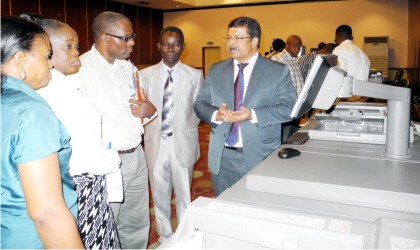
Deputy General Manager, Sharp Altect International, Mr Varghese Gorge (right), speaking to newsmen at the live demonstration of New Age Digital Printing and Finishing in Abuja, last Monday. With him is the Managing Director, First October Global Resources Ltd, Mr Wale Akindele (2nd right)
FMDQ OTC on Monday, recorded another feat with the listing of FCMB PLC’s N26 billion SPV bond on its platform.
The listed Bond is Series 1 of FCMB 7-year 14.25 per cent Fixed Rate Subordinated Unsecured Bond due for Nov. 20, 2021 under a N100 billion debt issuance programme.
The Tide source reports that this followed the listings of the N30.5billion UBA Bond, N15.54bn Stanbic IBTC Bond, N4.8trn FGN Bonds and quotation of N2.8trn Nigerian Treasury Bills respectively, on the OTC securities exchange.
Speaking at the listing ceremony, Ms Tumi Sekoni, Group Head, Business Development FMDQ said that FMDQ recognised the growth potential of issuers of debt in the Nigerian capital market.
Sekoni said that FMDQ would continue to provide remarkable opportunity for the issuers to raise the profile of their issues and access a deep pool of funds.
Sekoni said that listing of debt securities on the OTC securities exchange provides a wide range of benefits across the debt market value chain.
She said that the Exchange’s initiatives to promote secondary market liquidity would contribute immensely to the growth in the overall domestic bond market.
Sekoni said that “issuers have the opportunity to leverage on the provisions of this unique exchange to meet their long term funding needs even as the financial markets become aligned with international best practices.”
Mr Ladi Balogun, the Group Managing Director, FCMB Plc, explained that the bond issue would serve as tier 11 capital which provides long term capital to support growth.
He said it would also reinforce the bank’s commitment to its customers at these challenging times.
Balogun said that the listing the FCMB SPV Bond on the FMDQ platform was hinged on the availability of a readily accessible liquid market to the bond holders.
He commended FMDQ’s efforts toward creating more depth in the Nigerian debt market.
He applauded the platform’s seamless processes and its drive to achieve market transparency by deploying technology initiatives.
Balogun said proceeds of the bond would be used to strengthen its capital base, enhance its capital adequacy ratio, expand distribution channels, infrastructure as well as grow its risk assets.
He said that the bond’s subscription level was 112 per cent, noting that the management of FCMB decided to accept only ¦ 26 billion.
Also speaking, Mr Tolu Osinibi, Executive Director, FCMB Capital Markets Ltd., said the FMDQ platform had encouraged the application of international best practices in the local trading environment.
Osinibi said that the platform would provides real-time market information, which would enable greater participation by market operators and significantly enhances liquidity.
He added that FMDQ market development initiatives had led to the revival of the Commercial Paper market, noting that the company should ensure introduction of more initiatives that would aid market growth.



Business
Jonathan, Diri, Others Laud Firm’s Milestone in Bayelsa …Says Project Will Drive Industrialisation, Create Jobs



-

 News4 days ago
RSG Targets Nine Million Residents in Mosquito Net Distribution Campaign
-

 Oil & Energy4 days ago
Aiyedatiwa Signs New Electricity Bill
-

 Maritime4 days ago
Marine Minister Commends President Tinubu On NPERA Bill Assent
-

 Oil & Energy4 days ago
NLNG Commissions Research And Innovation Centre In RSU
-

 News4 days ago
KenPoly Holds Eight Convocations, August 29
-

 News4 days ago
RSG Begins Another Phase of Projects Commissioning Today
-

 News4 days ago
RMAFC Completes Revenue Sharing Review, Proposes New Pay
-

 Maritime4 days ago
NAGAFF Petitions IGP Over Alleged Maritime Police Harassment