
Business
2014 Budget: NGE Bemoans Drop In Capital Expenditure

The Nigerian Guild of Editors (NGE) has urged the Federal Government to implement its promise of increasing its vote for capital expenditure.
It noted that capital expenditure had dropped from 32 per cent in the 2013 budget to 27 pen r cent in the 2014 budget.
The NGE said this yesterday, in a communiqué which was signed, respectively, by Mr Femi Adesina, President, and Mr Isaac Ighure, Secretary, and made available to newsmen in Lagos.
The union made the remark at the end of its standing committee meeting held in Calabar, Cross River State.
The NGE also expressed relief at the resolution of the stalemate between the Federal Government and the Academic Staff Union of Universities (ASUU).
The editors urged both parties to be faithful to the agreements reached, in order to avoid a reoccurrence.
The Guild also urged the FG to immediately negotiate with doctors and oil workers, who had served notices of industrial actions, noting that Nigerians were tired of strikes.
The communiqué urged Nigerian politicians to restrain from making rebellious remarks that could heat up an already unsteady polity.
It also advised politicians to ensure that the interest of the nation took pre-eminence above their personal interests.
The NGE also expressed happiness at the successful conduct of the council election in Yobe State.
“Whereas the state of insecurity in the country had been frightening, there seems an appreciable improvement in recent times”.
The Guild also commended the security agencies for the positive development shown by the successful conduct of the council elections in Yobe.
It urged the Independent National Electoral Commission (INEC) to take a cue from the election and work towards conducting successful elections in the three states of Adamawa, Borno and Yobe in 2015.
The Guild also praised the withdrawal of the proposed legislation in the Senate against online publications considered injurious to members of the society.
“Such legislation could be mishandled to stifle the press and restrain free expression, which is vital to the growth of our democracy,” it said.
The body noted the positive development in road and railway transportation in the country, but urged the government to double its effort towards improving the state of roads nationwide.
It also urged government to explore the potentials of water transport, in some parts of the country.
The Editors commended the Cross River State Government for sustaining the annual carnival, which it noted had boosted culture, tourism and revenue generation in the state.
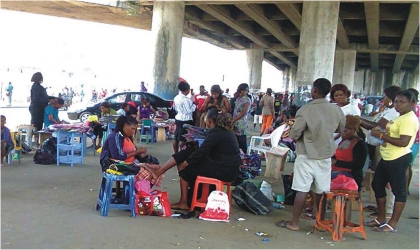
Beauticians at work in preparation for New Year at Mile 1 in Port Harcourt, recently.



Business
Jonathan, Diri, Others Laud Firm’s Milestone in Bayelsa …Says Project Will Drive Industrialisation, Create Jobs



-

 News3 days ago
RSG Targets Nine Million Residents in Mosquito Net Distribution Campaign
-

 Oil & Energy3 days ago
Aiyedatiwa Signs New Electricity Bill
-

 Maritime3 days ago
Marine Minister Commends President Tinubu On NPERA Bill Assent
-

 Oil & Energy3 days ago
NLNG Commissions Research And Innovation Centre In RSU
-

 News3 days ago
KenPoly Holds Eight Convocations, August 29
-

 News3 days ago
RSG Begins Another Phase of Projects Commissioning Today
-

 News3 days ago
RMAFC Completes Revenue Sharing Review, Proposes New Pay
-

 Maritime3 days ago
NAGAFF Petitions IGP Over Alleged Maritime Police Harassment