
Business
FG Provides N3bn For Micro Biz Dev

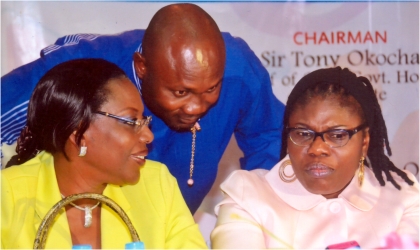
Sole Administrator, Greater Port Harcourt City Development Authority, Dame Aleruchi Cookey-Gam (left), conferring with Commissioner for Agriculture, Hon. Emmanuel Chindah. With them is Women Affairs Commissioner, Mrs Joeba West.
The Federal Government says it provided N3 billion through the National Enterprise Development Programme (NEDEP) for micro enterprises across all the states of the federation from January to September 2013.
The Minister of Trade and Investment, Mr. Olusegun Aganga, said the direct micro-enterprise funding further demonstrated the commitment of the President Goodluck Jonathan’s administration to develop enterprises at the grassroots in order to create jobs, enhance growth and ultimately reduce poverty.
Aganga spoke through his Senior Special Assistant on Corporate Communications, Mrs. Yemi Kolapo, who received the ‘Star Ambassador of Nigerian Women Business Journalists’ award on the sidelines of the World Bank/International Monetary Fund meetings, in Washington, DC, United States.
He said the NEDEP provided the necessary platform for sustainable ongoing funding of the micro enterprises, adding that the programme, through the Small and Medium Enterprises Development Agency of Nigeria’s business development training, also ensured the financial readiness of the micro enterprises and, thus, their ability to repay the disbursed loans.
Micro-enterprises are businesses with less than 10 employees and or less than N5 million in assets (excluding land and buildings). They currently represent 99.87 per cent of Nigeria’s MSME population.
According to the minister, the NEDEP is an initiative spearheaded by the Federal Ministry of Trade and Investment and its three parastatals, the Bank of Industry, SMEDAN and the Industrial Training Fund.
He said, “The Federal Government is deepening its interventions at the grassroots by implementing new initiatives in each state and local government of the federation. Over the last three months, SMEDAN has expanded its operational footprint and the agency is now present in every state of the federation, a remarkable feat within such a short period. This will enable it to provide the necessary support in an efficient manner in the different states.
“Nigeria has over 17 million MSMEs, according to a survey carried out by SMEDAN in collaboration with the National Bureau of Statistics, and employs over 32 million people. Most Nigerians are employed in this sector and future job growth in Nigeria, like in most developed countries, is expected to come from this sector.”



Business
Jonathan, Diri, Others Laud Firm’s Milestone in Bayelsa …Says Project Will Drive Industrialisation, Create Jobs



-

 News3 days ago
RSG Targets Nine Million Residents in Mosquito Net Distribution Campaign
-

 Oil & Energy3 days ago
Aiyedatiwa Signs New Electricity Bill
-

 Maritime3 days ago
Marine Minister Commends President Tinubu On NPERA Bill Assent
-

 Oil & Energy3 days ago
NLNG Commissions Research And Innovation Centre In RSU
-

 News3 days ago
KenPoly Holds Eight Convocations, August 29
-

 News3 days ago
RSG Begins Another Phase of Projects Commissioning Today
-

 News3 days ago
RMAFC Completes Revenue Sharing Review, Proposes New Pay
-

 Maritime3 days ago
NAGAFF Petitions IGP Over Alleged Maritime Police Harassment