Connect with us

Education

Don Charges FG On Solid Minerals Dev

Published

on

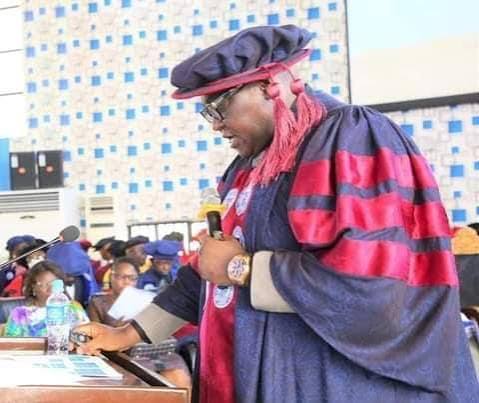
A university lecturer, Dr Francis Beka, has urged the Federal Government to demonstrate strong commitment for accelerated development of the solid minerals sector by allocating about 5% of the nation’s oil revenue to the growth of the sector.

Beka, who is of the Department of Geology and Centre for Petroleum Geosciences, University of Port Harcourt made the recommendation in Port Harcourt while delivering a keynote address in a sensitisation workshop organised by the Raw Materials Research and Development Council (RMRDC).

In his paper titled “Rationale for Effective Appraisal of Nigeria’s Solid Mineral Resource Potential for Raw Materials Development,” Beka reiterated the urgent need to plough the excess funds from the oil and gas sector to grow the solid minerals base as a parallel sector to further enhance the future of Nigerian economic development further recommended that coal should contribute at least 25% to the power generation mix in Nigeria, noting that the nation has over 650 million tons of proven reserves of coal while coal resources alone contribute about 70% to power generation in the world.

“Today, the solid minerals sector has suffered unprecedented neglect because of the ready availability of easy funds for the growth of the petroleum sector,” he said, adding that if tapped, the much reserves of solid minerals sector would create teeming employment, help to stem poverty, reduce urban migration and conflicts in the country.

The window of opportunities associated with the growth of the mineral resource sector, he explained, was wide and cutting across the realm of national development issues especially in the anticipated key growth areas of  infrastructure development, human capacity building, institutional capacity strengthening, including support sectors as well as community growth and sustainable development.

Raising alarm over possible drying of the nation’s oil wells in future, the lecturer said the wisest thing was to develop other sectors on which base would lean the economic survival of our country and urged government to turn substantial attention to other sectors instead of continued dependence on the oil and gas sector.

He also urged government to put in place the enabling environment that would encourage private sector participation and investment in the solid minerals sector stressing that raw materials development from the solid mineral sector is a key area that is crying for national attention.

In his remark, Rivers State Co-ordinator of RMRDC, Mrs Felicia Chilaka said outside oil and gas, Rivers State had abundant reserves of solid minerals waiting to be tapped and challenged investors to take advantage of the situation.

She also called for reviving of the moribund state owned West African Glass Industry as the raw material needed was largely sand noting that if done, it would create employment, create wealth and expand market for glass products amongst other advantages.

Participants commended the council for the programme and charged RMRDC to come up more regularly with such workshop. They also pleaded that the council should develop raw materials resources map of Rivers State to guide investors as well as extending the programmes to local government areas and local communities.




Continue Reading

Education

IAUE Trains HODs, Deans Ahead of NUC Resource Verification

Published

on

The Academic Planning Unit of Ignatius Ajuru University of Education, IAUE, has organized a Pre-Resource Assessment Workshop for Heads of Department and Deans as part of preparations for the forthcoming NUC Resource Verification exercise.
The workshop held on Tuesday, August 4, 2026, at the Postgraduate Hall of the University. It drew professors, deans and HODs from across faculties.
Declaring the workshop open on behalf of the Vice-Chancellor, Prof. Okechukwu Onuchukwu, the University Librarian, Prof. Emmanuel Okwu, welcomed principal officers and other participants. He described the session as critical to ensuring the University’s readiness for the NUC assessment.
Prof. Okwu stressed that the exercise was not routine but a strategic step toward meeting national standards. He urged participants to take the presentations seriously and implement recommendations in their departments.
The Director of the Academic Planning Unit, in his welcome address, said the workshop was designed to assess the level of preparedness of departments ahead of the verification. He noted that the University had already invested significantly in facilities and staffing and was now awaiting the NUC team.
Three resource persons took participants through key aspects of the verification process. The Director of Academic Planning, Prof. Joseph Kinanee, spoke on “NUC Resource Verification and Their Requirements.”
Prof. Levi Doe Kalagbor, Director of Quality Assurance, addressed “The Role of Staff in Successful Resource Verification Exercise.” Prof. Isaac Ogundu, Dean of the Faculty of Vocational and Technical Education, presented on “NUC Scoring Format/Guide and Its Implication for Approval Status.”
The presentations were followed by an interactive question-and-answer session. Participants sought clarifications on documentation, facilities and staffing ratios, and received detailed responses from the facilitators.
In his closing remarks, Prof. Okwu thanked everyone for their active participation and engagement. He expressed optimism that IAUE would record a successful outcome in the upcoming NUC resource verification. The programme ended with a closing prayer and refreshments.
Continue Reading

Education

UNIPORT VC Hails Postgraduate School Over Planned International Conference

Published

on

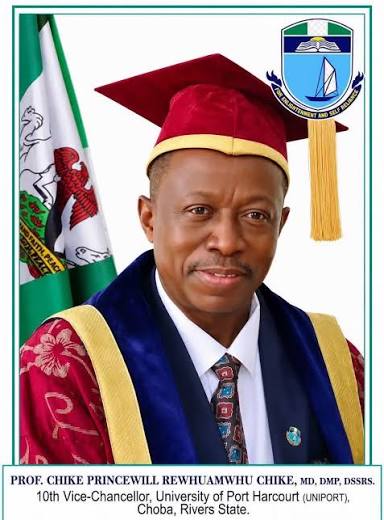
The Vice-Chancellor of the University of Port Harcourt, Prof. Chike Princewill, has commended the School of Graduate Studies for initiating an international conference, describing it as a timely move to boost research output, academic excellence and the University’s global visibility.
Prof. Princewill gave the commendation on Friday while receiving members of the conference planning committee set up by the School. The delegation was led by the Associate Dean of the School of Graduate Studies, Prof. Doris Adameh.
He applauded the committee for conceiving the project and urged members to pursue it with diligence and strategic planning. According to him, such academic gatherings are critical to positioning UNIPORT as a hub for cutting-edge research in the region and beyond.
The Vice-Chancellor specifically charged the committee to engage the University’s alumni as strategic partners in the execution of the conference. He noted that their networks, experience and resources would add significant value to the event.
Prof. Princewill further directed the team to reach out to former postgraduate students of the University to solicit their support and cooperation. He said their involvement would help ensure wider participation and a more successful hosting.
He stressed that alumni remain vital stakeholders in the University’s growth agenda. “Their contributions can significantly enhance the success of the event and strengthen our academic and research profile,” he stated.
Earlier in her remarks, Prof. Adameh said the committee was constituted by the School of Graduate Studies to plan and deliver an international conference that meets global standards. She noted that the process was already underway.
Prof. Adameh explained that the conference is designed to bring together scholars, researchers and professionals from across the world. The goal, she added, is to advance knowledge exchange and foster academic collaboration that will benefit both the University and the wider scholarly community.
By: Amadi Akujobi
Continue Reading

Education

Education Commissioner hails RSU’S  growth research as key to rivers development

Published

on

The Rivers State Commissioner for Education, Dr. Peters Nwagor, has commended Rivers State University, RSU, for its resilience, academic growth and research contributions, describing the institution as critical to the state’s socio-economic development.
Dr. Nwagor gave the commendation on Tuesday, August 11, 2026, during an official visit to the University in Nkpolu-Oroworukwo. He held talks with principal officers, provosts, campus heads, deans and directors at the Dr. Nyesom Ezenwo Wike Senate Building.
The Commissioner said the visit was to engage the University’s leadership on consolidating gains and strengthening capacity for quality teaching, cutting-edge research, innovation and community service. He noted that RSU occupies a strategic position in the state’s development agenda.
Reaffirming government’s commitment, Dr. Nwagor said education remains the bedrock of human capital development and economic transformation. He stressed that investments in infrastructure, staff development and digital learning must be matched with strong institutional systems, transparency and measurable outcomes.
He urged the University to prioritize key performance indicators such as accreditation performance, research output, internally generated revenue, student outcomes and graduate employability. According to him, these metrics should drive continuous improvement across faculties.
Dr. Nwagor also charged RSU to accelerate its digital transformation, establish research and innovation hubs to solve real societal problems, and maintain existing infrastructure. He advised management to explore sustainable funding through grants, endowments, alumni engagement and strategic industry partnerships.
The Commissioner emphasized that government and the University must play complementary roles. While government meets its statutory funding obligations, he said, the institution must strengthen internal efficiency and pursue legitimate private-sector collaborations.
The Vice-Chancellor, Prof. Isaac Zeb-Obipi, appreciated the State Government for its sustained support. He highlighted last year’s budgetary intervention for accreditation, approval of funds for the Faculty of Communication and Media Studies Film Festival slated for November 2026, and the implementation of the new minimum wage for RSU staff.
Prof. Zeb-Obipi, however, drew attention to pressing challenges. He cited shortages of teaching and non-teaching staff ahead of accreditation exercises, inadequate classrooms, libraries, equipment and office spaces, and acute accommodation deficits for staff and students.
The Vice-Chancellor appealed for support to recruit more personnel, retain retired academics on contract, and engage sabbatical and adjunct lecturers. He also requested funding for NUC and professional accreditation scheduled for October, stressing that successful outcomes are vital to RSU’s competitiveness. He reaffirmed management’s commitment to work with government to position RSU as a leading centre of knowledge, research and innovation.
By Amadi Akujobi
Continue Reading

Trending