
Sports
2011: Another Year Of Disappointment For Nigerian Sports

There is no doubt that the year 2011 has slipped into the pages of history. But a glance across the landscape of Nigeria’s Sports would reveal a litany of woes and disappointments that have certainly raised more questions than answers.
From football, the nation’s ring of sports to the tracks, field events and other team sports, it was lamentations all over.
Off the field, it was also a case of poor performances by the authorities in charge of be Sports in the country.
Perhaps, most Nigerians would have passed dire judgment and termed him a prophet of doom if anybody had predicted that the nations Sports would have slided so low in the out gone year.
However, only a few events brought smiles and celebrations to Nigerians, the majority were indeed going tales of woes and agonies.
Among those that brought positive vibes to the nation included the triumph of the national U-20 team, flying Eagles in South Africa during the African youth championship, the delightful performance and final appearance of the national women’s youth team, falconets at the FIFA U-19 Women World Cup in Germany, where they lost to Germany after a gallant performance in the championship match.
Coach John Obuh and his Flying Eagles ruled Africa after warring a record sixth AYC title but fell short of expectation at the global stage. They rode on the back of the victory to the FIFA U-20 World Cup on Colombia only to falter at the quarter final stage, losing 3-2 to France. They were able to impress Nigerian fans and beyond with their emergy and style at the tournament.
The memorable 17th National Sports Festival, NSF hosted by the Rivers State government remained one of the shining lights of national sports events in the year under review.
The Garden City Games 2011 will no doubt linger in the minds of many Nigerians and others who beheld the spectacle that surrounded its arganisation, for a long time to come.
Over 15,000 athletes and officials from the 36 states of the Federation and the Federal Capital Territory (FCT) were believed to have featured in the two-week sports fiesta which began on June 27 and ended on July 11.
Apart from delivery an ultramodern Sports Stadium names, Adoriye Amilsimaka Stadium Complex, the 17th NSF brought the razzmatazz and panache associated with computer age sports events.
With the successful hosting f the Festival by the Rivers State government and the triumph of her athletes, the state has set the pace in the standard of hosting the National Sports festival, regarded as the biggest sporting event in the country.
Also, the third place finish of the country’s contingent to the 10th All Africa Games in Maputo, Mazambique behind winners, South Africa and Egypt was part of the positive notes of 2011. The country after a sluggish start only lost second position to Egypt by just a gold medal lose than the north Africans.
Among other sports that gave little to cheer include the Nigeria Basketball federation, NBBF, Athletic Federation of Nigeria, AFN and the Nigeria Scrabble Federation.
These federation managed to keep their heads above waters by devising means of keeping their athletes active and successful.
That is as far as the cheerful news goes while the bad and the ugly far out weigh the positives.
The biggest Catastrophe was in football where Nigeria’s Super Eagles, Super Falcons, Under 23 Olympic team and the administrators, especially, the Nigeria football federation and the Nigeria premier league board conspired to take the game several steps back into oblivion.
In one of the worst years of Nigerian football, the national teams stumbled from one defeat to another, especially, in the hands of eternal rivals, Ghana, who ended our hopes of participating in the football events of the forthcoming London Olympics and the All Africa Games.
The Ghanaians also stopped the falcons from being part of the 10th All Africa Games in Maputo.
Even the much heralded Samson Siasia, who was popularly engage in November 2010 as Super Eagle Coach amid huge expectations failed to qualify Nigeria for the 2012 Africa Cup of Nations. He and his team failed to beat Ethiopia and Guinea and ensured that the Eagles will not be part of the African Mundial for the first time in 25 years.
Siasia was to be clamed by his failure in October after his employers decided to sack him.
The nationals U-23 team fared no better than their senior counterparts. Against huge expectations from Nigerians, the team and their handler, Austine Eguawen put up a poor performance at the inaugural CAF.
U-23 championship in Morocco to crash out of the London 2012 Olympic Games football event in November.
The Falcons had earlier blown their own chances in Yaounde, Cameroon when they failed to hold their nerve in a crucial Olympic qualifier against their Cameroon counterpart. It was the first time the Nigerian women will not be going to the Olympics.
Also in the year under review, Nigerian club performed poor in continental competitions. Though, two time African champions, Enyimba International FC and CAF confederation Cup debutants, Sunshine stars of Akure deserve some commendations for reaching the semi final stage of the CAF champions league and the confederation cup.
Domestically, the Nigeria premier league entered the record books as the 2010/2011 season dragged on for almost two years, following rancour and court proceedings by the NFF and NPL big wigs.
Dolphins FC eventually emerged champions, beating Sunshine Stars to the title on the last day.
But it is on record that the season ran without prize money and referees owed back log of indemnities.
Even the worries league was still without a title sponsor and prizes.
The year 2011, apart from being a very bad one for the country also claimed some of her illustrious athletes and personalities. The AFN, lost its technical Director, Mr. Sunday Bada, on Monday, December 12. Late Bada was a superintendent of the Nigeria police force and an Olympic Silver Medalist.
Earlier in April, the nation had mourned the tragic death of Super Eagles Olubaya Adefemi who died in an accident while on his way to Nigeria to finalise his wedding.
The nation also lost one of its stout administrators in the person of Alhaji Jamiu Tunde Ojulari, President, Youths Sports Federation of Nigeria (YSFON) after a brief illness.
While, every true Nigerian Sports lower will want to wish that the woeful performances and agonies of 2011 are not witnessed again in the country, it is time for the sports administrator at every level to wake up. Learn from the past and work toward making 2012 and beyond more positive and successful.



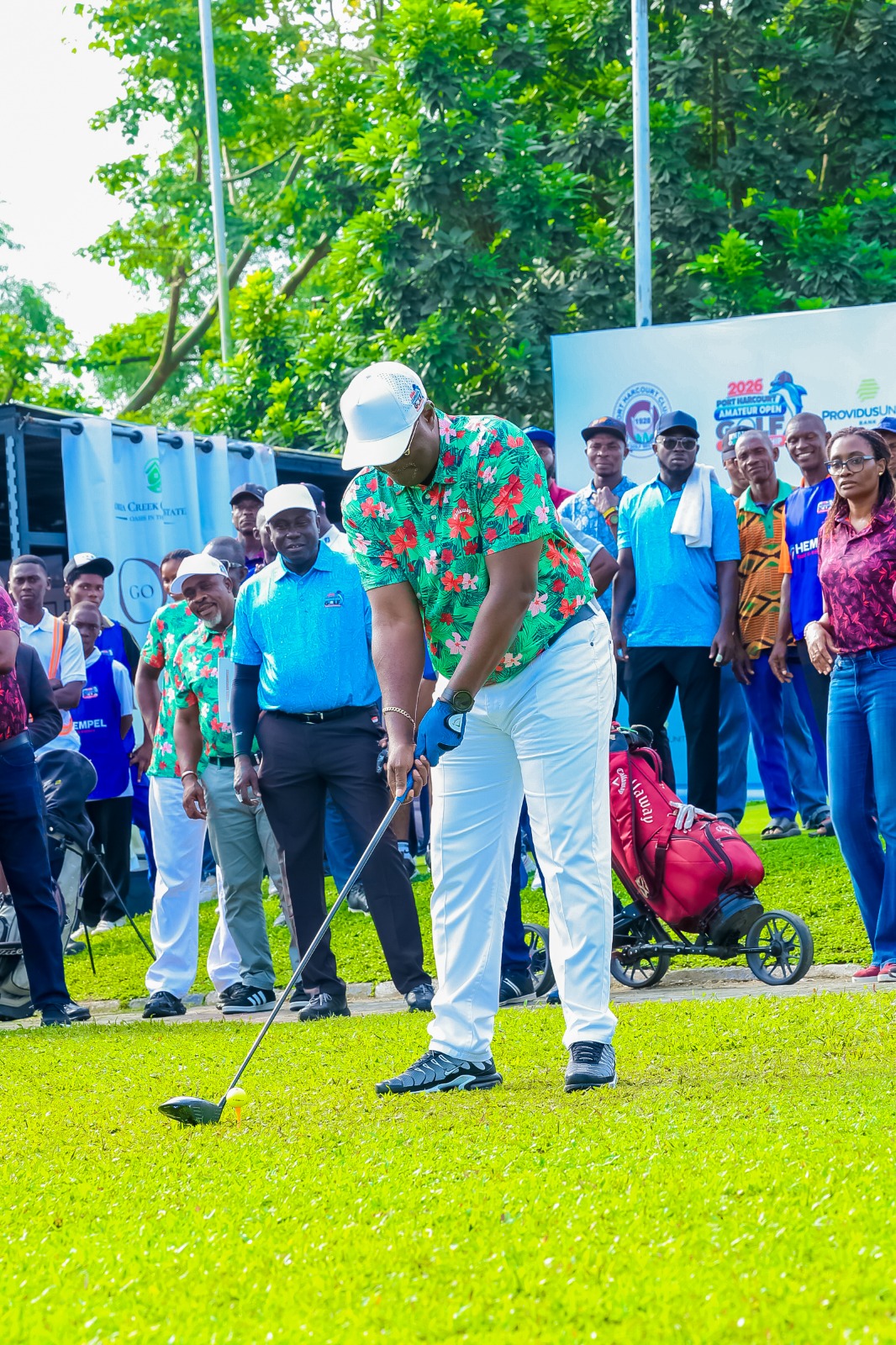
Governor of Rivers State, Sir Siminalayi Fubara, on Saturday declared open the 2026 Port Harcourt Amateur Open Golf Championship during which he renewed his administration’s commitment to supporting initiatives that promote youth development and the wellbeing of Rivers people.
Governor Fubara, who was represented by his Chief of Staff, Barr. Sunny Ewule, at the ceremonial Tee -off to kickstart the tournament, said the event holding in Port Harcourt, is a clear indication that Rivers State is safe, peaceful and open for sports, tourism and business.
“This championship bringing over two hundred and fifty golfers from across Nigeria to Port Harcourt is a testament to the fact that Rivers State is safe, peaceful and open for sports, tourism and business. You have demonstrated that sports is a powerful tool for social cohesion and for projecting the positive nature of our State,” he said.
The Rivers State Government, the Governor stated, identifies with the championship and will continue to support initiatives that promote youth development and the wellbeing of the people.
Governor Fubara described golf as more than a sport, emphasising that it teaches patience, discipline, focus and integrity. According to him, these values were in line with his administration’s commitment to peace, unity and healthy living for all the people of Rivers State.
He commended the Local Organizing Committee for their hard work in putting the event together. He also commended the Port Harcourt Club Golf Section for sustaining the historic Club since 1928, while wishing all golfers participating in the championship an injury-free and worthy tournament.
The President of the Port Harcourt Club, Barr. Victor Omubo Frank-Briggs, expressed appreciation to the Governor honouring their invitation, noting that with the government’s presence the golfers have been energised and inspired to do their best in the championship
MFM, First Bank eye AWBL finals in Liberia (5)
Nigerian clubs MFM Basketball Club and First Bank Basketball Club will battle for places in the African Women’s Basketball League finals when they compete in the FIBA Africa Zone 3 qualifiers in Monrovia, Liberia, from November 2 to 9.
The six-team competition will take place at the Samuel Kanyon Doe Indoor Gymnasium in Paynesville, with the top two teams earning qualification for the continental finals in Cairo, Egypt, scheduled for December 11 to 19.
MFM and First Bank will be seeking to carry their domestic form into the qualifiers after meeting in the final of the Zenith Bank Women’s Basketball League, where MFM claimed a narrow 66-64 victory.
The result underlined the close rivalry between the Nigerian sides, who will now look to establish themselves against opponents from across the region and secure their places in Cairo.
Defending FIBA Africa Zone 3 champions Friends of Basketball Association of Côte d’Ivoire will also compete, alongside Benin Republic’s Energie Basketball Club of Cotonou.
Hosts Liberia will be represented by Flames Basketball Club, the domestic league runners-up, and reigning national champions D’Rockers Basketball Club.
The Nigerian clubs secured their places in the qualifiers after FIBA Africa and the Liberia Basketball Association extended the registration deadline and adjusted the competition schedule following the late conclusion of their domestic league campaign. The intervention was facilitated by FIBA Africa Zone 3 President, Colonel Sam Ahmedu (retd.).
Preparations for the tournament are also gathering momentum, with Flames president and Liberia Basketball Association Secretary-General Calvin Diggs saying the organisers are working to deliver a successful competition.
FIBA Africa Zone 3 Secretary Joe Apu also expressed confidence in Liberia’s readiness, citing the experience of the country’s basketball community in hosting international events.
With six teams competing for just two qualification places, MFM and First Bank will face a demanding test as they seek to progress to the continental finals in Egypt.
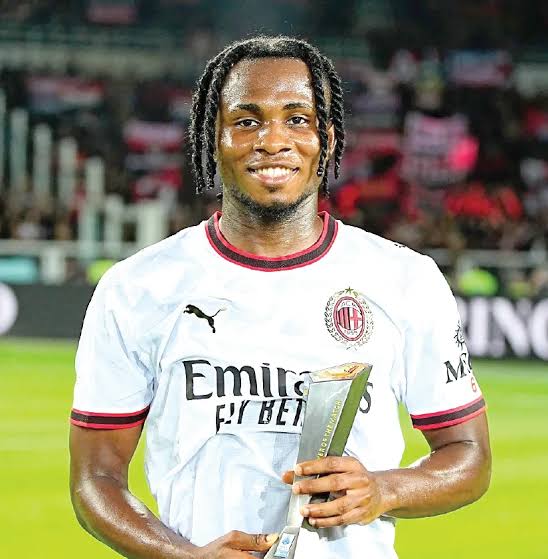
Super Eagles winger Samuel Chukwueze is expected to spend at least two months on the sidelines with a hip injury, ruling him out of AC Milan’s upcoming fixtures, including the derby against Inter Milan.
According to Italian sources, the 27-year-old has consulted a specialist over a problem with his left hip and commenced treatment with injections.
Chukwueze will undergo another assessment in 10 to 15 days, but he is not expected to return before the end of the year, dealing a blow to Nigeria and Milan’s options on the right flank.
The Nigerian reportedly experienced discomfort in his hip after Milan’s Serie A fixture against Atalanta and missed training ahead of last Thursday’s UEFA Europa League clash with Bournemouth, which the Italian side lost 3-0.
Chukwueze has made eight appearances across all competitions this season, providing two assists since returning to Milan following a loan spell at Premier League club Fulham.
His absence adds to Milan’s injury concerns, with defender Matteo Gabbia and winger Alexis Saelemaekers also sidelined by long-term injuries.
The Rossoneri are reportedly considering recalling Zachary Athekame from his loan spell at Lyon to provide additional cover during Chukwueze’s recovery.
Milan, who remain unbeaten in Serie A this season, face Udinese on Sunday before taking on Inter in the derby on October 31.
There is better news for the Italian side regarding striker Gonçalo Ramos, who has returned to full training after missing the Bournemouth defeat with fatigue in his left calf.
A scan revealed no muscle damage, making the Portuguese forward available for Sunday’s trip to Udinese.

Three Nigerians, David Samuel, Patrick Ocheme and Raphael Uchegbu, will fight for titles at the PFL Africa finals after the Professional Fighters League confirmed PFL Rwanda for December 12 at the BK Arena in Kigali.
The promotion announced on October 23 that the event will crown three African champions in the welterweight (170 lbs), lightweight (155 lbs) and bantamweight (135 lbs) divisions.
In the main event, the undefeated Samuel, who has a record of 7-0, will meet Angola’s Shido “Machine” Boris Esperança, who is 13-2, in the welterweight final.
Esperança reached the final with a first-round finish in his semi-final, while Samuel went the distance to keep his perfect record.
“My Nigerian roots opened the door for me to compete in PFL Africa, and reaching the final is a special source of pride for me,” Samuel said. “On December 12, I will step into the cage not just as a finalist, but as a man determined to finish what he started and become a champion.”
Esperança said, “I believe that I can be that champion that the promotion deserves because I have been crafting myself for that.”
Ocheme, whose record stands at 10-1, headlines the co-main event against Senegal’s Demba “Black Tiger” Seck, who is 11-3, in the lightweight final. Ocheme booked his place with a devastating first-round body kick in his semi-final.
“This means a lot to me because finishing fights is what I do best; I am a knockout artist by nature,” Ocheme said. “I trust my preparation, my fight IQ and my ability to get the job done, God willing, in the first or second round.”
Seck responded, “Patrick is a tough opponent, and I always knew our paths could cross in the final. I respect his skills, but I truly believe I am the most complete, technical, strongest, and the most experienced fighter in this division.”
In the bantamweight final, Uchegbu, a former FCC champion with a record of 11-2, faces Liberia’s Dwight Joseph, who is 17-3 and won his semi-final by split decision.
“Winning in the final will change my life, and I look forward to bringing the belt back to the motherland and showing the next generation of African fighters what is possible,” Uchegbu said.
Joseph said, “Coming up short last year motivated me to push even harder this time around. I am getting my hand raised, leaving with that belt, and taking it back to Liberia.”
PFL Rwanda will be shown across Africa on SuperSport for English-speaking viewers and Canal+ for French-speaking audiences. It will also be available on free-to-air television via SportyTV.
PFL Africa General Manager, Elias Schulze, said, “Kigali will take centre stage as we crown Africa’s next champions in front of a global audience. Together with our Rwandan partners, we are giving African talent a world stage, and the next generation something to fight for.”
-

 Education1 day ago
FCE Yola Graduates 3,555 Teachers , Seeks Upgrade to University
-

 Sports1 day ago
Nigerian Trio Target Titles At PFL Africa Finals
-

 Niger Delta2 days ago
Diri Restates Stance On Lagos-Calabar Coastal Highway
-

 Niger Delta2 days ago
C’River, NUJ Pay Tribute To Late Guardian Editor
-

 News2 days ago
NDLEA Recovers Tons Of Illicit Drug Consignments In Nine States
-

 Opinion2 days ago
Checking Voter Apathy In Nigeria’s Electoral Process
-

 Politics1 day ago
2027: DICKSON’S EX-ALLY VOWS TO WORK AGAINST NDC INTEREST IN BAYELSA
-

 Politics1 day ago
2027: GROUP PLEDGES 40,000 SUPPORTERS FOR COALITION CANDIDATES IN RIVERS