
Nation
THE STATES

Bauchi
Only two small scale enterprises in Bauchi have met the Centre Bank of Nigeria guidelines for its intervention loans to operators in the sector, an official has said.
The Chairman of the National Association of Small Scale Industries, Alhaji Tijjani Jallaba, told newsmen in Bauchi yesterday that one other enterprise was on the verge of meeting the requirements.
He named the two enterprises as Gambo Marafa and Baba Buba, adding that Fatima Idris Enterprises was in the final stage to qualify for the loan.
“The reasons for the low patronage of the loan is the tight condition set by the CBN.
‘’ If you see what is encompassed in the scheme, you will realise that the CBN has introduced a good programme that will help to transform small scale businesses into profitable ventures.
Borno
The 21 Army Brigade, Maiduguri, has placed its men on red alert following the spate of killing of soldiers by unknown gunmen in Borno.
Lt. Abubakar Abdullahi, the Brigade’s Spokesman, told newsmen in Maiduguri that the army lost four of its officers in separate attacks last week in Maiduguri metropolis.
He said that “most of the victims were killed because of some lapses.
“The officer who was shot on Sunday at Jajeri was killed because he left the company of his colleagues, contrary to military discipline, while the officer shot on Tuesday at the State Low Cost Estate was sick.
“His assailants trailed him in the evening and took advantage of his condition by shooting him near a mosque.”
Abdullahi said that the officer was not part of the current military operations in the state, which made him unprepared.
He added that the army had always placed its men on red alert for eventualities, especially with the recent attacks.
Ekiti
An Ado-Ekiti Chief Magistrate’s Court has ordered that a 27-year-old man, Akindele Ebunjobi, be remanded in prison for allegedly stabbing his brother to death.
The Chief Magistrate, Mr R.A. Adegboye, gave the order on Wednesday in Ado-Ekiti, after Ebunjobi appeared before him and pleaded not guilty to one-count charge of murder.
The police prosecutor, Mr Ajiboye Bayo, told the court that the accused person on January 11, at about 10.30 p.m., at 29 Oke Odo Street, Osan-Ekiti, stabbed his younger brother Olaniyi Ebunjobi, to death.
Bayo said that the accused stabbed Olaniyi on his back and neck during an argument, and that the incident was said to have taken place in Osan-Ekiti in Moba Local Government Area Ekiti State.
FCT
The Freedom Party of Nigeria (FPN) on Wednesday called on INEC to adhere strictly to its timetable in order not to cause problem for the entire electoral process.
Chief Frank Ohwofa, the National Chairman, who made the call in Abuja during an interview with newsmen said there was no need to allow political parties to go against the existing timetable.
According to him, any favour to a political party will dash all hopes of Nigerians on credible polls.
“There should not be any favouritism to any political party because it will cause lacuna for the entire electoral process.
“Any alteration will otherwise dash all aspirations of Nigerians for credible elections as our hopes on the credibility of Prof. Attahiru Jega will also decline.
“If a waiver can be granted to any party, INEC must grant same to other parties too,’’ he added.
Gombe
The Gombe State Police Commissioner, Mr Orubebe Ebikeme, has warned that parents in the state will henceforth be held responsible for the misbehaviour of their children.
Ebikeme gave the warning in Gombe yesterday at a news conference following the continued breach of the peace in the past one week by some notorious youths known as “Kalare”.
He said, “Parents owed it a duty to the society to monitor and control the behaviour of their children.
Jigawa
The Independent National Electoral Commission (INEC) in Jigawa says no fewer than 692,335 eligible voters in the state have so far been registered in the ongoing voter registration.
The Head, Department of Public Affairs and Monitoring, Alhaji Surajo Kore, told newsmen in Dutse that the figure was collated since the commencement of the exercise on January 15 up till January 18.
“Though, there were some hiccups in the first three days, things have improved tremendously in terms of the speed of the machines,” he said.
Surajo explained that the Commission projected more than 1.7 million eligible voters to be registered in the state, based on the previous exercise, especially in 2006.
Katsina
A 28 year-old man, Sama’ila Garba of Sabuwar Kofa quarters in Katsina, on Thursday bagged one year jail term and 100 strokes of the cane for fornication.
The police docked Garba before Sharia Court I, Katsina, for the alleged offence.
The arraignment of the accused followed a complaint lodged by one Hussaina Isa, also of Sabuwar Kofa quarters, on November 12, 2010, alleging that Garba impregnated her.
The prosecutor, Sgt. Abubakar Mamman, said the complainant also alleged that the accused lured her to have sex with him, which resulted to a pregnancy and subsequent delivery of a baby.
However, the accused pleaded guilty to the charge, accepting that he had an affair with the girl.
Kebbi
All Farmers Association of Nigeria (AFAN), Kebbi chapter, will screen farmers that will benefit from the newly introduced CBN N1billion commercial agricultural credit scheme.
The Chairman of the chapter, Alhaji Bello Kalgo, who stated this on Wednesday in Birnin Kebbi while addressing the farmers.
He said the screening was also to ensure prompt repayment of the loan, for other farmers to benefit and for the expansion of the scheme.
Kalgo said that besides boosting farmers’ productivity, the scheme would also provide more employment opportunities for them as well as increase the revenue accruing from their farming activities.
The chairman said that the state government had guaranteed the loan with no interests attached.
He promised the farmers of the readiness of the association to attract more supports for them such as timely release of fertiliser, modern farming implements, seedlings and pesticides, especially in areas devastated by flood last year.
Ogun
The yesterday Justice, Development and Peace Commission (JDPC), Ijebu-Ode Catholic Diocese, has cleared 40 plots of land for fish farmers in Ijebu-Ode, Ogun state.
Mr. Felix Adesiyan, the Diocesan Agricultural Development Programme Coordinator, disclosed this in an interview with newsmen in Ijebu-Ode yesterday.
Adesiyan explained that the move was aimed at encouraging more people, especially youths, to embrace fish farming and also to solve the problem of inadequate land for fish farming in the community.
He said that each of the farmers registered with the commission would be given a piece of land for a period of five years, adding that the land would attract a token rent of N5,000.
Plateau
Brig.-Gen. Hassan Umaru, the Commander of the Special Task Force (STF) in Jos, on Wednesday appealed to the people of Plateau to be patient with the soldiers maintaining the peace in the state.
Briefing newsmen on the series of protests launched against the STF in recent times, Umaru said the force was trying to restore peace to the state.
The Tide’s source reports that one of such protests was launched on Monday at Farin Lamba, Vom, while another was recorded at Abattoir within Jos metropolis on Wednesday.
“We are trying to restore peace, but the way and manner people are talking against us is not encouraging.
“The women protest is not encouraging at all and we want to suggest that people should not allow themselves to be used because the peace of the state should be paramount to all,” he said.
Yobe
Two officials of INEC participating in the ongoing registration of voters in Nguru Local Government Area of Yobe have suffocated.
The Resident Electoral Commissioner in the state, Malam Sadiq Musa, who confirmed the story, told newsmen in Damaturu yesterday that the men died on Monday and Wednesday.
Musa said that the officials failed to switch off the power generator while sleeping in their room close to the Registration Centre after working for hours.
He named the deceased as Abdulhamid Mustafa, an Inspector with Immigration Department and Aliyu Abubakar, Principal Officer with INEC’s head office in Damaturu.
The fumes filled the room in the night and they suffocated; one person died immediately while the other died the next day in a hospital, ‘’ he said.



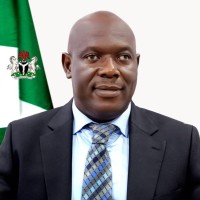
The Hydrocarbon Pollution Remediation Project (HYPREP) has commemorated the 15th anniversary of the release of the United Nations Environment Programme (UNEP) Environmental Assessment Report on Ogoniland, reaffirming its commitment to restoring the environment and improving the livelihoods of affected communities.
In a statement signed by the Project Coordinator, Prof Nenibarini Zabbey, to commemorate the anniversary, HYPREP described the anniversary as a significant milestone in Nigeria’s environmental restoration efforts, noting that the project has made remarkable progress in implementing the recommendations of the landmark UNEP report released on August 4, 2011.
The UNEP report had revealed extensive oil pollution across Ogoniland, severe environmental degradation, and serious public health risks resulting from decades of petroleum operations. It also recommended an initial $1 billion fund to commence the cleanup of the affected communities.
According to HYPREP, the Federal Government formally launched the Ogoni clean-up in 2016, while the Project Coordination Office was established in 2017 to drive the implementation of UNEP’s recommendations.
Zabbey said the current administration has continued to prioritise the project under the Renewed Hope Agenda.
Providing an update on the cleanup, the Project Coordinator disclosed that 30 of the 65 contaminated sites identified by UNEP have been fully remediated, while work is ongoing at several medium- and high-risk locations. It also stated that more than 1.5 million mangrove seedlings have been planted as part of what it described as the world’s largest restoration of oil-degraded mangroves, with over 1,000 hectares of shoreline already rehabilitated.
Zabbey further revealed that 49 Ogoni communities have been connected to potable water schemes through multiple water projects and booster stations aimed at providing safe drinking water across the region.
In the health sector, he said the 100-bed Ogoni Specialist Hospital in Kpite and the 43-bed Cottage Hospital in Buan are nearing completion, adding that several existing health facilities have been upgraded with modern medical equipment, while five ambulances have been donated to improve emergency healthcare services. The Project Coordinator also disclosed that a three-year human health biomonitoring study is being conducted in collaboration with the World Health Organization’s International Agency for Research on Cancer (IARC).
On economic empowerment, Zabbey stated that the Project has created more than 8,000 direct jobs and trained thousands of Ogoni youths and women in various vocational and technical skills, including software development, cybersecurity, aviation, commercial diving, seafaring, mechatronics, and creative arts. The project also reported awarding scholarships to more than 1,000 students, providing grants to small businesses, and supporting persons living with special needs through skills acquisition programmes.
The statement further highlighted ongoing legacy projects, including the Ogoni Power Project and the Centre of Excellence for Environmental Restoration, which it said is about 96 per cent complete. HYPREP also welcomed the recent designation of the Ogoni Wetland as a Ramsar Site of International Importance and pledged to continue promoting biodiversity conservation and sustainable management of the ecosystem.
Marking the anniversary, Zabbey said the progress achieved over the past 15 years demonstrates the collective commitment of government, development partners, stakeholders, and local communities to restoring Ogoniland. He called for renewed collaboration to sustain the cleanup effort, promote environmental sustainability, and support the long-term development of the region. 3
-

 News2 days ago
RSG Targets Nine Million Residents in Mosquito Net Distribution Campaign
-

 Oil & Energy1 day ago
Aiyedatiwa Signs New Electricity Bill
-

 Maritime1 day ago
Marine Minister Commends President Tinubu On NPERA Bill Assent
-

 Oil & Energy1 day ago
NLNG Commissions Research And Innovation Centre In RSU
-

 News2 days ago
KenPoly Holds Eight Convocations, August 29
-

 News2 days ago
RMAFC Completes Revenue Sharing Review, Proposes New Pay
-

 News2 days ago
RSG Begins Another Phase of Projects Commissioning Today
-

 Maritime1 day ago
NAGAFF Petitions IGP Over Alleged Maritime Police Harassment