
Business
LIRS Seals Filling Stations

The Lagos State Internal Revenue Service (LIRS) on Friday sealed seven filling stations in Lagos over tax evasion.
Mrs Afolashade Afolayan, Assistant Legal Adviser of LIRS, said that the closure was due to alleged refusal of the filling stations to pay their taxes to the state government.
A reporter who accompanied the enforcement team, reports that operators of the stations were accused of failing to pay outstanding N6.8 million tax liabilities for 2008.
Afolayan said the state government would continue to clamp down on tax defaulters.
According to her, several notices have been sent to defaulting companies to pay their outstanding taxes within the stipulated period.
Afolayan advised defaulting corporate organisations and individuals to pay all their outstanding taxes by June to avoid sealing off their companies.
Mr David Alatise, a dealer in one of the affected stations, told newsmen that the state and Federal Governments were imposing too many taxes on them.
Alatise urged the LIRS to meet with stakeholders to build a conducive tax environment in the state.


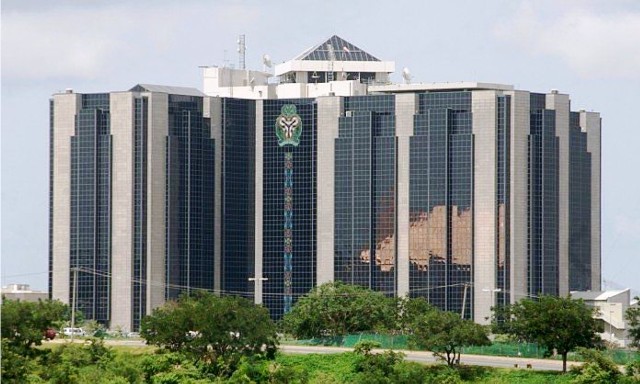
The Central Bank of Nigeria (CBN) has revised its cash withdrawal rules, discontinuing the special authorisation previously permitting individuals to withdraw N5 million and corporates N10 million once monthly, with effect from January 2026.
In a circular released Tuesday, December 2, 2025, and signed by the Director, Financial Policy & Regulation Department, FIRS, Dr. Rita I. Sike, the apex bank explained that previous cash policies had been introduced over the years in response to evolving circumstances.
However, with time, the need has arisen to streamline these provisions to reflect present-day realities.
“These policies, issued over the years in response to evolving circumstances in cash management, sought to reduce cash usage and encourage accelerated adoption of other payment options, particularly electronic payment channels.
“Effective January 1, 2026, individuals will be allowed to withdraw up to N500,000 weekly across all channels, while corporate entities will be limited to N5 million”, it said.
According to the statement, withdrawals above these thresholds would attract excess withdrawal fees of three percent for individuals and five percent for corporates, with the charges shared between the CBN and the financial institutions.
Deposit Money Banks are required to submit monthly reports on cash withdrawals above the specified limits, as well as on cash deposits, to the relevant supervisory departments.
They must also create separate accounts to warehouse processing charges collected on excess withdrawals.
Exemptions and superseding provisions
Revenue-generating accounts of federal, state, and local governments, along with accounts of microfinance banks and primary mortgage banks with commercial and non-interest banks, are exempted from the new withdrawal limits and excess withdrawal fees.
However, exemptions previously granted to embassies, diplomatic missions, and aid-donor agencies have been withdrawn.
The CBN clarified that the circular is without prejudice to the provisions of certain earlier directives but supersedes others, as detailed in its appendices.
-

 Featured4 days ago
Oil & Gas: Rivers Remains The Best Investment Destination – Fubara
-
Nation4 days ago
Hausa Community Lauds Council Boss Over Free Medical Outreach
-

 Nation4 days ago
Ogoni Power Project: HYPREP Moves To Boost Capacity Of Personnel
-
Nation4 days ago
MOSIEND Calls For RSG, NDDC, Stakeholders’ Intervention In Obolo Nation
-
Nation4 days ago
Association Hails Rivers LG Chairmen, Urges Expansion Of Dev Projects
-
Nation4 days ago
Film Festival: Don, Others Urge Govt To Partner RIFF
-
 News4 days ago
NDLEA Arrests Two, Intercepts Illicit Drugs Packaged As Christmas Cookies
-
 News4 days ago
Troops Rescue 12 Abducted Teenage Girls In Borno