Opinion
INEC And Voters Registration Exercise
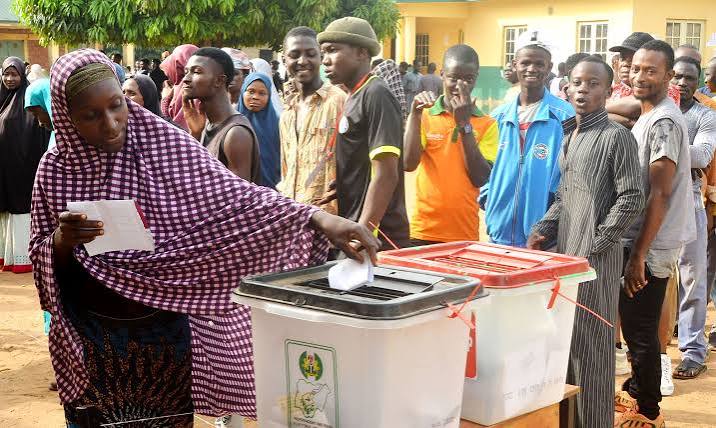
Recently, there have been calls in the media and at public places for the Independent National Electoral Commission (INEC) to revise the nations voters registers before the 2011 general elections.
These calls to a great extent are welcome development because it will assist to streamline
irregularities that may hinder future conduct of elections in the country.
For instance, some of the names existing in the current voters registers may be regarded as ghost or fake names as the card carrier may have died after the 2007 elections.
Also, the call if favourable considered will enable those persons or eligible voters who have not been opportune to register to do so, where their reasons at that time may be that they were under age or could not meet up deadline stated for the registration exercise.
The revision of the voters registers is also necessary in view of the fact that most of the registers may either have been torn or worn out following excessive usage by both the three different sections of the government, that is, the federal, state and local governments in the country.
It would be recalled that the last voters registration exercise was carried out in 2006 with the voters registers used in the 2007 elections, where most registers might have found either got torn, destroyed or disappeared as a result of elections characterised by confusions and violence in some geo-political region or states.
Interestingly, revision of voters registers will ensure that real democracy is practiced as citizens are not disenfranchised.
Eligible voters on the register should equally be given their original voters’ cards to enable them exercise their franchise.
In the 2006 revision of voters register action exercise, most eligible voters were neither registered nor given their voters cards.
The independent National Electoral Commission (INEC) in charge of the exercise should intensify efforts aimed at providing and creating sufficient materials, wards, polling units or centres as well as commence early delimitation of constituencies which will ease the electoral process.
INEC should take adequate time and care in the provision of storage facilities to secure the materials as well as training of electoral personnel for the conduct of the elections to avoid the mistakes of the past.
The conduct of the Anambra State Governorship election last month was an eye-opener as the INEC was meticulous in the exercise.
While we commend the Independent National Electoral Commission for that wonderful performance, it is our belief that the 2001 elections will take the same shape that could bring peace to strengthen the nascent democracy.
Although 2011is still far from now, for the preparation of the electoral requirements, but how far?.
So, INEC should start now, to put things in order as the people of old once told us that, “A stich in time, saves nine.
Awoji resides in Port Harcourt.
Umegbewe Awoji

Opinion
Time and Season Can Tell
Opinion
Why Adaeze Deserves A Second Chance
Opinion
Empowering Youth Through Agriculture
Quote:”While job seeking youths should continuously acquire skills and explore opportunities within their immediate environment as well as in the global space through the use of digital platforms, government, corporate/ multinational organizations or the organised private sector should generate skills and provide the enabling environment for skills acquisition, through adequate funding and resettlement packages that will provide sustainable economic life for beneficiaries”.
The Governor of Rivers State, Sir Siminalayi Fubara, recently urged youths in the Rivers State to take advantage of the vast opportunities available to become employers of labour and contribute meaningfully to the growth and development of the State. Governor Fubara noted that global trends increasingly favour entrepreneurship and innovation, and said that youths in Rivers State must not be left behind in harnessing these opportunities. The Governor, represented by the Secretary to the State Government, Dr Benibo Anabraba, made this known while declaring open the 2026 Job Fair organised by the Rivers State Government in partnership with the Nigeria Employers’ Consultative Association (NECA) in Port Harcourt. The Governor acknowledged the responsibility of government to create jobs for its teeming youth population but noted that it is unrealistic to absorb all job seekers into the civil service.
“As a government, we recognise our duty to provide employment opportunities for our teeming youths. However, we also understand that not all youths can be accommodated within the civil service. This underscores the need to encourage entrepreneurship across diverse sectors and to partner with other stakeholders, including the youths themselves, so they can transition from being job seekers to employers of labour,” he said. It is necessary to State that Governor Fubara has not only stated the obvious but was committed to drive youth entrepreneurship towards their self-reliance and the economic development of the State It is not news that developed economies of the world are skilled driven economies. The private sector also remains the highest employer of labour in private sector driven or capitalist economy though it is also the responsibility of government to create job opportunities for the teeming unemployed youth population in Nigeria which has the highest youth unemployed population in the subSahara Africa.
The lack of job opportunities, caused partly by the Federal Government’s apathy to job creation, the lack of adequate supervision of job opportunities economic programmes, lack of employable skills by many youths in the country have conspired to heighten the attendant challenges of unemployment. The challenges which include, “Japa” syndrome (travelling abroad for greener pastures), that characterises the labour market and poses threat to the nation’s critical sector, especially the health and medical sector; astronomical increase in the crime rate and a loss of interest in education. While job seeking youths should continuously acquire skills and explore opportunities within their immediate environment as well as in the global space through the use of digital platforms, government, corporate/ multinational organizations or the organised private sector should generate skills and provide the enabling environment for skills acquisition, through adequate funding and resettlement packages that will provide sustainable economic life for beneficiaries.
While commending the Rivers State Government led by the People First Governor, Sir Siminilayi Fubara for initiating “various training and capacity-building programmes in areas such as ICT and artificial intelligence, oil and gas, maritime, and the blue economy, among others”, it is note-worthy that the labour market is dynamic and shaped by industry-specific demands, technological advancements, management practices and other emerging factors. So another sector the Federal, State and Local Governments should encourage youths to explore and harness the abounding potentials, in my considered view, is Agriculture. Agriculture remains a veritable solution to hunger, inflation, and food Insecurity that ravages the country. No doubt, the Nigeria’s arable landmass is grossly under-utilised and under-exploited.
In recent times, Nigerians have voiced their concerns about the persistent challenges of hunger, inflation, and the general increase in prices of goods and commodities. These issues not only affect the livelihoods of individuals and families but also pose significant threats to food security and economic stability in the country. The United Nations estimated that more than 25 million people in Nigeria could face food insecurity this year—a 47% increase from the 17 million people already at risk of going hungry, mainly due to ongoing insecurity, protracted conflicts, and rising food prices. An estimated two million children under five are likely to be pushed into acute malnutrition. (Reliefweb ,2023). In response, Nigeria declared a state of emergency on food insecurity, recognizing the urgent need to tackle food shortages, stabilize rising prices, and protect farmers facing violence from armed groups. However, without addressing the insecurity challenges, farmers will continue to struggle to feed their families and boost food production.
In addition, parts of northwest and northeast Nigeria have experienced changes in rainfall patterns making less water available for crop production. These climate change events have resulted in droughts and land degradations; presenting challenges for local communities and leading to significant impact on food security. In light of these daunting challenges, it is imperative to address the intricate interplay between insecurity and agricultural productivity. Nigeria can work toward ensuring food security, reducing poverty, and fostering sustainable economic growth in its vital agricultural sector. In this article, I suggest solutions that could enhance agricultural production and ensure that every state scales its agricultural production to a level where it can cater to 60% of the population.
This is feasible and achievable if government at all levels are intentional driving the development of the agricultural sector which was the major economic mainstay of the Country before the crude oil was struck in commercial quantity and consequently became the nation’s monolithic revenue source. Government should revive the moribund Graduate Farmers Scheme and the Rivers State School-to-Land agricultural programmes to operate concurrently with other skills acquisition and development programmes. There should be a consideration for investment in mechanized farming and arable land allocation. State and local governments should play a pivotal role in promoting mechanized farming and providing arable land for farming in communities. Additionally, allocating arable land enables small holder farmers to expand their operations and contribute to food security at the grassroots level.
Nigeria can unlock the potential of its agricultural sector to address the pressing needs of its population and achieve sustainable development. Policymakers and stakeholders must heed Akande’s recommendations and take decisive action to ensure a food-secure future for all Nigerians.
By: Igbiki Benibo
-
Sports4 days ago2026 WC: Nigeria, DR Congo Awaits FIFA Verdict Today
-
Politics4 days ago
ADC, PDP, LP Missing As INEC Set For By- Elections In Rivers
-
Environment4 days agoOxfam, partners celebrate 5 years of climate governance programmes in Nigeria
-
Politics4 days ago
FG’s Economic Policies Not Working – APC Chieftain
-
Politics4 days ago2027: Diri Unveils RHA LG Coordinators, APC Congress Panel
-
Politics4 days agoReps To Meet,’Morrow Over INEC’s 2027 Election Timetable
-
Politics4 days agoGroup Continues Push For Real Time Election Results Transmission
-
Sports4 days ago
Sunderland Overcome Oxford Challenge