
Nation
Buhari On A Jamboree Visit To Uzodinma -Ohanaeze

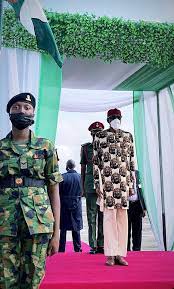
The Ohanaeze Ndigbo Youth Council Worldwide, OYC, yesterday berated Governor Hope Uzodinma of Imo State for linking Ndigbo to President Muhammadu Buhari’s visit to the State today.
Uzodinma had disclosed that Buhari would, apart from commissioning projects he completed in the State, meet with Igbo leaders and discuss issues affecting the zone.
But in a reaction, the President-General of OYC, Mazi Okwu Nnabuike said Uzodinma’s claims were big slight on Ndigbo.
He said it was insulting that a private visit to Uzodinma’s Imo Government could gradually turn into a visit to Igboland by Buhari.
The enraged youth group said, “we had wanted to hold our peace over the noise about President Buhari’s visit to Imo State but under the prevailing circumstances, we are compelled to set the record straight.
“We want to start by making it clear that President Muhammadu Buhari is not visiting Igboland today, but is rather coming to see Governor Hope Uzodinma on a private visit that has nothing to do with the good people of the South-East.
“Having said that, it is also imperative to state that Ndigbo are not scheduled to meet with Buhari in Imo State to discuss any issue whatsoever. The reason is simple- at no point did Igbo leaders meet where a decision was taken for such a visit, let alone agreeing on issues to present to Buhari.
“Secondly, Uzodinma, who is number one enemy of Ndigbo, a man that has bluntly refused to protect our people, but is holding tenaciously to open grazing of cattle, is not and will never be a rallying point for Ndigbo.
“Having said this, he is on his own and is not in any way representing the interest of Ndigbo, but is merely receiving Buhari as his private guest, which he is entitled to.
“Any Igbo leader going there is not representing the interest of Ndigbo and we will regard such a person as an enemy of the people.
“What we will not tolerate is the habit of dragging Ndigbo into such a Jamboree. Ndigbo are not ass lickers, we are one of the three major tripods under which this country is standing and for that reason, we are not going to go cap in hand begging anyone for what is our due, including the 2023 presidency which is not negotiable.”
The youth group equally said it was not happy that the members of the Indigenous People of Biafra, IPOB, were popularizing Buhari’s visit by proclaiming sit-at-home in the entire Igboland.
“What is the essence of even contemplating a sit-at-home in the entire Igboland because Buhari is visiting Hope Uzodinma in Imo State? They have helped Gov. Uzodinma in giving the visit such a colouration that it is for the entire Igboland.
“If at all they must declare a sit-at-home, it should have been in Imo State because Buhari is not visiting Igboland. They should not make this kind of very costly mistake next time, it has given this visit undue popularity,” Okwu added.



Rivers State University and the Otonti Nduka Foundation for Values Education jointly hosted a two-day National Conference on 8 and 9 May 2026 to examine the state of values in Nigeria.
The two days conference held at Rivers State University convocation arena brought together academics, policymakers, legal experts and education leaders under the theme _“Trends and Challenges in Upholding Values in Nigeria.”_
The gathering focused on policy gaps, curriculum reform, and the role of ethics in public service and education.
The event opened on Friday with remarks from Vice Chancellor Prof. Chief Isaac Zeb-Obipi, who stressed the need to address declining moral and civic values across Nigeria’s education and public sectors. A book of abstracts for the plenary sessions was also presented to participants.
Key speakers included former Attorney General Chief Dr Kanu Agabi, SAN; NERDC Executive Secretary Prof. Shehu Salisu; Prof. Hauwa Imam, FNAE, of the University of Abuja; former Rivers SUBEB Chairman Ven Dr Fyneface Akah, ; former NIMASA DG Dr Hon. Dakuku Adol-Peterside; and RSU Director of ICT Prof. Sunny Orike.
Discussions centered on integrating values education into schools, tertiary institutions and public institutions, alongside the impact of technology on moral development among young Nigerians. Panel and plenary sessions produced practical recommendations for curriculum and policy reform.
On Saturday, the foundation marked its centenary with the unveiling of the book _Otonti Nduka in History_, launched by Chief Engr. Grant Offor, FNSE. The Nigerian Academy of Education held a ceremonial procession led by its President Prof. Olu Jegede and the Ikwerre Professors Forum.
In a communiqué, participants called for stronger collaboration between government, civil society and academia to mainstream values education nationwide. They recommended reviewing teacher training curricula and expanding digital platforms to promote ethical civic engagement, with the foundation pledging to share the outcomes with education authorities for implementation.
Dignitaries present included Ogbakor Ikwerre Worldwide as Chief Host, Prof. Emeritus Chief T. Uzodimma Nwala, the Ikenga 1 of Mbaise and first philosophy student of Prof. Otonti Nduka, alongside scholars and community leaders.
Amadi Akujobi

The Shell Nigeria Gas Limited, in partnership with the Manufacturers Association of Nigeria, has reaffirmed support for efforts to expand gas distribution infrastructure in Rivers State as part of initiatives aimed at improving access to affordable, cleaner and more reliable energy for industries across the South-South region.
The commitment was highlighted during the SNG–MAN Business Forum held in Port Harcourt, where stakeholders from the industrial and public sectors examined the role of natural gas in driving industrialisation, boosting local production and strengthening energy security.
Speaking at the forum on behalf of the Managing Director of Shell Nigeria Gas Limited, the company’s Head of Gas Distribution, Mr. Chukwuka Amos Ejesi, described natural gas as a critical component of Nigeria’s energy mix and a key driver of sustainable industrial growth.
According to him, Nigeria’s gas development agenda has reached a stage where policy direction must be matched with practical implementation capable of addressing the energy challenges confronting manufacturers.
He noted that pipeline gas offers industries a cleaner, more dependable and cost-effective energy alternative capable of supporting uninterrupted operations, reducing emissions and improving production efficiency.
“Gas is the backbone of manufacturing, and we are encouraged by the growing recognition among stakeholders of the need for cleaner and more reliable energy solutions,” he said.
Ejesi stressed the need for sustained collaboration among energy providers, government institutions and industrial stakeholders to maximise the country’s gas resources for economic development.
He added that improved gas infrastructure would strengthen manufacturing value chains, enhance productivity and promote more competitive industrial operations across Rivers State and the wider South-South region.
Participants at the forum also emphasised the importance of expanding energy infrastructure as a pathway to unlocking industrial capacity, reducing operating costs and promoting sustainable industrial development.
Representing Governor Siminalayi Fubara, the Director-General of the Rivers State Investment Promotion Agency, Dr. Chamberlain Peterside, reaffirmed the state government’s commitment to partnering with private sector investors to revitalise industrial activities in the state.
He identified key projects targeted under the initiative to include the revival of the Ahoada Industrial Park, the New Port City project and the proposed Bonny Industrial Park, all aimed at stimulating economic growth and expanding industrial opportunities along the Bonny corridor.
According to the governor, the long-term vision is to position Rivers State as a leading manufacturing hub in Southern Nigeria through strategic public-private partnerships.
Governor Fubara also commended Shell Nigeria Gas and MAN for sustaining engagements geared towards improving industrial energy access, noting that gas infrastructure development remains central to the state’s economic recovery plans.
He further observed that the gas sector presents enormous opportunities for economic growth, especially as global energy systems continue to shift towards cleaner energy sources.
The governor called on stakeholders to work collectively towards developing a practical and sustainable gas framework capable of supporting the state’s industrial and energy development objectives.
Chairman of MAN, Rivers and Bayelsa Branch, Elder Vincent Okuku, described gas as indispensable to industrial operations, noting that many manufacturers continue to struggle with the high cost of alternative energy sources.
Similarly, President of the Port Harcourt Chamber of Commerce, Industry, Mines and Agriculture, Dr. Chinyere Ngozi Nwoga, said the transition to natural gas had become increasingly necessary for businesses seeking stable and cost-efficient operations.
“Pipeline natural gas provides a more cost-effective and reliable source of energy for industries,” she stated.
Also speaking, former Chairman of MAN in Rivers and Bayelsa States, Mrs. Emilia Akpan, stressed the need to align energy infrastructure development with investment in human capacity.
She maintained that rebuilding the state’s economy would require not only reliable energy supply but also the development of technical skills needed to support long-term industrial growth.
By Kevin Nengia
-
News4 days ago
Obuah’s Victory Excites Former Lawmaker as APC Primaries Conclude in Rivers West
-
News4 days ago
105 Nigerians Killed In S/Africa In Seven Years
-

 Niger Delta4 days ago
Royal Father Endorses PH Arsenal Community, Pledges To Support
-

 Sports4 days ago
Khana, Akpajo All-Stars Set For Friendly Match ” Morrow”
-
Business4 days ago
Dangote Refinery Ending Nigeria’s Dependence on Imported Fuel – EIU
-
Sports4 days ago
PH To Host 2026 NWFL Super Six
-
Business4 days ago
Commercial Aviation: Bayelsa Begins Operations As Pioneer Airline Launches Maiden Flight
-
Sports4 days ago
FG Approves Nationwide Stadium Overhaul