
Oil & Energy
Lawan Urges Lawmakers To Track PIB Implementation

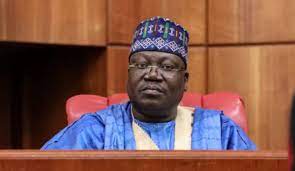
President of the Senate, Dr Ahmad Lawan, has urged lawmakers to track, monitor and supervise implementation of the Petroleum Industry Bill (PIB) after assent by President Muhammadu Buhari.
He made the call in a keynote address at the Conference of Presiding Officers of the Nigerian Legislature (COPON) held on Saturday in Abuja.
The theme of the conference was: “Public Perception of the Role of Legislature: Post Legislative Scrutiny and Independence of the Legislature.”
The president of the senate said: “We passed the PIB. But what is important is for the National Assembly to continue to track, monitor and supervise implementation of the PIB when it is eventually assented to by the President and the execution starts.
“This is because this is a 319 clause legislation and it is so sensitive, so central to our economy and lives of the people, particularly the host communities in the Niger Delta, in oil producing states.
“So we need to devote sufficient time to ensuring that the implementation, especially in the Host Communities Fund is done in such a way that what we think and anticipate will happen in host communities happens.
“Otherwise, we have to come back and see where the flaws will be.”
On legislative scrutiny, Lawan said it was a learning process that reduced ambiguity and distrust by allowing the legislature to learn by doing.
“Post legislative scrutiny will encourage citizens to engage more with parliament and improve the quality of our laws and governance.
“For this to be achieved, we must develop political will and make available time, funds and other resources to get it done,” Lawan said.
In his remarks, Speaker, House of Representatives, Mr Femi Gbajabiamila, said: “Public perception of the legislature is a topic that has been debated and talked about.
“It is a losing battle, you cannot win, but public perception is public perception. No matter what you do, it is all about the National Assembly.
“Unfortunately, public perception and what is right and what is legal and what is constitutional, are in a thug of war and it is a very difficult and delicate balancing act.
“One has to be very careful because even where the country catches on a slight cold, you blame it on the National Assembly.
“There is a lot of work still to do. As legislators, our ability to do what is required of us in this joint task of nation building depends on how well we can work together with Federal legislatures and across the legislature from the 36 states.”
Clerk to the National Assembly, Mr Amos Ojo, noted that the meeting of COPON was last held more than a decade ago.
He lamented that public perception of the legislature in Nigeria was often tilted in the direction of heavy criticism that was why the theme of COPON 2021 remained very instructive and strategic.
“A case of note is the recent overblown case of the leaking roof at the national assembly.
“Against this backdrop, l am using the opportunity of this COPON 2021 to urge the Nigerian media and Nigerians to change their stereotype perception of the legislature in Nigeria.”(NAN)



-

 News4 days ago
RSG Targets Nine Million Residents in Mosquito Net Distribution Campaign
-

 Oil & Energy4 days ago
Aiyedatiwa Signs New Electricity Bill
-

 Oil & Energy4 days ago
NLNG Commissions Research And Innovation Centre In RSU
-

 Maritime4 days ago
Marine Minister Commends President Tinubu On NPERA Bill Assent
-

 News4 days ago
KenPoly Holds Eight Convocations, August 29
-

 News4 days ago
RSG Begins Another Phase of Projects Commissioning Today
-

 News4 days ago
RMAFC Completes Revenue Sharing Review, Proposes New Pay
-

 Maritime4 days ago
NAGAFF Petitions IGP Over Alleged Maritime Police Harassment