
City Crime
Of Taskforce And Hoodlums

Only recently, a six-member taskforce pursued a truck carrying bundles of iron from Eliozu to Rumuo-domaya in Obio/Akpor Local Government Area of River State.
They had chased the trailer driver coming from Aba in Abia State from Eliozu, where the office of their principal is.
The six-member taskforce was determined to extort money from the trailer driver, either by hook or crook. They had hired a small white bus to chase the fleeing trailer driver. Three of the taskforce members alighted from the bus, climbed onto the moving truck and pummeled the driver with blows. They had ransacked and emptied his pockets in search of money to steal but the truck driver was not deterred and did not budge. He could not stop because he did not know what the assailants were up to. He had no inkling about whether they were legitimate or not.
One of his assailants got hold of a noxious liquid and administered same to his eyes. As the driver bent down to evade the onslaught, the trailer veered, smashed a yellow Nissan Xterra Jeep with registration number: EKY 298CC and ended up in a gutter. But for the bashing of the Nissan Xterra jeep which caused the trailer to stop, many citizens at the National Identity Registration Centre would have been killed.
As soon as the taskforce members noticed the damage they had caused, they fled for their lives as a crowd that had gathered around the scene chased them. But one of the taskforce members was caught by the mob as he ran out of luck. He was seriously manhandled but the vehicle owner, a legal practitioner, who did not want him to be killed, implored the mob to hand him over to law enforcement agents. The matter was reported at the Rumuodomaya Special Area Division in Obio/Akpor Local Government of Rivers State.
The two suspects caught by good citizens of Rivers State were handed over to the police in that division and detained therein.
At Rumuigbo, a similar incident occurred. Also, at Mile 3, Diobu; Port Harcourt, The Tide gathered another incident had also unleashed mayhem.
The Mile 3 incident, according to an eye witness, provoked commercial drivers bearing machetes to block the road.
Our source disclosed that it took the intervention of officers and men of the Nigerian police to quell the rampage.
For the umpteenth time, taskforce members wreaked havoc in the state. The state government had earlier banned the use of taskforce following the ugly incidents that occasioned their revenue drives. The present taskforce that has started on a bad note, The Tide gathered, is purportedly assigned to check wrong parking.
Unfortunately, the task-force members are faceless people drawn from hoodlums and a preponderance of jobless people. Most of them, according to reports, are not only unemployed but are also unemployable. Hooliganism and ruthlessness are their stock-in- trade. They execute benumbing cruelty on their victims. Sometimes, they kill, maim and rob their victims in the name of raking in revenue for government. They are in the semblance of the biblical Devil whose mission is to steal, kill and destroy.
Unfortunately, this class of taskforce members does not carry identity cards. They are not given any by their principals but are simply foisted on the society to wreak havoc and unleash mayhem. For them it is the survival of the fittest, and the society is worse for it. It is pathetic that this kind of thing is happening in the 21st century, when the world has become a global village and most of these ugly scenes are posted on the social media.
Regrettably, the negative image the activities of the hoodlums’ paint can only be imagined, no wonder, our country is often referred to as a shithole country. But what manner of revenue collection requires touts to jump into a moving trailer. Apart from endangering their own lives and that of the vehicle driver, the entire society is at risk in the unfolding drama of the absurd.
Two years back, a female police officer was killed when she was on traffic duty around the Rumukrushe axis of Obio/Akpor Local Government Area of the state. A stray bullet had hit her skull and killed her immediately when another policeman had shot at hawkers in the area. The police woman who was married with three children was felled in a disgusting manner. As she lay in the pool of her own blood, she was posted on the social media.
The state governor, Chief Nyesom Wike, summarily disbanded the task force and it was soothing to many frayed nerves. It also alleviated the pains of those in business and right-thinking members of the society.
The word “task force, according to Oxford Advanced Learners Dictionary is “a military force that is brought together and sent to a particular place, (2) a group of people, who are a brought together to deal with a particular problem.”
When one looks closely at the definition of the word “task force”, one is bound to find out that the concept of taskforce precludes an assembly of rejects of the society or hoodlums who are taking a toll on a society that has no place for them. Task forces are constituted to deal with certain problems and not as revenue agents. They are often on adhoc basis and once the problem is solved, they are disbanded.
Again, trap setting for members of the society is not one of functions of government. A government that lures its citizens into crime with the aim of extorting them for the sake revenue is at best a totalitarian one. That is why the prosecution of criminal wrongs ends up in imprisonment. Only minor criminal wrongs are given the option of fine.
The use of a task force that bastardizes the psyche of the society often attracts deprecatory comments about the government in power.
A taskforce consisting of faceless citizens with the sole aim of extorting money from drivers can only originate from illegality. It is a nullity. You cannot put something on nothing. In civilized countries, the police are in charge of traffic not hoodlums or taskforce. Traffic policemen or traffic wardens are in charge of traffic related offences. Traffic offences are quasi- criminal matters and their punishments are not as severe as such that is why policemen who are knowledgeable in law should handle it. Again, no person can be punished for any crime which is not written in any legal code. Crimes and punishments are codified. Among the various taskforces, the amount of money extorted from vehicle drivers depends largely on the naivety of their victims. The drivers that are greatly extorted are the ones that come from other states.
The taskforce set up by National Union of Road Transport Workers is the most vicious one. It works with benumbing insensitivity to the plight of its victims.
More pathetic is the fact that the task forces have no adjudicatory mechanism to prove the validity of their allegations against the so-to-speak defendants. They are the police and the court at same time. They allege, arraign, try and punish offenders, all by themselves. The right of fair hearing enshrined in Section 36 of the Constitution of the Federal Republic of Nigeria 1999 (as amended) is at best jettisoned. The barbarity of the process stares every right-thinking Nigerian in the face.
Pathetically, taskforce members drawn from hoodlums are anti-society. Moreover, since most of them are on a daily pay, they can afford to commit crimes and go scot free. This is because there is certainly no means of identifying who they are. They fizzle into thin air on the least apprehension of danger and the society is victimized.
One hardly understands where members of the taskforce derive their powers to harass and molest innocent citizens. There is obviously no statute backing the use of anonymous and faceless citizens as members of a taskforce to cause mayhem in the society.
The police that are enlisted in the Nigeria police, wear name tags and numbers and can be identified with a specific police division. Taskforce members are everywhere and recruited from everywhere. A policeman that pleaded anonymity told The Tide that one of the frequent cases that attended Police stations in recent times had to do with the excesses and depravity of the taskforce: an uncouth assemblage of hoodlums. Indeed, nothing good can come from this kind of arrangement.
On the one hand, some taskforces are established by government but a preponderance of others that take liberty for license aren’t. They are impersonators. There is grave danger in assigning specific duties to taskforce members that are not profiled. Again, making taskforce assignment exclusively for hoodlums goes against the grain. Those who are not trained and have no conscience put the society at risk. Power of any kind must not be given to men of questionable characters.
On the other hand, if government does not establish a taskforce with a relevant legislation who does that? Again, is there any provision in any extant statute authorising the use of a taskforce peopled by hoodlums?
Interestingly, every organization established by government is a creation of the law, and it derives its power from the law. Where an organization or body is not created by the law, it is nonexistent. Any act done by such a body or purported to be done by such non-existent body is null and void. That is why the operation of the taskforce set up by the National Union of Road Transport Workers (NURTW) without the necessary backing by the law can at best be described as an illegality.
In Lagos State, there is the Lagos State Ministry of Transport fondly referred to as LASMA, which levies fine on vehicle drivers that violate traffic regulations. The Ministry can be taken to court when the rights of drivers and vehicle owners are violated. But faceless task force members without proper means of identification are a grave danger to the society.
Years ago, the Rivers State Ministry of Transport used a taskforce simply referred to as MOT to deal with ubiquitous wrong parking of vehicles, obstruction of traffic and sundry other traffic offences and it was good.
MOT could sue and be sued.
What is very offensive today is that members of taskforce depend solely on what they are able to rake in on a daily basis to get paid. This again, is bound to cause problem as “man must eat” syndrome relieves them of any sense of responsibility and justice. Members of taskforce today are not profiled; they cannot sue and cannot be sued especially as they are faceless.
But how long will the society remain in this ugly state of affairs. There are indications that more illegal taskforces are likely to emerge as 2023 draws nearer.
By: Chidi Enyie


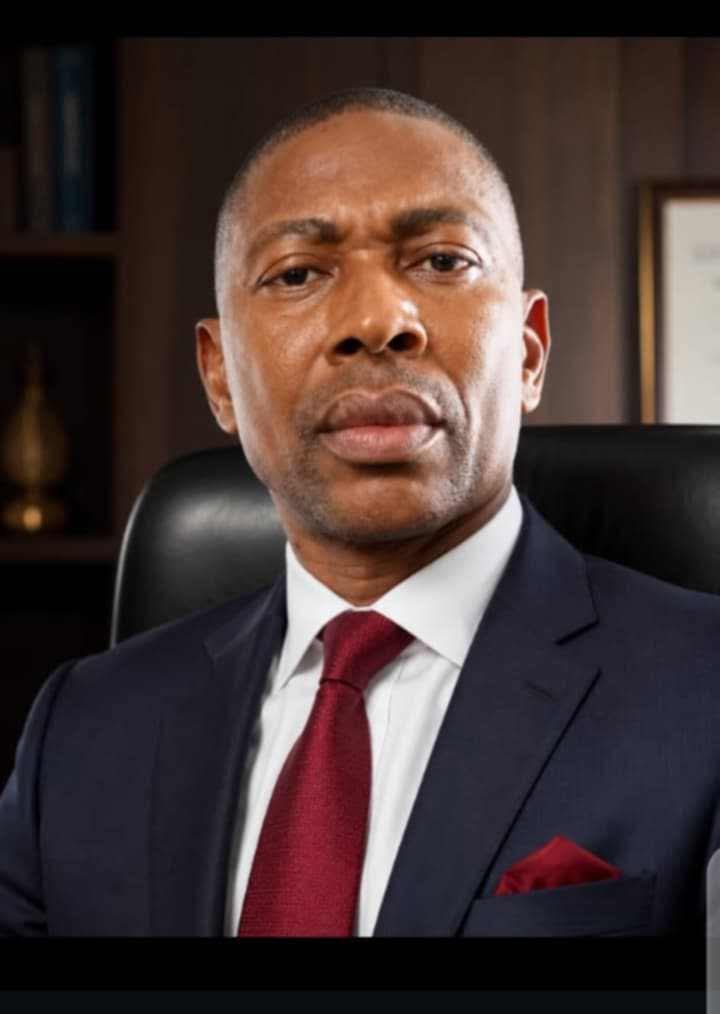
A former staff of the Rivers State Newspaper Corporation, publisher of The Tide Newspapers, Idongpee Akwaowo Reuben, has been appointed the Acting Registrar/Chief Executive Officer of Chartered Chemists of Nigeria (ICCON) by the Federal Government of Nigeria.
Akwaowo’s appointment follows the expiration of the second tenure of the former Registrar, Chemist Jwalshik Wilford.
According to a letter released from the office of the Minister of State for Health and Social Welfare dated August 5, 2026, the Minister of State for Health and Social Welfare, Dr. Iziaq Adekunle Salako, said the appointment was with immediate effect.
The minister had earlier announced Akwaowo’s appointment during a meeting with the Permanent Secretary, Heads of Departments, and Directors in June 10, 2026 in the Minister’s Conference Room.
He said the appointment was automatic and effective 1st June, 2026 following the satisfactory handover that followed the succession procedure.
The Minister nullified the earlier process put in place for a substantive appointment, citing it as a contravention of the provision of the ICCON Act.
He further directed that the appointment letter be issued without further delay.
The Minister admonished the new ICCON Chief Executive to take charge and ensure that the Institute is on the path of peace and progress to deliver her mandates.
In his response, Akwaowo thanked the the Federal Government for the appointment which, he said, has laid every uncertainty surrounding the leadership of the Institute to rest.
He pledged his unalloyed loyalty to the Federal Government and the Minister and promised to work with his Management Team to align with the policy directives of the Ministry as well as the renewed hope agenda of the Federal Government.
Akwaowo joined ICCON in 2005 as a pioneer staff, rose through the ranks and served in many capacities transcending virtually all the departments in the Institute including HOD, Administration/Accounts & Finance.
Most recently, he served as the pioneer Team Lead and the Registrar/CEO Representative in the National Chemical Personnel Audit excercise to Chemical companies and Chemistry Departments in Tertiary Institutions as part of the Institute’s regulatory mandates.
He has attended several courses and workshops and represented the Institute at various conferences and fora.
Akwaowo is a Chartered Chemist and also a member of a number of professional bodies.
He rose to the rank of Director, Scientific in 2025, and was until his appointment, the Coordinator, Zonal Offices of ICCON.
City Crime
Bayelsa Water Coys Raise Alarm Over Business Threats …Set To Resist Multiple Levies Amid High Production Cost

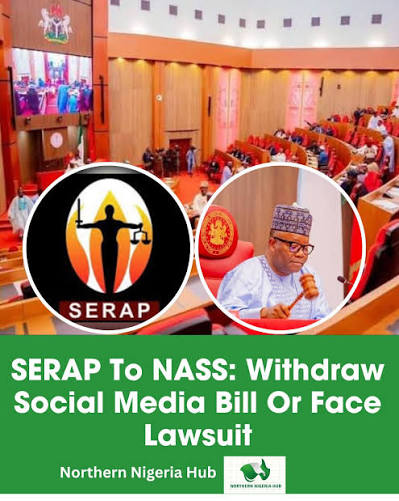
The Socio-Economic Rights and Accountability Project has asked the National Assembly to immediately withdraw the proposed Nigeria Data Protection (Amendment) Bill, 2026, describing it as a backdoor attempt to regulate social media and expand government control over online expression.
SERAP warned that it would institute legal action if the bill is passed in its current or substantially similar form.
The bill, sponsored by Senator Ned Nwoko (APC, Delta North), seeks to compel social media platforms, data controllers and data processors operating in Nigeria to establish physical offices in the country.
It also empowers the Nigeria Data Protection Commission to shut down or prohibit the operations of any entity that fails to comply within 30 days.
In a letter dated July 18, 2026, and addressed to Senate President Godswill Akpabio and Speaker of the House of Representatives Tajudeen Abbas, SERAP said the proposed amendment posed a threat to constitutionally guaranteed rights.
The letter, signed by SERAP Deputy Director Kolawole Oluwadare and issued on Sunday, read in part, “Requirements compelling technology companies to establish local offices would increase government leverage over platforms, facilitate political pressure, make censorship demands easier and expose local employees to retaliation.
“The Bill would create sweeping powers capable of shutting down or excluding social media platforms from the Nigerian market and expose millions of Nigerians to serious violations of their constitutionally and internationally guaranteed human rights.”
SERAP argued that the bill revives previous attempts to regulate social media that attracted widespread public opposition.
“The current Bill revives substantially similar proposals previously introduced by Senator Nwoko, raising renewed concerns that localisation requirements are being used as a vehicle for expanding governmental control over digital platforms and online expression,” it said.
The organisation warned that it would challenge the legislation in court if enacted.
“Should the Bill be enacted into law in its current or substantially similar form, SERAP shall promptly take all appropriate legal actions to challenge its legality in the public interest and to ensure that Nigerians’ fundamental rights are fully protected,” the letter stated.
According to SERAP, the proposed legislation would give the Nigeria Data Protection Commission excessive powers to block digital platforms without adequate procedural safeguards.
“The Bill constitutes a backdoor attempt to regulate social media and increase governmental control over online expression through corporate localisation requirements rather than through transparent and constitutionally permissible regulation,” it said.
The group argued that the bill lacks provisions for prior judicial authorisation, meaningful opportunities for compliance beyond the proposed 30-day period, and safeguards to protect the rights of millions of Nigerians who rely on digital platforms.
SERAP also cited the judgment of the ECOWAS Court of Justice on Nigeria’s suspension of Twitter, arguing that the proposed amendment could produce similar consequences by indirectly excluding social media platforms from operating in the country.
“The Bill also risks recreating the very dangers previously condemned by the ECOWAS Court of Justice. In SERAP and Others v. Federal Republic of Nigeria, the Court held that the suspension of Twitter violated the rights to freedom of expression, access to information and media freedom protected under the African Charter.
“Although the present Bill differs from the Twitter suspension in form, it creates the possibility of achieving the same result indirectly by empowering regulators to prohibit digital platforms from operating in Nigeria.
“The National Assembly should not enact legislation capable of producing, through indirect regulatory means, the very restrictions on fundamental rights that regional human rights law prohibits,” the organisation said.
It maintained that while governments have a legitimate interest in regulating digital platforms, such measures must comply with constitutional guarantees and international human rights standards.
The organisation further warned that mandatory localisation requirements would increase compliance costs for technology companies, startups, educational institutions and artificial intelligence developers.
“The proposed amendment conflicts directly with the objectives of the Nigeria Startup Act 2022 and the National Digital Economy Policy and Strategy.
“Mandatory localisation requirements substantially increase compliance costs, particularly for startups, open-source projects, educational institutions, research organisations, AI developers and smaller technology companies, while reducing Nigeria’s attractiveness as a destination for innovation and investment.
“No major democratic jurisdiction requires every social media platform to establish a physical office as a blanket precondition for providing services.”
SERAP added, “The National Assembly should immediately reject and withdraw the Bill, as it is manifestly incompatible with the Nigerian Constitution and Nigeria’s obligations under the African Charter on Human and Peoples’ Rights and the International Covenant on Civil and Political Rights.”
-

 News2 days ago
RSG Targets Nine Million Residents in Mosquito Net Distribution Campaign
-

 Oil & Energy2 days ago
Aiyedatiwa Signs New Electricity Bill
-

 Oil & Energy2 days ago
NLNG Commissions Research And Innovation Centre In RSU
-

 Maritime2 days ago
Marine Minister Commends President Tinubu On NPERA Bill Assent
-

 News2 days ago
KenPoly Holds Eight Convocations, August 29
-

 News2 days ago
RSG Begins Another Phase of Projects Commissioning Today
-

 News2 days ago
RMAFC Completes Revenue Sharing Review, Proposes New Pay
-

 Maritime2 days ago
NAGAFF Petitions IGP Over Alleged Maritime Police Harassment