
News
Covid-19: 4m AstraZeneca Vaccines Arrive Nigeria, ‘Morrow

The Secretary to the Government of the Federation, Mr Boss Mustapha, has confirmed that Nigeria would, tomorrow, receive 4million doses of the Oxford AstraZeneca Covid-19 vaccines, as the first tranche of the COVAX deliveries hit the nation’s shores.
Mustapha, who is also the chairman, Presidential Task Force on Covid-19, made the disclosure, last Saturday in Abuja, while evaluating the country’s fight against the disease.
“They (vaccines) should depart India on March 1, 2021 in the night and arrive in Abuja on the 2nd of March, 2021,” he said.
Nigeria is set to receive its first four million shipment of Oxford AstraZeneca Covid-19 vaccines from COVAX, a global scheme set up to procure and distribute vaccines for free, as the world races to contain the Coronavirus pandemic.
COVAX, which was set up in April, 2020, to help ensure a fairer distribution of Coronavirus vaccines between the rich and poor nations, said it would deliver two billion doses to member-states by the end of 2021.
Nigeria’s four million vaccines would be its first Covid-19 vaccines from the COVAX facility.
The facility promised access to vaccines for up to 20 per cent of participating countries’ population with an initial supply beginning in the first quarter of 2021 to inoculate three per cent of their populations.
The Federal Government had earlier announced that the first 4million doses of the Oxford AstraZeneca Covid-19 vaccines would arrive in the country by the end of February.
The SGF disclosed that the UN Children’s Fund (UNICEF) would be organising the shipment from Mumbai, India, with the World Health Organisation (WHO), both backers of COVAX.
Meanwhile, the PTF chairman praised Nigeria’s health workers and the various frontline workers for working hard to combat the Coronavirus pandemic.
Mustapha, while evaluating the county’s response to Covid-19 in the past year, said the PTF had performed “very well’’ with a very robust national response.
“We have succeeded in discharging our mandate of managing the pandemic with a well-defined process and a robust national response,” he noted.
The SGF said that the strategies evolved by his committee to manage the pandemic had been replicated in some other countries, especially the compulsory Polymerase Chain Reaction (PCR) testing for travellers.
He explained that the pandemic had helped the country to scale up its health infrastructure, citing the increase in the number of infectious diseases testing laboratories from four to 132 across the country.
The Health Minister, Dr. Osagie Ehanire, last Wednesday, admitted that the country may have to wait till March to receive its first doses of the vaccines.
Ghana received 600,000 doses of the AstraZeneca vaccines, last Wednesday, making it the first country on the continent to benefit from the COVAX programme.
Cote d’Ivoire, a country with more than 32,000 Covid-19 cases and 188 deaths, also received over 500,000 doses of the Oxford-AstraZeneca Covid-19 vaccine, last Friday.
It is exactly one year ago, February 27, 2020, that Nigeria detected its first case of the Coronavirus disease (Covid-19), believed to be the first reported case in Sub-Saharan Africa.
With more than 150,000 cases reported since then, the NCDC said Nigeria’s response had been led by science and driven by the power of coordination, collaboration and solidarity among federal and state governments, partners, the private sector and the citizens.



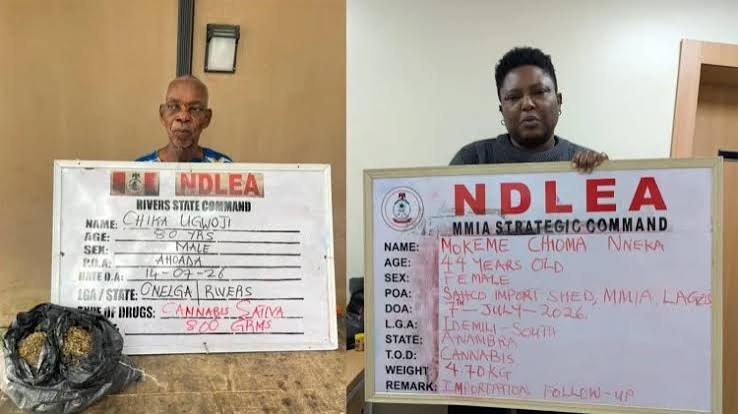
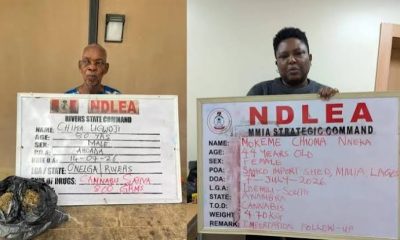
The National Drug Law Enforcement Agency (NDLEA) has intercepted 1.63 million pills of tramadol concealed in two long trailers heading for Kano as it intensified efforts to dismantle a transnational drug trafficking syndicate operating along the Togo-Benin Republic-Nigeria corridor.
The agency also arrested an 80-year-old suspected drug dealer in Rivers State, a businesswoman linked to cannabis shipments from Canada, a Chadian woman, a couple and other suspects in coordinated operations across Lagos, Edo, Kogi and Rivers states.
The NDLEA’s Director of Media and Advocacy, Femi Babafemi, disclosed this in a statement, yesterday.
According to the statement, the latest intelligence-led operation came barely one week after NDLEA operatives recovered 558,900 pills of tramadol concealed in the false-bottom compartment of a truck that entered Lagos through the Togo-Benin Republic route.
Babafemi said, “Ongoing efforts to dismantle a transnational drug trafficking syndicate smuggling tramadol from Togo, through Benin Republic into Nigeria have yielded another success with the interception of two long trailers used to move One Million Six Hundred and Thirty (1,630,000) pills of tramadol 250mg concealed in fabricated compartments of the trucks across multiple borders into Lagos.”
He added that one of the two trailers was intercepted on July 2 along the Lagos-Ibadan Expressway, where operatives recovered 853,000 pills of tramadol 250mg concealed in a fabricated compartment beneath the cargo floor.
Babafemi said, “One of the two trucks already heading to Kano was tracked and located on 2nd July 2026 along the Lagos-Ibadan Expressway where NDLEA officers recovered 853,000 pills of tramadol 250mg concealed in a fabricated compartment beneath the cargo floor of the trailer and arrested the 22-year-old driver Jabir Kabiru.”
He further disclosed that another trailer was intercepted two days later on the same route.
“Two days later, 4th July, NDLEA operatives acting on processed intelligence successfully tracked and recovered the second trailer from the Lagos-Ibadan Expressway while heading to Kano. A total of 777,000 pills of tramadol 250mg concealed in a fabricated compartment beneath the cargo floor of the truck were evacuated and the 22-year-old driver Muhammed Nuhu arrested,” the statement read.
According to Babafemi, investigations established a link between the three intercepted consignments.
He said, “Investigations revealed that all three trucks and consignments intercepted on 21st June, 2nd July and 4th July belong to the same transnational drug trafficking syndicate operating along the Togo-Benin Republic-Nigeria axis.”
The agency also intercepted 4.70 kilograms of Canadian Loud, a synthetic strain of cannabis, at the import shed of the Murtala Muhammed International Airport, Ikeja, Lagos.
Babafemi said, “Two consignments of Canadian Loud, a synthetic strain of cannabis, with a combined weight of 4.70 kilograms have been intercepted at the import shed of the Murtala Muhammed International Airport (MMIA), Ikeja, Lagos. The cargoes, which arrived the Lagos airport from Canada in cartons with ‘Odugwu’ boldly written on them, came aboard British Airways and Ethiopian Airlines flights on 24th June and 3rd July respectively.”
He said two cargo agents, Ali Rotimi Samson and Orimolade Oluwagbenga, were initially arrested in connection with the shipments, while another suspect, Edeh Onyeamachi Stanislus, was apprehended after arriving at a logistics company to take delivery of the consignments.

The Federal Ministry of Humanitarian Affairs and Poverty Reduction has denied claims that it has commenced registration for a purported ?50,000 National Support Allowance.
The ministry, in a public notice posted on its official X handle, yesterday, described messages, links and websites advertising the alleged programme as fraudulent.
It urged Nigerians to disregard such claims and verify information only through official government channels.
“The Federal Ministry of Humanitarian Affairs and Poverty Reduction has NOT commenced registration for any ?50,000 National Support Allowance,” the ministry said.
It added, “Disregard fraudulent messages, links and websites claiming otherwise. Verify any info only through official govt channels.”
The alert is in response to a circulating scam flyer that falsely claims the program is ongoing under President Bola Tinubu’s directives.
The fake advertisement, which includes text in Hausa and English, directs victims to a suspicious website (kluspz.com) for applications.
The ministry’s warning comes amid heightened concerns over digital fraud targeting vulnerable populations seeking social support.
Similar scams have previously surfaced around programs like N-Power, prompting questions from citizens in replies to the official post.
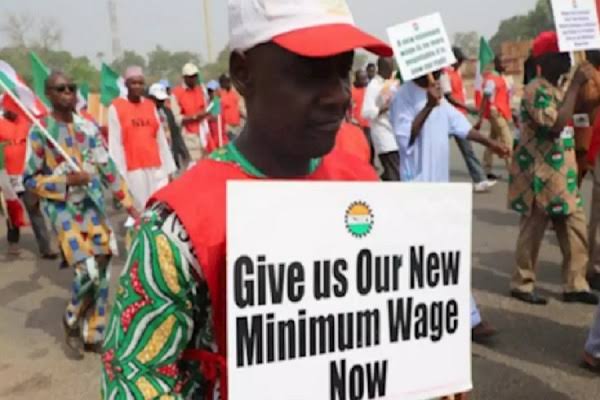
The Nigeria Labour Congress (NLC) has expressed its preparedness for a major national struggle for a comprehensive review of the national minimum wage.
NLC President, Comrade Joe Ajaero, hinted at this while making his remarks at the commissioning of the Comrade Godwin Abumisi Pensioners Legacy House and Multipurpose Hall in Abuja.
Ajaero said it is no longer acceptable to discuss the welfare of workers without also discussing the welfare of those who have completed their active years of service.
He advised workers and pensioners to get prepared for the ideological and economic battles that lie ahead.
According to the NLC president, “The Nigeria Union of Pensioners (NUP) is one of the proud affiliates of the Nigeria Labour Congress. Therefore, your struggle is our struggle, and your welfare remains a priority for the organised labour movement.
“We are currently in the preparatory stages for a major national struggle for a comprehensive review of the national minimum wage.
“However, let me state unequivocally that it is no longer acceptable to discuss the welfare of workers without also discussing the welfare of those who have completed their active years of service.
“Accordingly, the Nigeria Labour Congress will not only push for a new national minimum wage but will also demand the establishment of a national minimum pension. It is a historical injustice that men and women who devoted their youth, strength and productive years to the service of this nation should be condemned to live below the poverty line after retirement.”
Ajaero noted that the cost of living has risen astronomically as food, healthcare and transportation have become increasingly unaffordable.
“We cannot continue to allow our senior citizens to survive on pensions that have become poverty wages. Every retiree deserves to live with dignity after decades of faithful service to the nation,” he said.
He urged pensioners across the country to remain united and prepared as the process begins, adding: “This Legacy House should not merely be seen as a physical structure; it should become a centre for mobilisation, strategic engagement and solidarity as we prepare for the struggles ahead.”
The NLC president pointed out that the working class has always understood that “those who exploit workers are united in advancing their interests. We too must remain united in defending our collective interests and ensuring that government fulfils its obligations to both serving workers and retirees.”
He urged pensioners across the country to remain united and prepared as the process begins, adding: “This Legacy House should not merely be seen as a physical structure; it should become a centre for mobilisation, strategic engagement and solidarity as we prepare for the struggles ahead.”
The NLC president pointed out that the working class has always understood that “those who exploit workers are united in advancing their interests. We too must remain united in defending our collective interests and ensuring that government fulfils its obligations to both serving workers and retirees.”
He said the completion of the project should serve as a clarion call to all workers and lovers of the masses.
“We must not only build physical structures but also build a strong movement capable of compelling government to honour its commitments,” he said.
Ajaero further stated: “We will continue to demand the immediate payment of all outstanding pension arrears and the implementation of a pension regime that guarantees every retiree a life of dignity and security.
“Together, we shall continue to fight until every Nigerian worker and pensioner receives the justice, respect and welfare they deserve.”
-

 News3 days ago
Rivers NUJ Seeks Recruitment Into State Media Houses …Urges Govt To Reposition Public Service
-

 News3 days ago
Family Seeks Police Help As Woman Goes Missing After Fleeing Female Circumcision Threat
-
 Oil & Energy2 days ago
NCDMB Partner Renaissance To Train 300 Youths On oil, gas Skills
-
 News3 days ago
Nigeria Hosts World Public Relations Forum Sept …As Experts Seek Inclusion Of PR In Decision Making
-

 News3 days ago
Tinubu, Fubara Condole Amaechi Over Mother’s Death
-
 News2 days ago
NDLEA Intercepts 1.63m Tramadol Pills, Arrests 80-Year-Old Suspect
-
 Oil & Energy2 days ago
Local Crude Shortage Crippling Nigerian Refineries – MAN
-
 News3 days ago
Uphold Principles Of Dev, Rivers SSG Charges Tertiary Institutions